

View All CommunityCraftEquityFamilyLearnLiveMaterialsPlayResilienceWork
 001
001
Paarshav Shah
Parallax Chair
#Craft #Materials
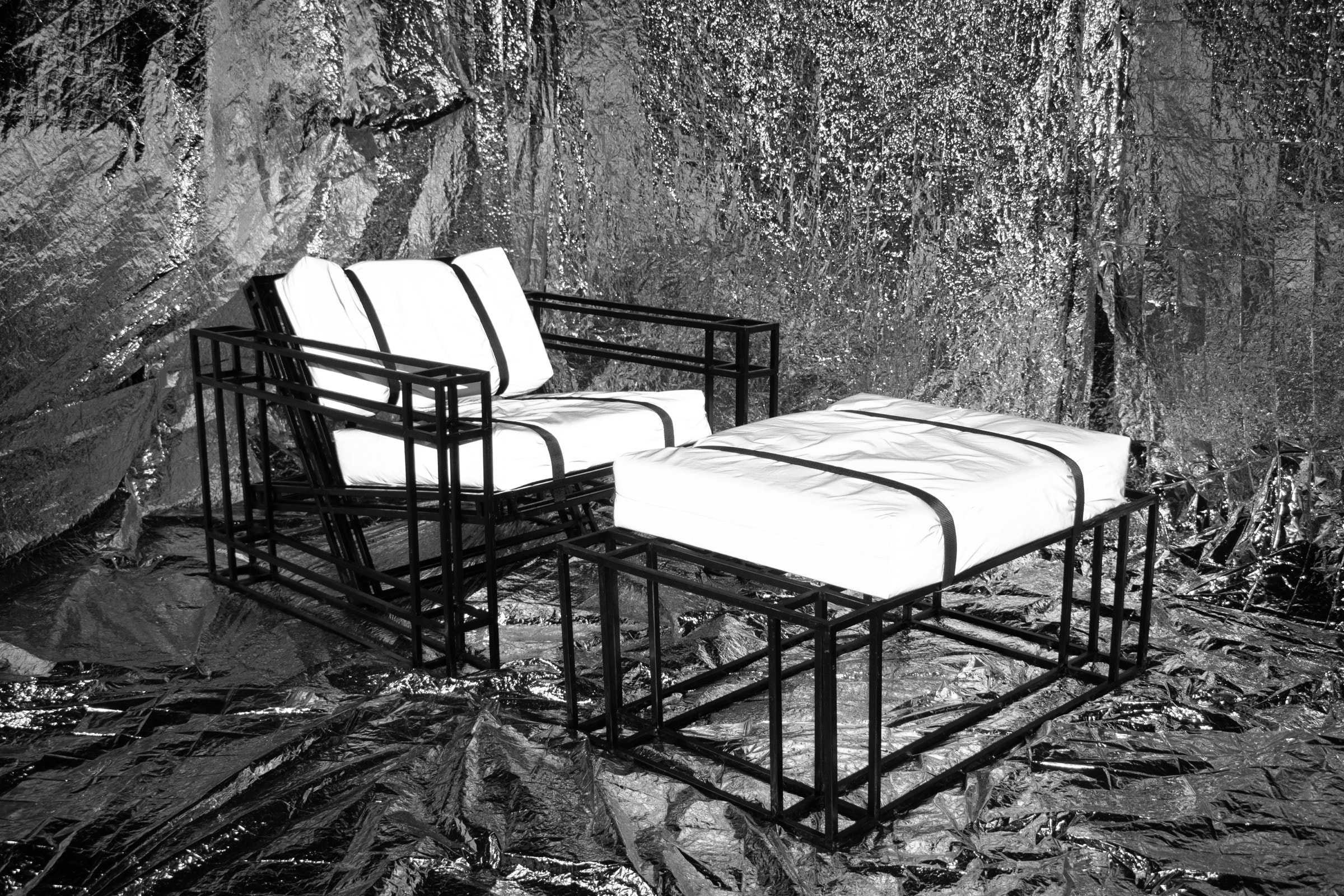
We see the processes of construction all around us, whether it’s the steel beams or the hi-vis jackets the masons wear. I wanted to design furniture that – in a pure sense – makes use of the industrial material & aesthetic. The Parallax Chair is precise and proportional, driven by the modernist dogma. The chair and ottoman are built by welding 1/2” square steel tubing, grinding it down flush, and coated with a matte black finish. The cushions are upholstered with a retro-reflective fabric and are secured with heavy duty straps on to the steel frame.
-
Bushwick
https://aiabrooklyn.org/wp-content/uploads/bknow/details/Parallax%20Chair.jpg
 002
002
Chien Dao
Belle Gardens Affordable Home Ownership
#Community #Equity #Family #Live #Materials #Resilience
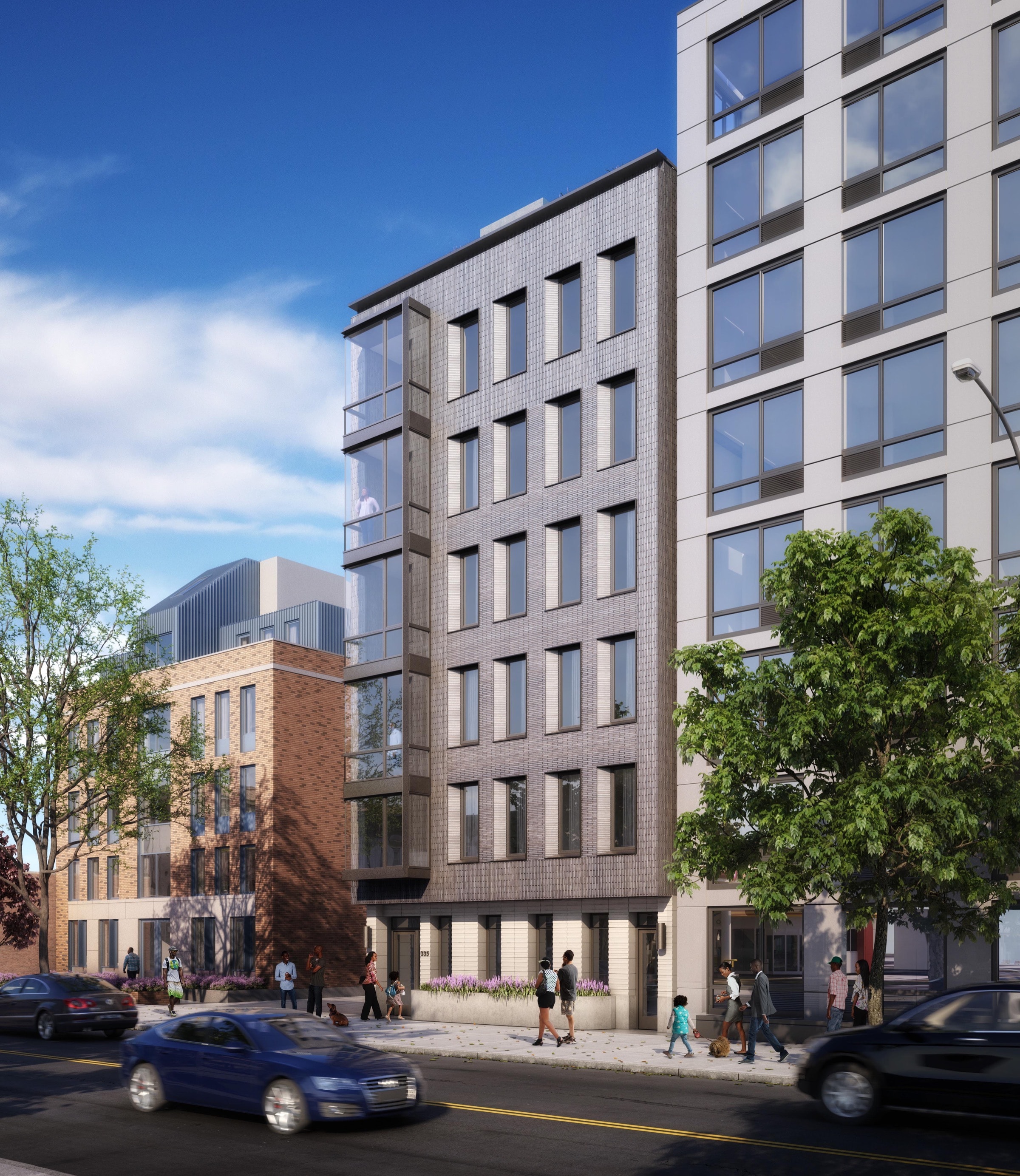
Belle Gardens is one of the very few affordable housing projects currently finishing that is both truly affordable and well designed to provide a market rate feel and livability.
DCAP, Fulcrum Arch, Chien Dao Studio, BJF
Bedford Stuyvescant
https://aiabrooklyn.org/wp-content/uploads/bknow/details/Belle%20Gardens%20335%20Ralph.jpg
 003
003
Peter L. Gluck
Van Sinderen Plaza Affordable Housing
#Community #Equity #Family
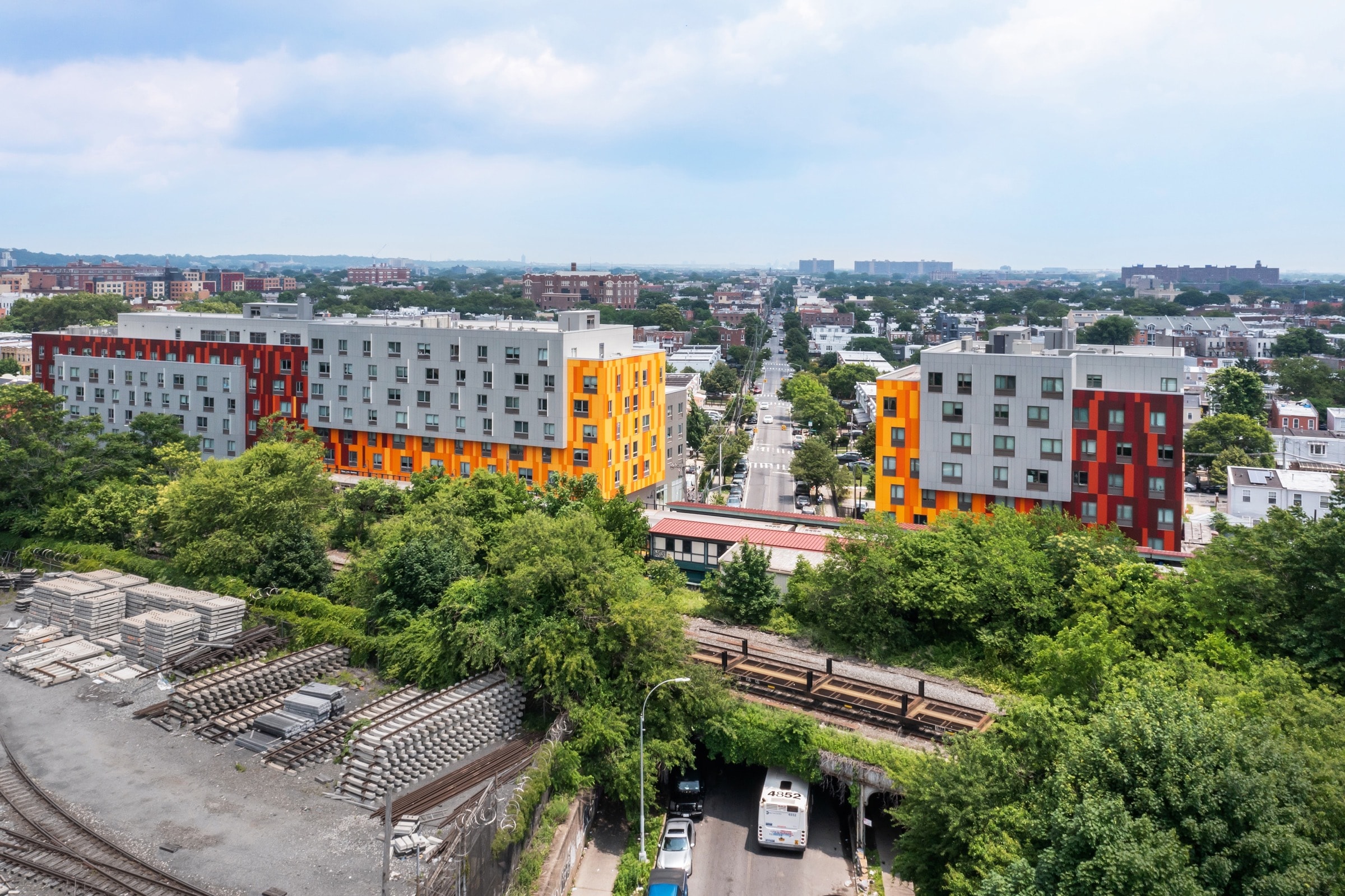
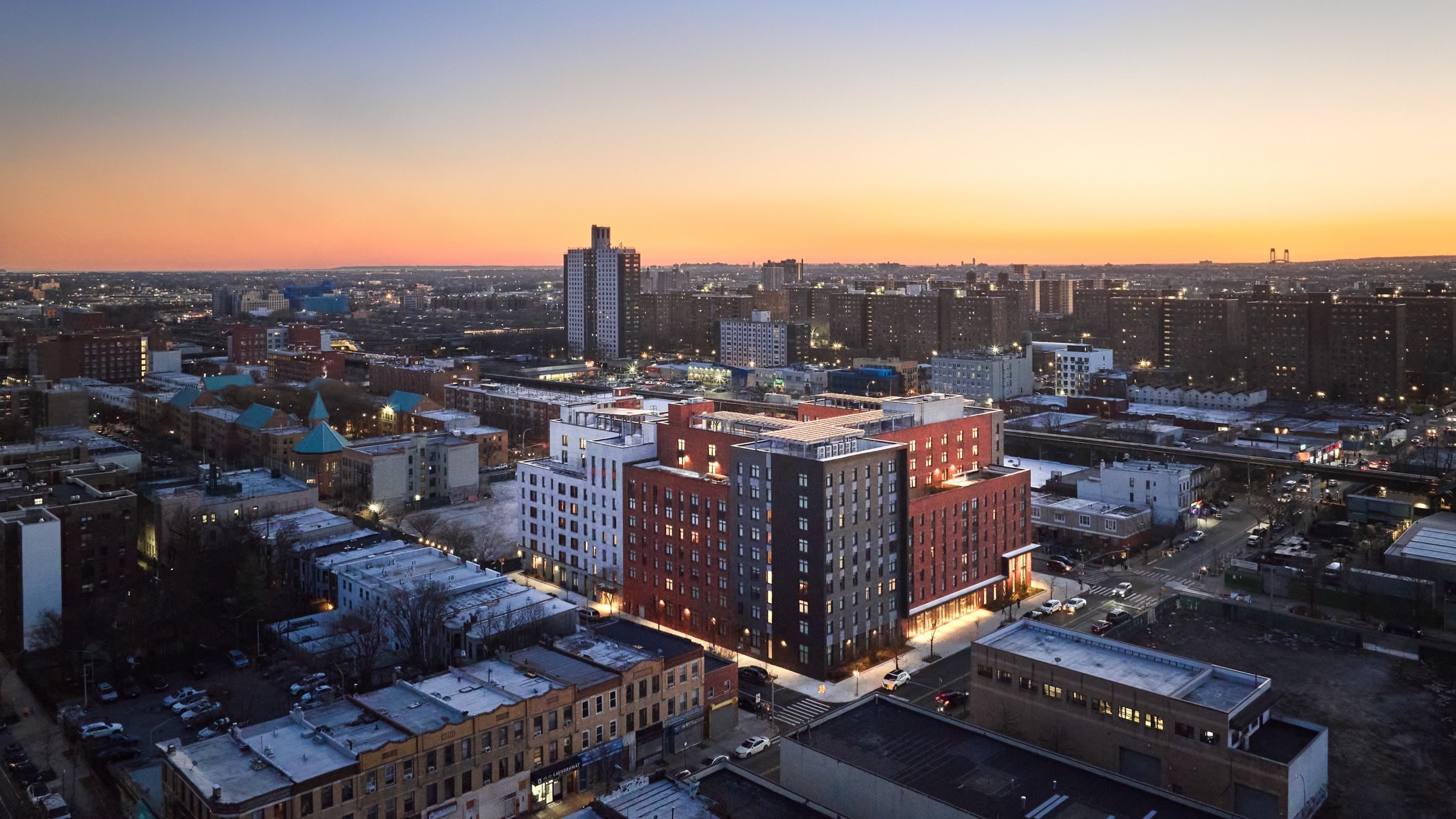
Van Sinderen Plaza addresses New York City’s urgent need for affordable housing by transforming two long vacant sites into 130 high-quality apartments with street level retail and a community daycare. Developed under the Extremely Low- and Low-Income Affordability Program of the Department of Housing Preservation and Development, the project combines city- and privately-owned manufacturing lots and rezones them as residential with a commercial overlay. Right next to the elevated tracks of the L train, at the border between East New York and Brownsville, the two seven-story buildings flank the avenue at the transit hub intersection to create a colorful gateway into the neighborhood.This 100% affordable housing development is LEED and Enterprise Green Communities certified.
GLUCK+ Architecture, MacQuesten Construction Management
Brownsville / East New York
https://aiabrooklyn.org/wp-content/uploads/bknow/details/GLUCK_vansinderenplaza_brooklynNOW26c.jpg
 004
004
Assemblage Landscape Architecture
Dolly’s Park
#Community #Craft #Materials
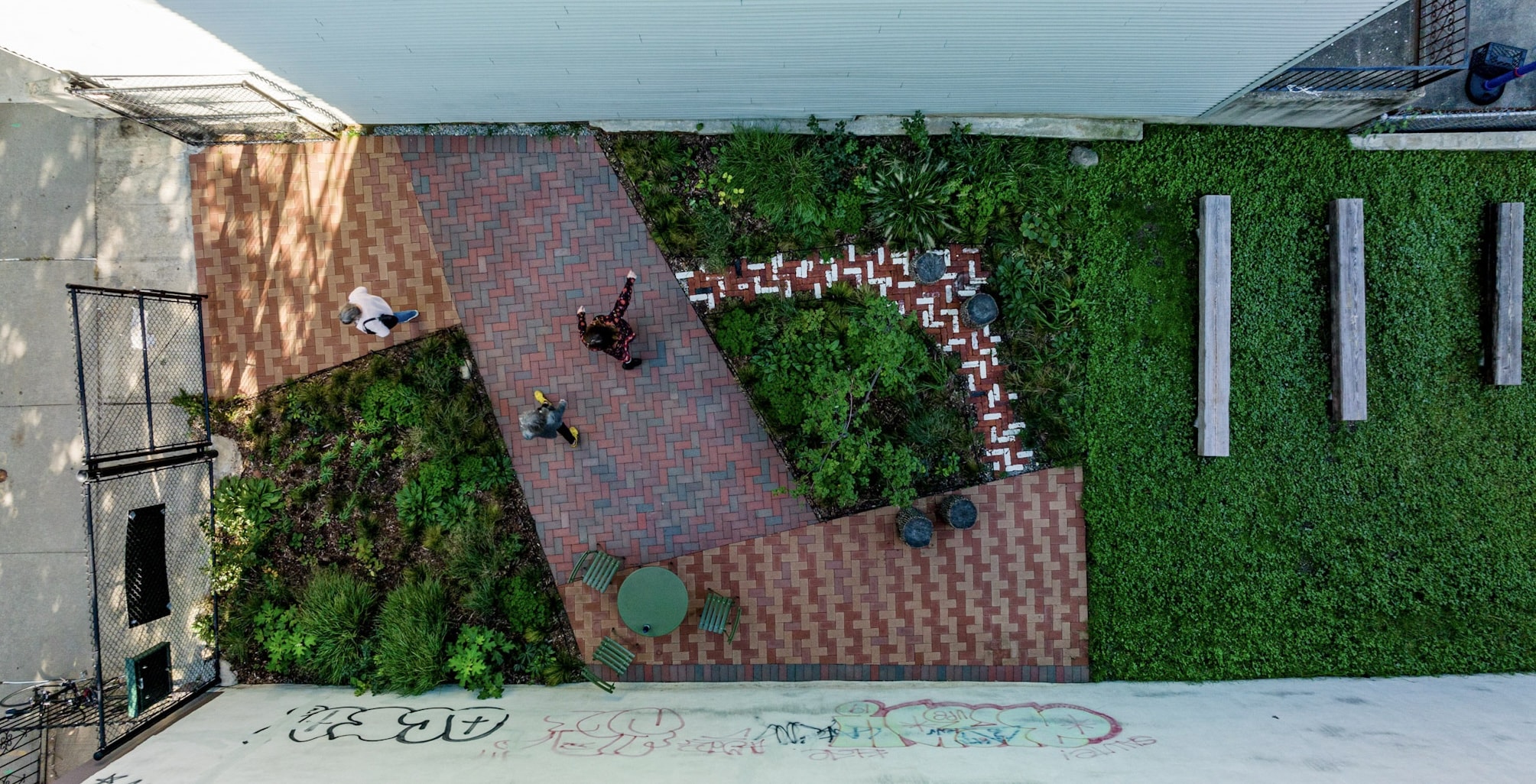
Working together with local community members and decarbonization through material reclamation are at the the heart of this project. Assemblage Landscape Architecture collaborated with Dolly’s Park Board and NYC GreenThumb to reimagine Dolly’s Park as a greener, more accessible community space in Gowanus. The project transformed an underutilized gravel lot into a welcoming landscape that supports gathering, ecological restoration, and everyday use.Assemblage prioritizes the use of local and regional materials to reduce embodied carbon, and we use salvage and reclaimed materials to reduce the harvesting of new resources and the production of new materials. The QR-enabled material source map traces the origins of all site elements, revealing a layered narrative of place and reuse. Incorporating former building materials into the landscape represents a vital form of adaptive reuse—extending the life cycle of existing resources while grounding the project in the history and fabric of its community.
Field Form, NYC Green Thumb, Community Members
Gowanus, Brooklyn
https://aiabrooklyn.org/wp-content/uploads/bknow/details/Board%20Layout.jpg
 005
005
IKMueller Architecture PLLC
Park Slope Parlor
#Craft #Family #Materials
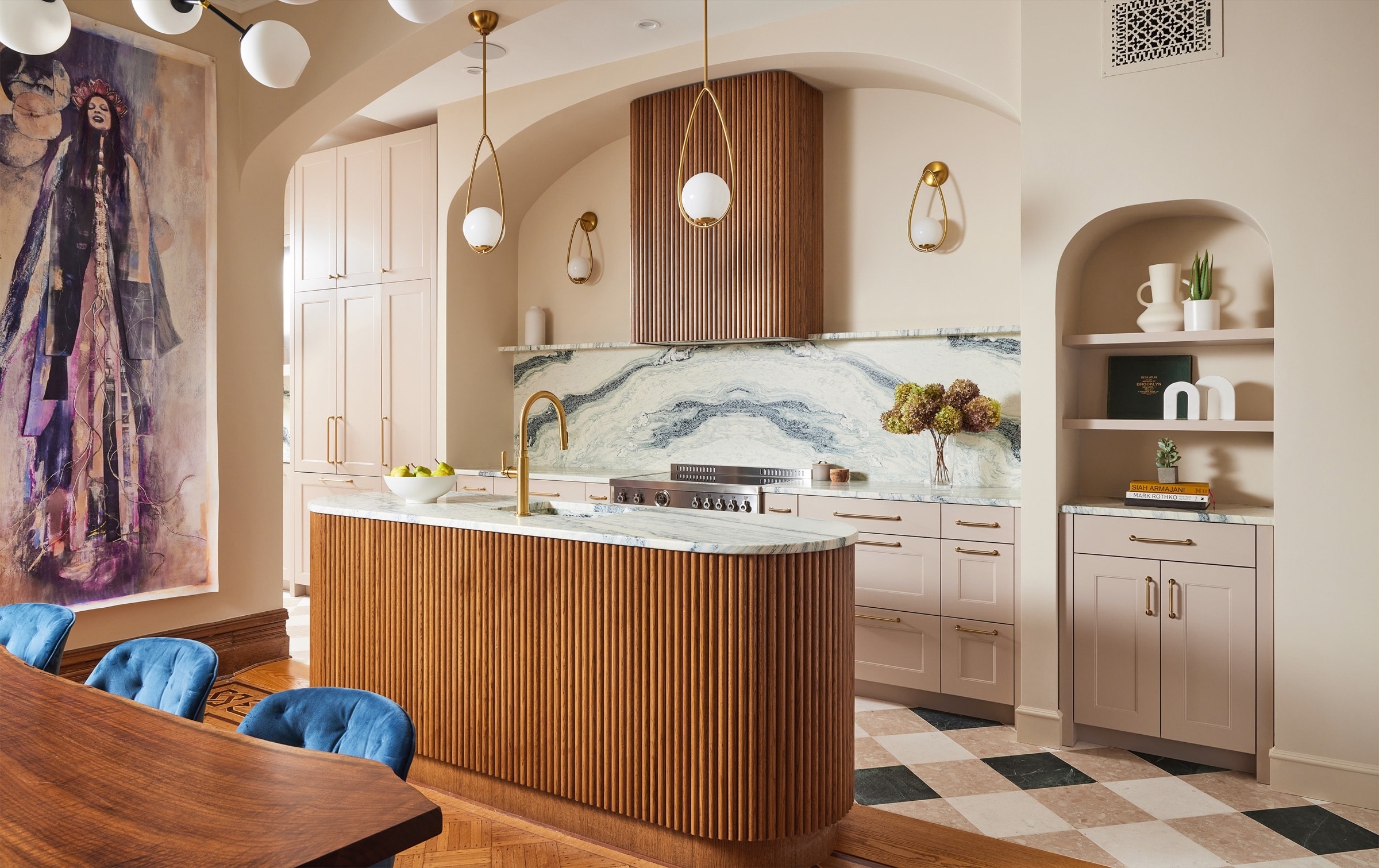
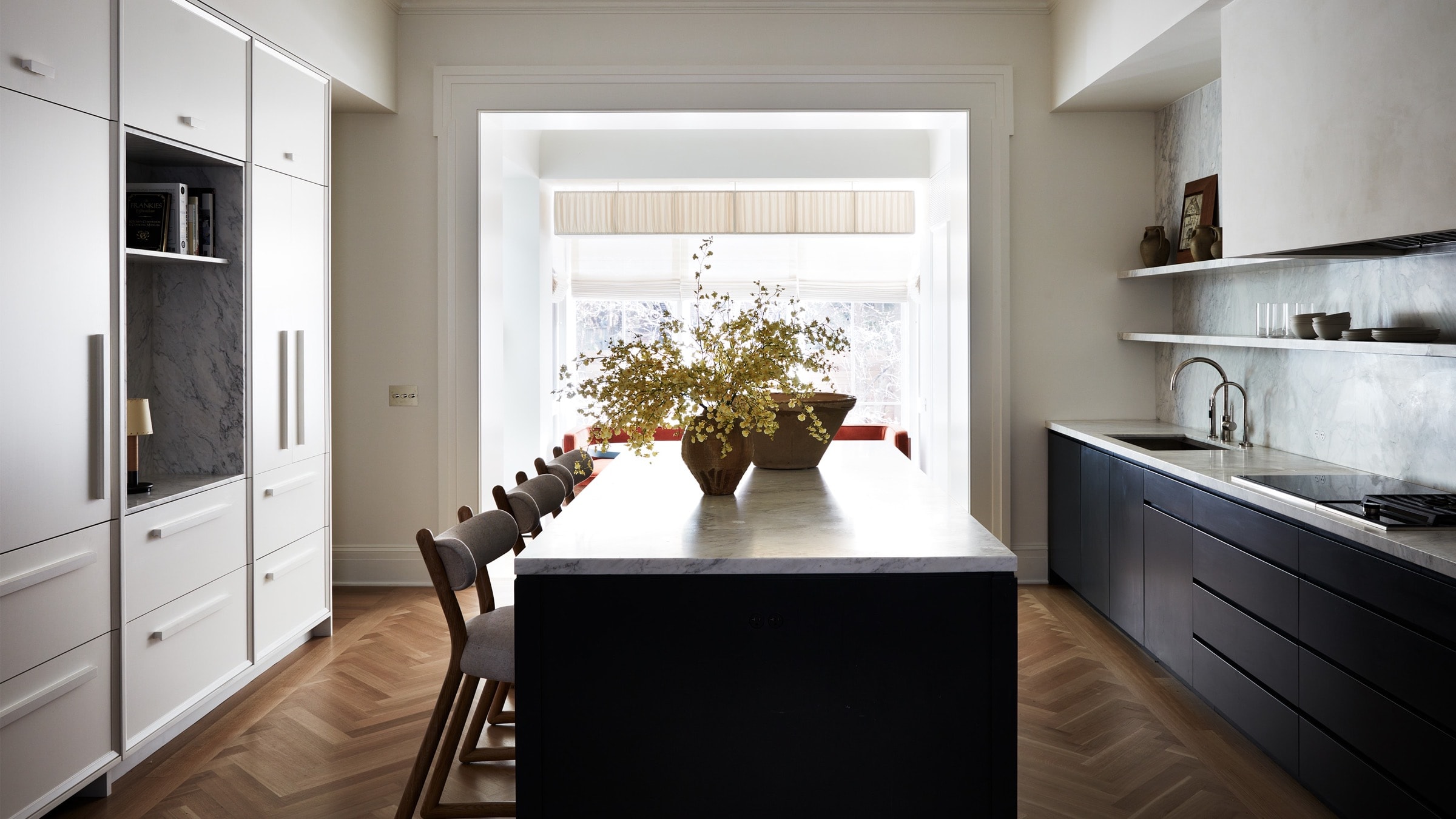
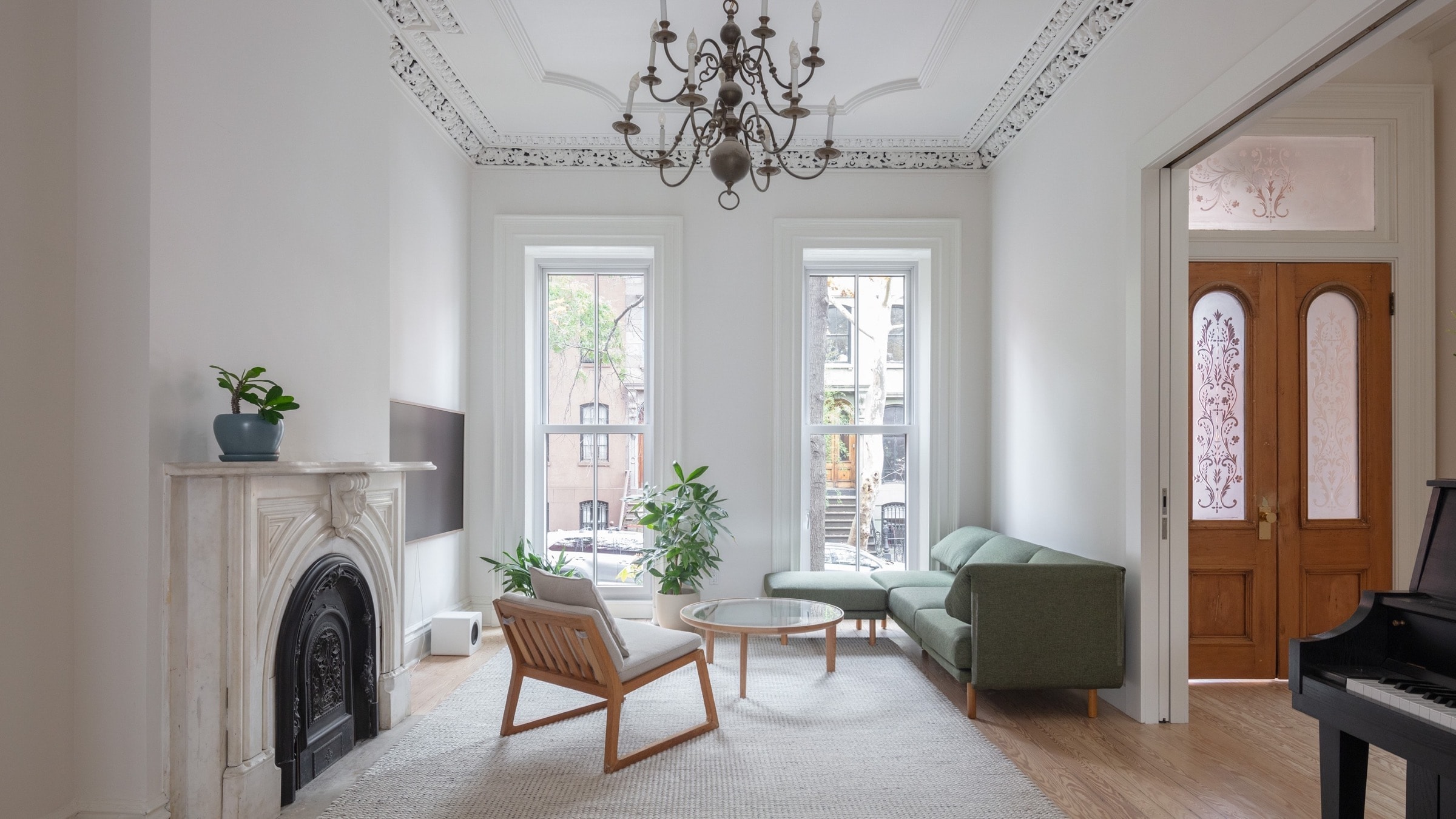
This renovation celebrates craftsmanship while meeting contemporary needs, balancing a homage to the brownstone’s origins with thoughtful updates that serve a dynamic, livable design. The reimagined floor plan replaced an original load bearing wall with a large steel beam in the ceiling to open up the dining room, kitchen, and pantry, and improve flow and functionality. A large kitchen island connects traditional and contemporary elements, while curves throughout the rooms soften transitions and improve functionality in the space. Thoughtful material choices like custom wood stains, terrazzo tiles, and a bookmatched marble backsplash create warmth and cohesion. Design highlights include a playful checkered floor that guides movement with a dynamic pattern, a concealed pantry with curved, caned-glass appliance cubby and brass accents, and a cleverly designed powder room maximizing space and style.
MEP Engineer: CES Engineering, Contractor: Elephants D&D Corp., Photography: Erik Bernstein Photography
Park Slope
https://aiabrooklyn.org/wp-content/uploads/bknow/details/Park%20Slope%20Parlor.jpg
 006
006
Michael Licht
Carriage House Home
#Craft #Live #Materials
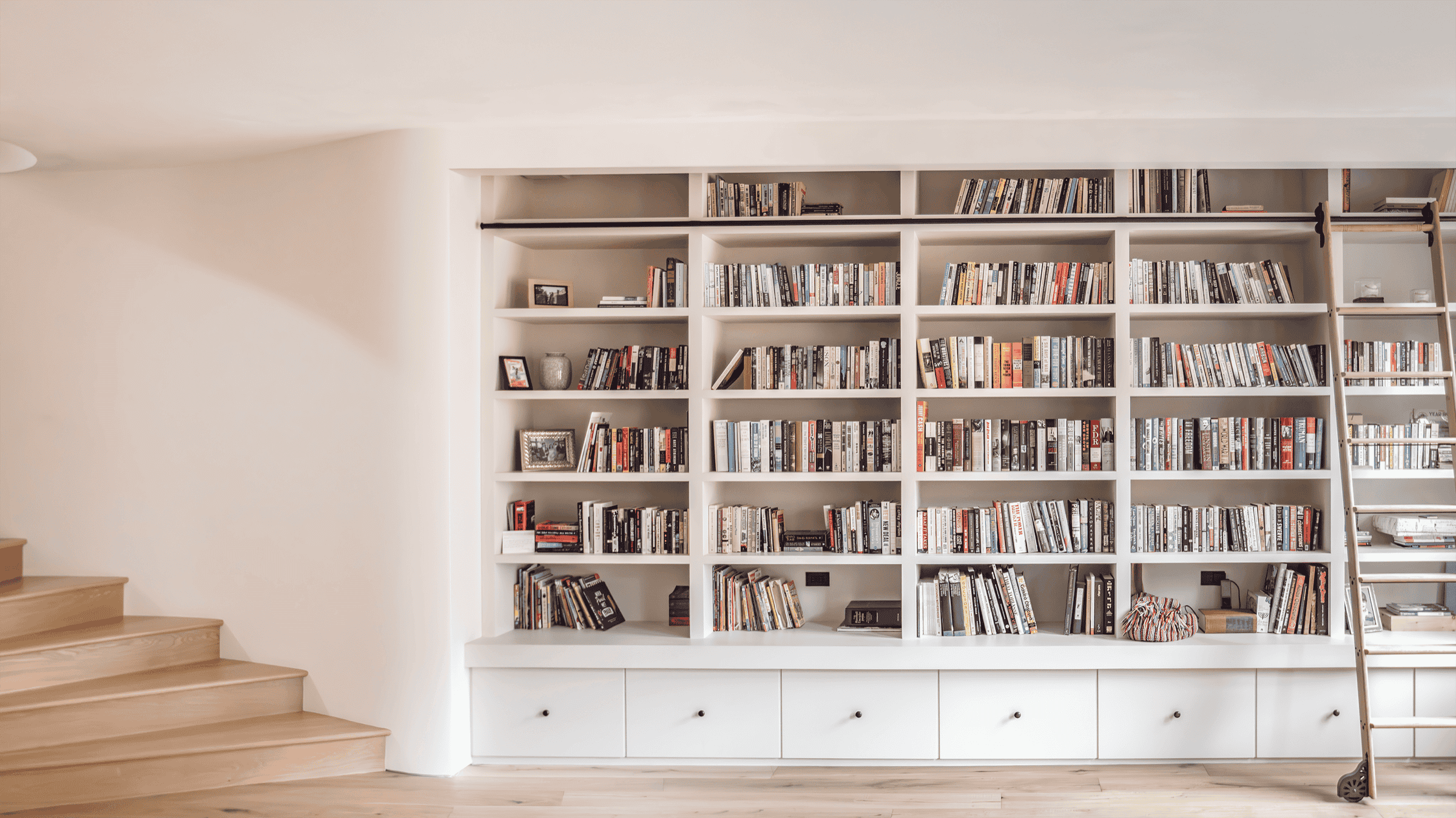
Rather than symmetry or a proportional system, the object of this remodel was flow and connection. The project staircase tacks in towards the center of the layout to gently direct circulation, leaving a long flowing bookcase in its wake. Rounding the stairwell both softened the portal into the living room, and created space in plan for a small soaking tub in the main bath above. Sweeping ceiling coves guide progression into the dining, cooking and living areas.Project scope also included certificates of occupancy for three roof terraces and the associated work to raise parapets, fix drainage pitch, and resurface the facade with new stucco. The envelope of the home was upgraded to include air sealing, additional insulation, new steel and glass doors, and structural reinforcement of the roof for an urban garden.Custom built-in millwork, plan adjustments, lighting design and fine craftmanship make this a carriage house a home.
Habiterra LLC, Lumfardo Luminaries
Park Slope
https://aiabrooklyn.org/wp-content/uploads/bknow/details/OOOA%20Carriage%20House%20Home.jpg
 007
007
pH design - Hilary Padget and Anthony Harrington
Park Slope Passive Redux
#Live #Materials #Resilience
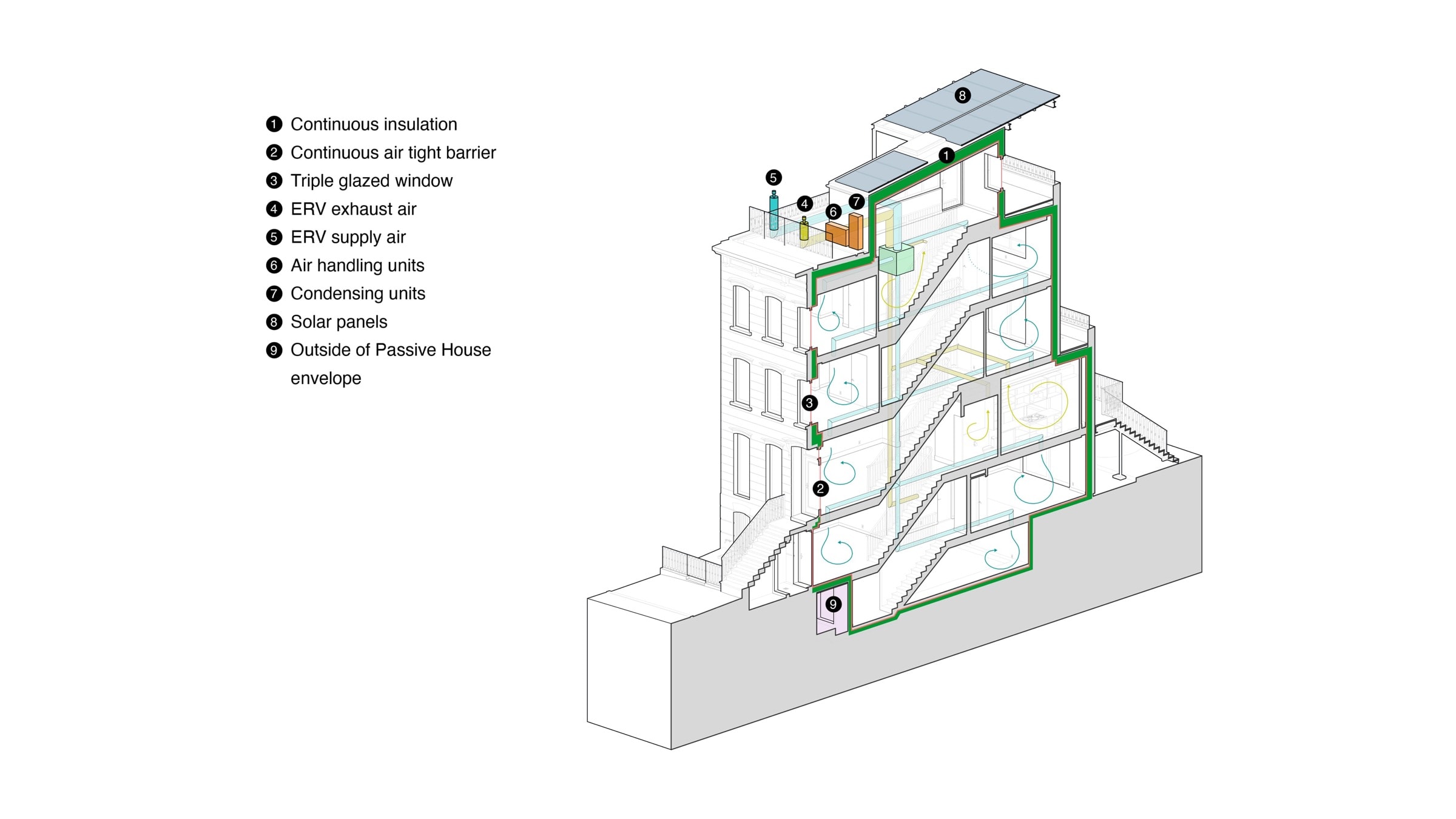
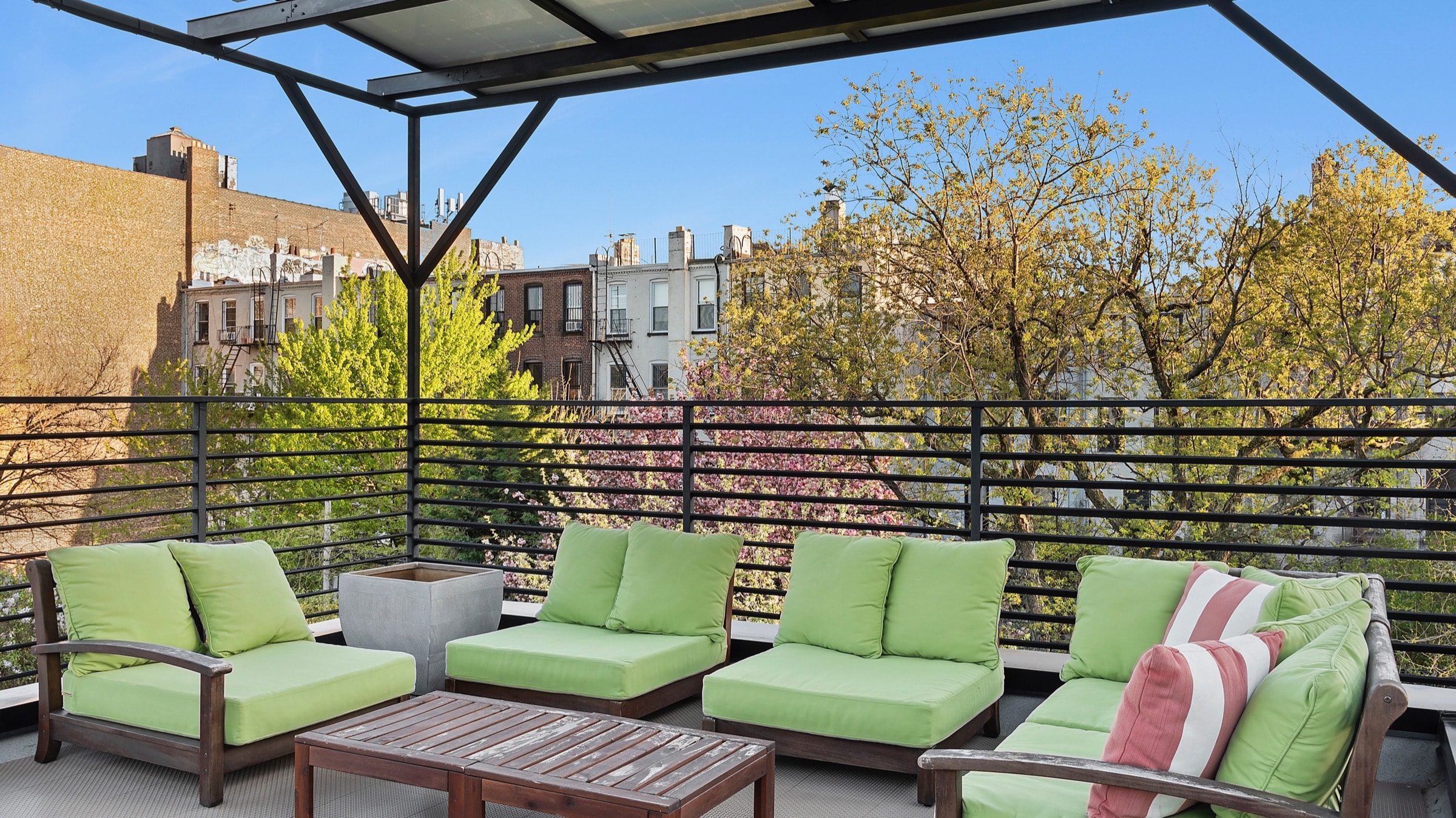
A family of four — both parents working from home and all four sensitive to allergens and city pollution — purchased this long-vacant Park Slope brownstone knowing it could become something most Brooklyn homes aren’t: a high-performance, deeply healthy home built for the way they live and the climate challenges ahead.Brooklyn brownstones are built to last, but age brings problems — and this one had more than most. Vacant for years following a fire, it had a failing facade, holes in the roof, and water damage throughout. We kept what was significant — the masonry, the front facade — and restored it fully: traditional stucco repairs, a rebuilt mahogany cornice, new ironwork, reset bluestone. Behind it, the interior was rebuilt entirely to the Passive House standard: continuous insulation, high-performance windows, careful air sealing, an ERV, reclaimed wood flooring, natural materials, and low-VOC finishes throughout. A solar array and green roof complete the performance.
PJoe Construction Corp., Barry Structural Engineering, PLLC, RJD Engineering
Park Slope
https://aiabrooklyn.org/wp-content/uploads/bknow/details/PARK%20SLOPE%20PASSIVE%20REDUX.jpg
 008
008
Mookntaka
Friends from the Canal
#Community #Craft #Play
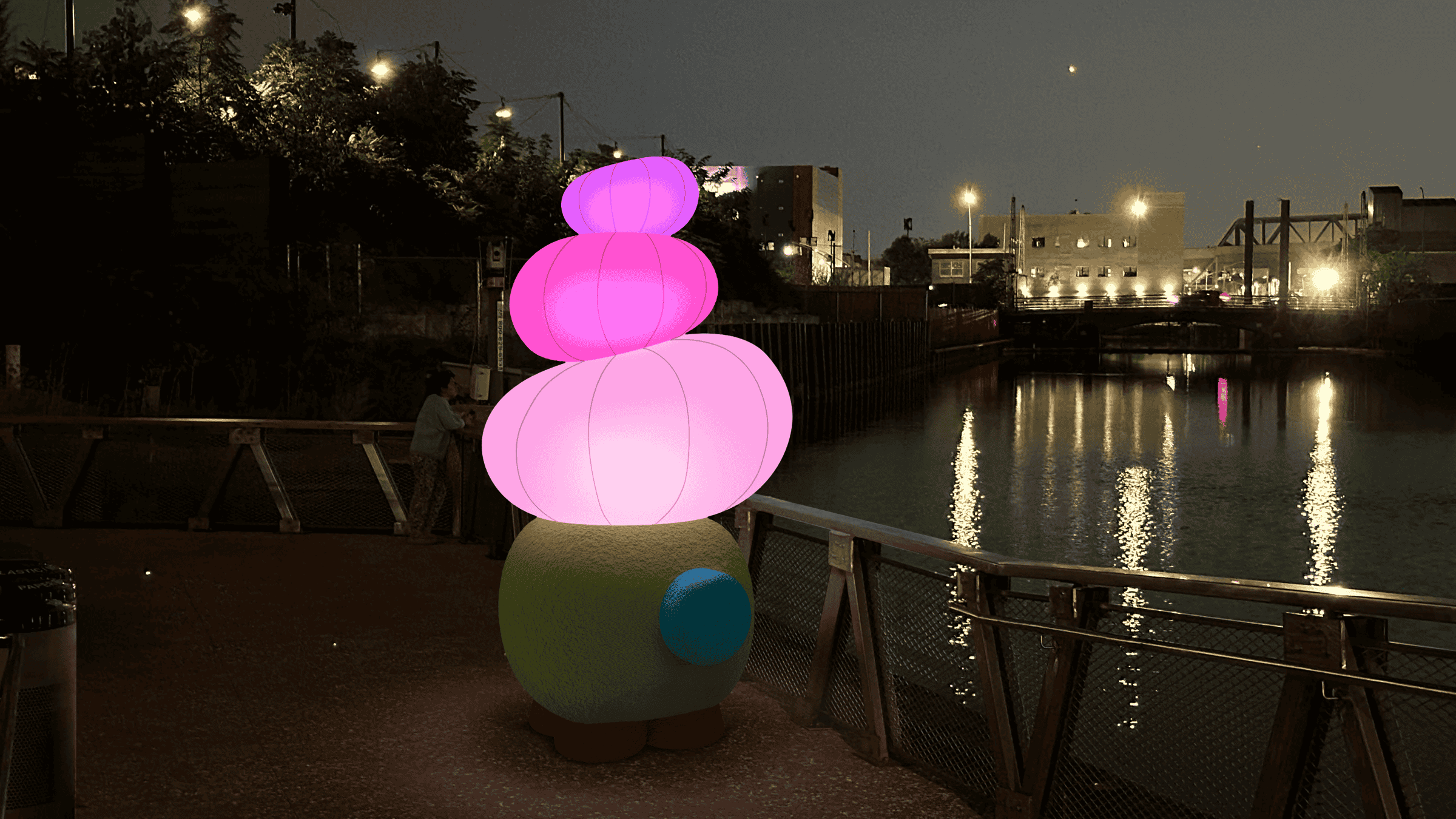
With the collective effort of cleaning the canal, the hidden creatures of Gowanus are waking up to see what all the commotion is. Rumored to be slimy, scary monsters, the creatures are actually kind, gentle friends. To their surprise, so are we!Meet Shelby, Loofa, and Pebbles, the Friends from the Canal! Three cheerful mutants who playfully greet visitors and residents by day and radiate soft light at night.Created by local artist duo Mookntaka, Friends from the Canal is a multi-site public art installation. These inflatable, character-driven sculptures, inspired by Gowanus’ fauna, serve as friendly neighborhood ambassadors.Mookntaka was selected through an open call, and chosen by a committee of local residents and community leaders in collaboration with Van Alen Institute.Friends from the Canal is made possible by a $100,000 Public Realm Grant for Commercial District Lighting awarded through the NYC Department of Small Business Services.
Van Alen Institute, New Project, Buro Happold, Sighte Studios, TYLin, New York City Small Business Services
Gowanus
https://aiabrooklyn.org/wp-content/uploads/bknow/details/Friends%20from%20the%20Canal.jpg
 009
009
Han Kuo
Scenes of Home
#Family #Play #Resilience
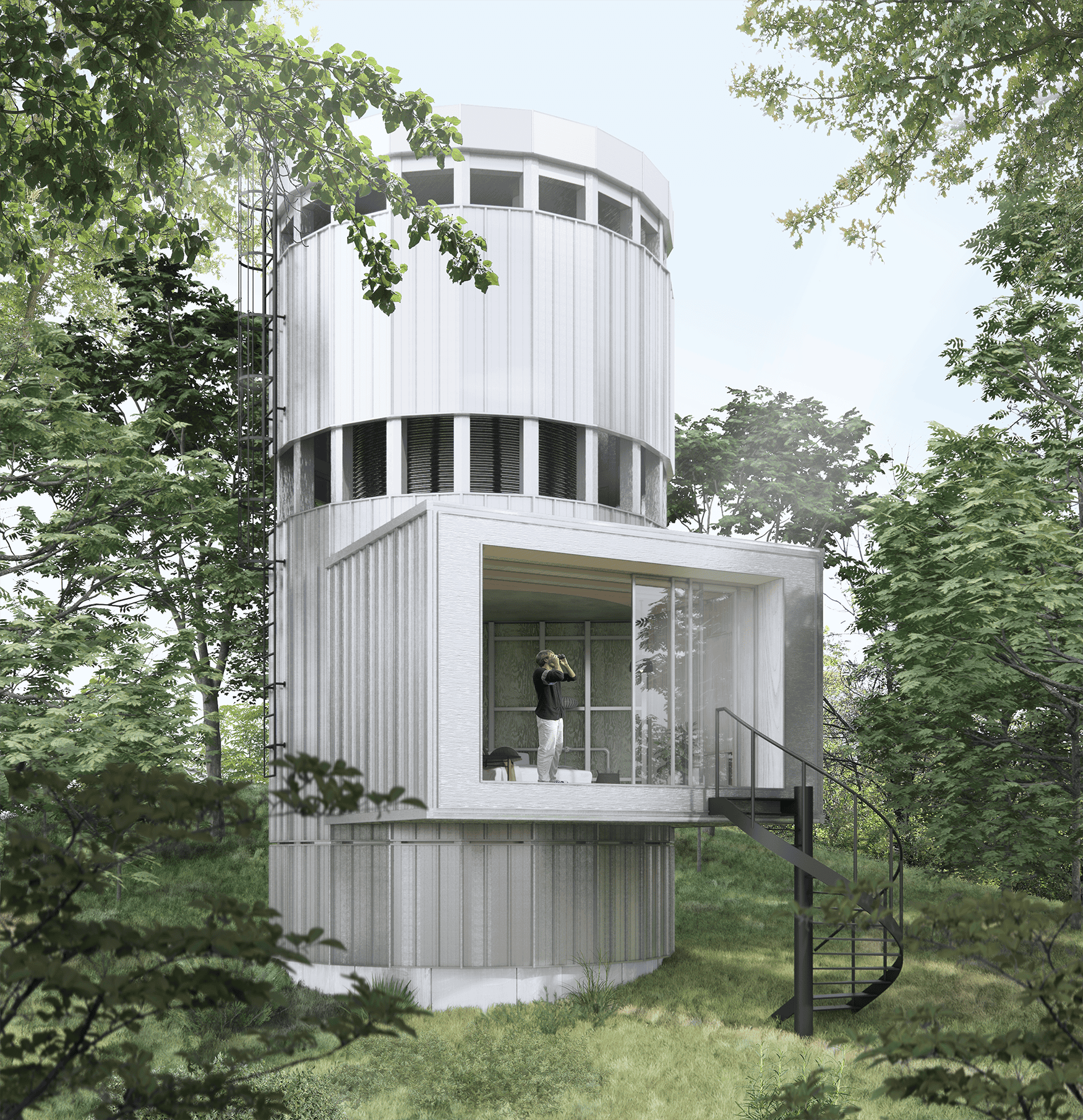
In an effort to efficiently optimize the living quality and minimize its footprint and environmental impact, this project is trying to re-interpret the meaning of micro-living via condensing all necessary programs into 3 most fundamental scenes(or so-called rooms), sleeping(bedroom), dining (kitchen and dining place) and washing(shower and toilet). All 3 scenes will be compactly encapsulated in a cylindrical core. By implementing a revolving-stage mechanism, the core of 3 scenes are integrated and fixed on the rotatable platform, shifting the programs from one to another on its axis and marking a sophisticated integration between house programs and the theatrical function of a stage. Aiming to remove the need for unnecessary circulation or transitional spaces like corridors or lobbies that are typically placed between different spaces, and infusing a distinctive dynamic character, the rotatable core is capable of maximizing its internal mobility and flexibility of living, while sitting with a minimum footprint.
Lead Designer : Han Kuo, Team : Carol Chao
Williamsburg
https://aiabrooklyn.org/wp-content/uploads/bknow/details/Scenes%20of%20Home.jpg
 010
010
Union Street Studio Architects, Norman Cox, Brynnemarie Lanciotti
Mosaic/Constellation
#Community #Equity #Family
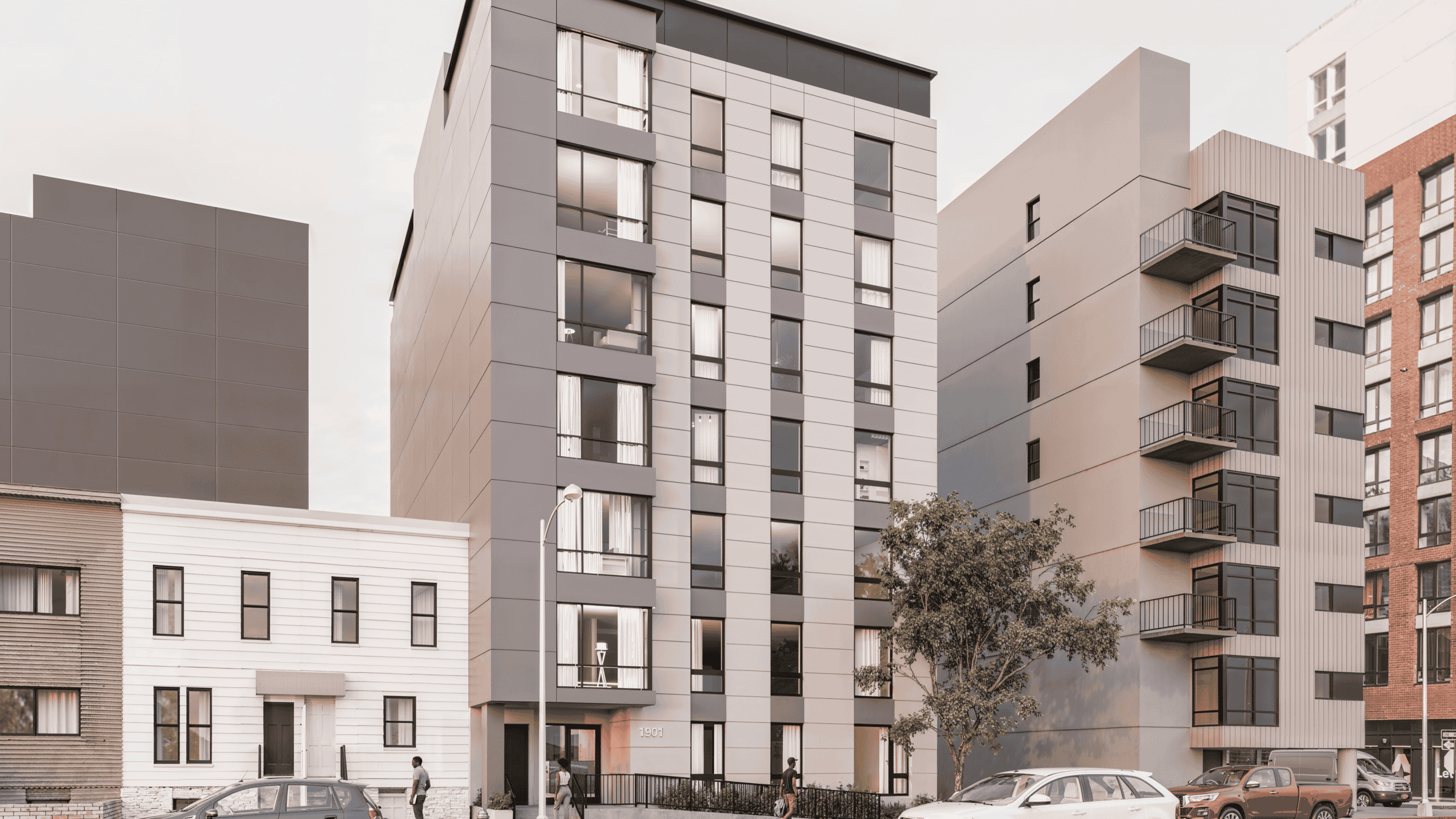
The Client engaged Architect to design 21 new buildings across five community districts in eastern Brooklyn. This HPD Sponsored Open Door project comprising two phases will produce 150 affordable units via shared equity co-op ownership with Interboro Community Land Trust. The CLT ownership model allows shareholders to build wealth through equity while maintaining long term affordability. Constructed on infill sites, the buildings range in size from two to twenty-five units. The building designs respond to wide variation in lot character and context and are optimized for energy efficiency and reduced operating costs.
Habitat for Humanity New York City and Westchester County, Interboro Community Land Trust
Multiple
https://aiabrooklyn.org/wp-content/uploads/bknow/details/Constellation%20Exhibition%20Board_Final.jpg
 011
011
Marshall Shuster
South Williamsburg Townhouse
#Craft #Family #Live
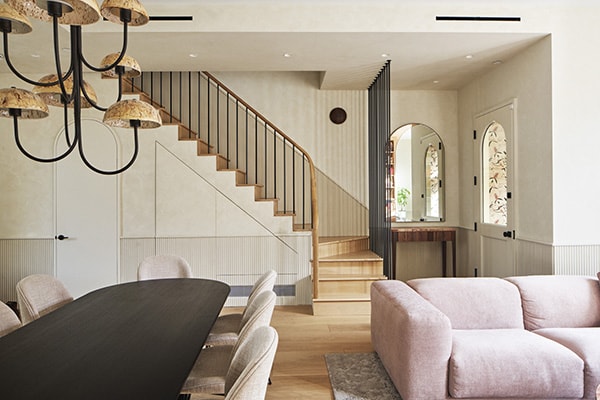
Located just north of the Williamsburg Bridge and a block from the Domino Sugar Factory, the South Williamsburg Townhouse transforms an 1860s three-family residence into a cohesive two-family home. A full gut renovation preserved its historic character while adapting it for modern living.Major structural upgrades included underpinning the foundation to deepen the cellar, rebuilding the rear façade, adding a fourth floor, and installing an elevator connecting all levels. These changes improved light, circulation, and spatial flow.A private two-bedroom garden apartment occupies the lower level with access to a rear terrace. The owner’s residence spans cellar through fourth floor, featuring a backyard, rear deck, rooftop terrace with hot tub, and a sound-isolated studio.Mesarch Studio led both architecture and interiors, creating a unified design that balances minimalism, warmth, and playfulness within a thoughtfully reimagined historic shell.
David Patnaude - Owners Rep, Prime Builders - Contractor, Kam Chu - Mechanical Engineer, Celin Munoz - Structural Engineer, Jeff Keiter - Landscape Architect, Aaron Poritz - Millworker
Williamsburg
https://aiabrooklyn.org/wp-content/uploads/bknow/details/SOUTH%20WILLIAMSBURG%20TOWNHOUSE%20sm.jpg
 012
012
Han Kuo
From Water Tower to Affordable Micro-Living Unit
#Community #Equity #Resilience
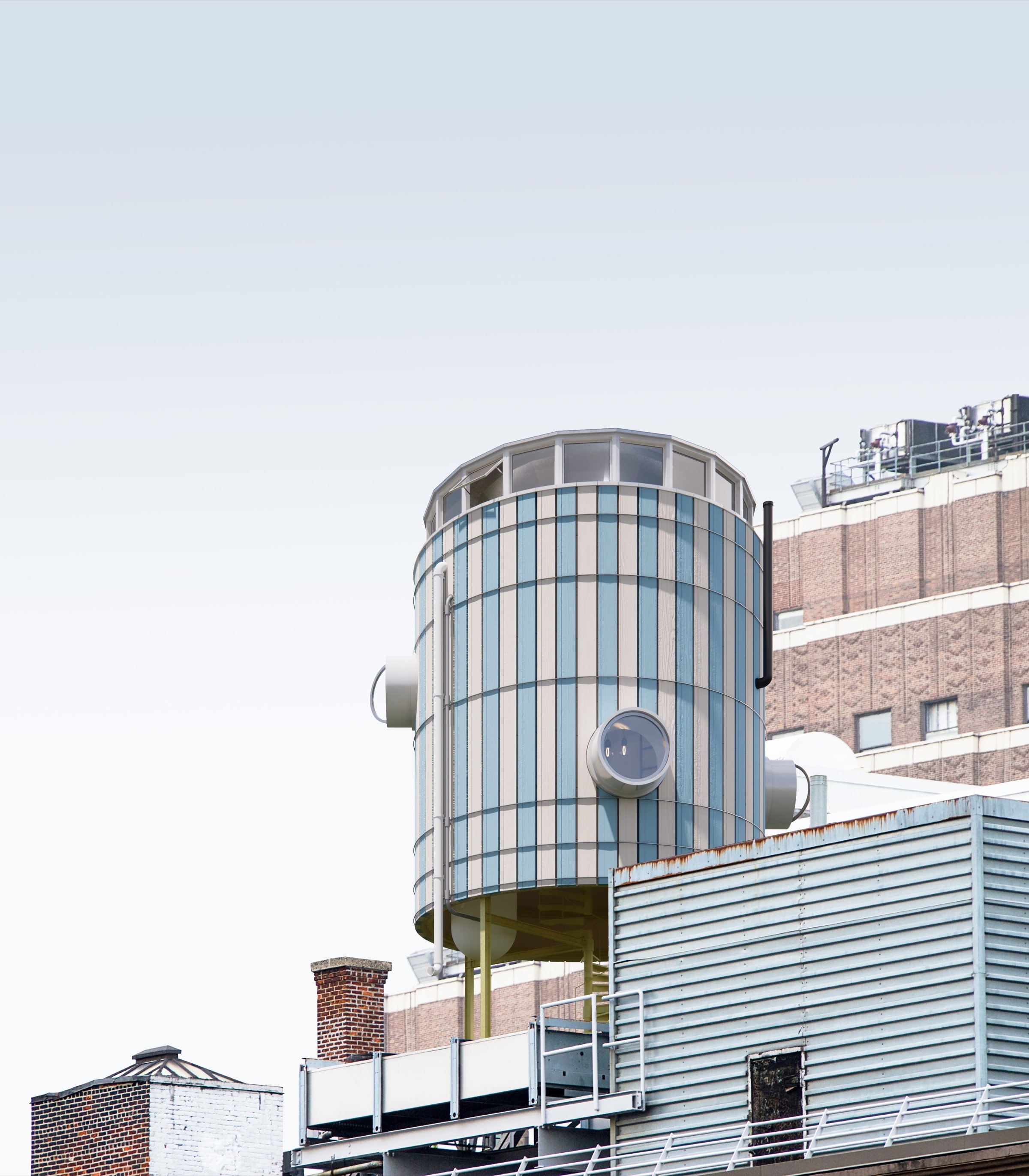
The wooden water tower is a ubiquitous feature, integrated into the city’s skyline of New York. Despite its long-lasting durability, they must be replaced due to age, disrepair, or seismic concerns. New York City is estimated to have 10,000 to 15,000 functioning water towers, with older units regularly decommissioned and new ones built. This ongoing cycle of renewal presents an opportunity for sustainable reuse. Transforming decommissioned water towers into micro-houses offers a creative solution that supports circular design, resource efficiency, and innovative approaches to urban living.Following the typical footprint of a water tower, the space is equally divided into four quarters, each one designated for a specific function, such as kitchenette, bathroom, dining area, and bedroom. To optimize spatial efficiency, each quarter is elevated to different heights, creating interstitial storage spaces between levels. These staggered platforms are connected by a spiral stair, establishing both vertical continuity and spatial hierarchy.
Architect / designer : Han Kuo
Downtown Brooklyn
https://aiabrooklyn.org/wp-content/uploads/bknow/details/From%20Water%20Tower%20to%20Affordable%20Micro-Living%20Unit_supra-simplicities.jpg
 013
013
Matt Melody
HELP ONE
#Community #Equity #Resilience
HELP ONE, a four-building mixed-use complex around a common courtyard enriches nearly a full Brooklyn block with a holistic environment focused on art, care, and sustainability. Affordable and supportive housing encircle a common courtyard, ensuring the wellbeing of families and the city’s most vulnerable residents served by the nonprofit developer. The complex design echoes the quintessential NYC urban block, varying materiality, scale, and heights from six to ten stories to harmoniously integrate into three unique street contexts. A continuous exterior ribbon of canopy illuminates the sidewalk, creating a welcoming entrance leading to a double-height lobby with murals highlighting local artists.
Architect: Curtis + Ginsberg Architects LLP, Developer: HELP Development Co., Operator / Service Provider: HELP USA, Engineer - Structural: DeNardis Engineering, Engineer - MEP: Skyline Engineering, Landscape Architect: Terrain-NYC, Sustainability Consultant: BrightPower, Construction Manager: Monadnock Construction
East New York
https://aiabrooklyn.org/wp-content/uploads/bknow/details/HELP%20ONE%20Exhibition%20Board.jpg
 014
014
Ben Herzog - Architect, Jeremy Vealey - Project Architect, Alex Hornbuckle - Project Designer, Interior Designer - Julia Conti
Ditmas Park Victorian
#Craft #Materials #Resilience
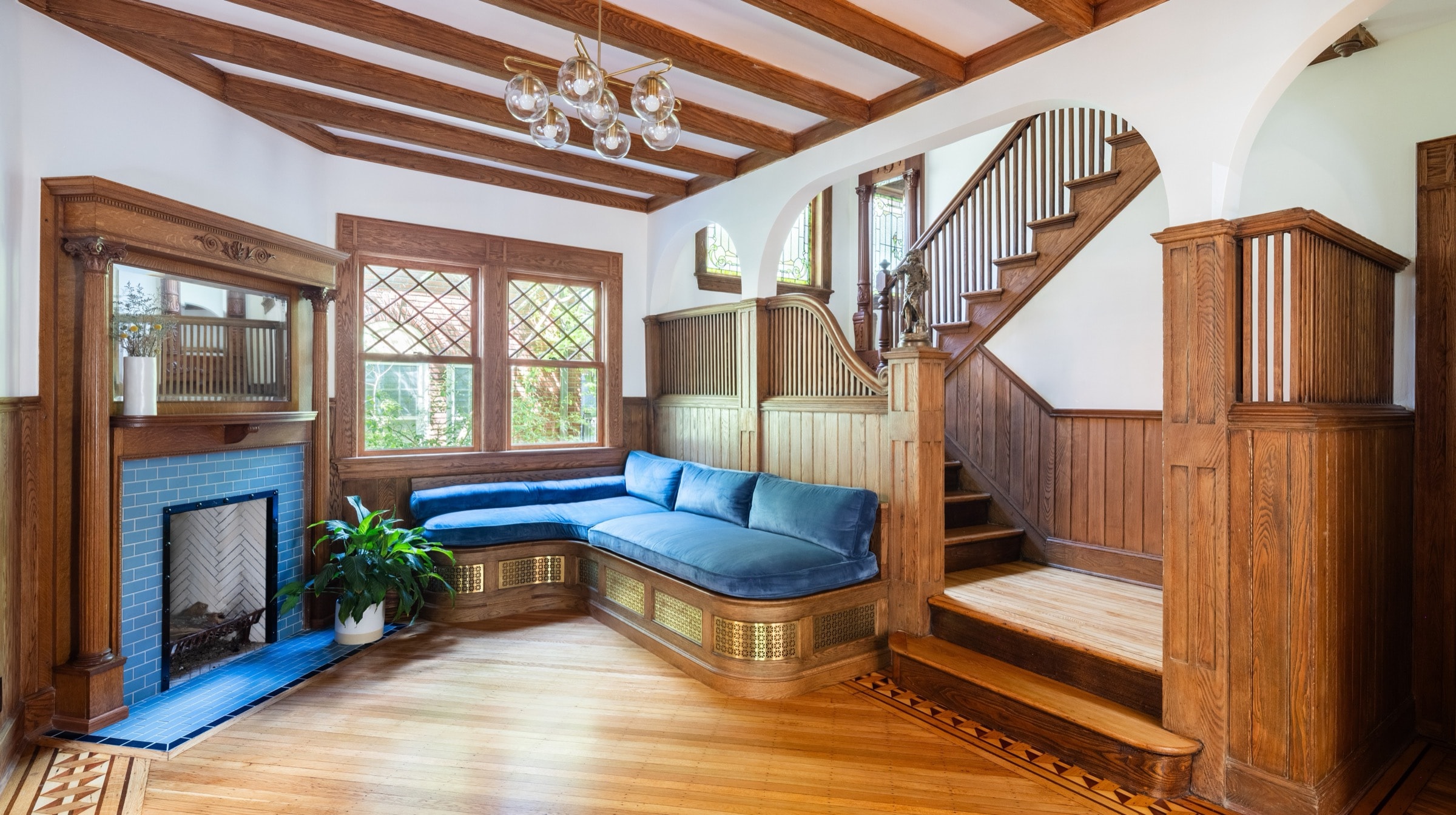
In 2020, we prioritized restoring this home’s historic integrity, focusing on original woodwork and essential upgrades. By removing a central powder room, we reclaimed the kitchen’s layout to highlight original leaded glass windows. This structural shift enabled a new primary suite and a hidden den without compromising the home’s character. While adding custom mosaics and millwork, we left the upper floors largely untouched to honor the architecture. Through meticulous craftsmanship, the GC celebrated every historic detail, ensuring modern systems blend seamlessly with the home’s timeless design.
Contractor: Wild Stone Structural Engineer: Celin Munoz Consulting Engineer, P.C.MEP Engineer: Bendix Engineering, PCPhotographer: Bridgit Beyer
Ditmas Park
https://aiabrooklyn.org/wp-content/uploads/bknow/details/20260310_Ditmas%20Park%20Renovation.jpg
 015
015
M. Todd Architect | CEO Michelle Todd
Ridges Residences
#Community #Materials #Resilience
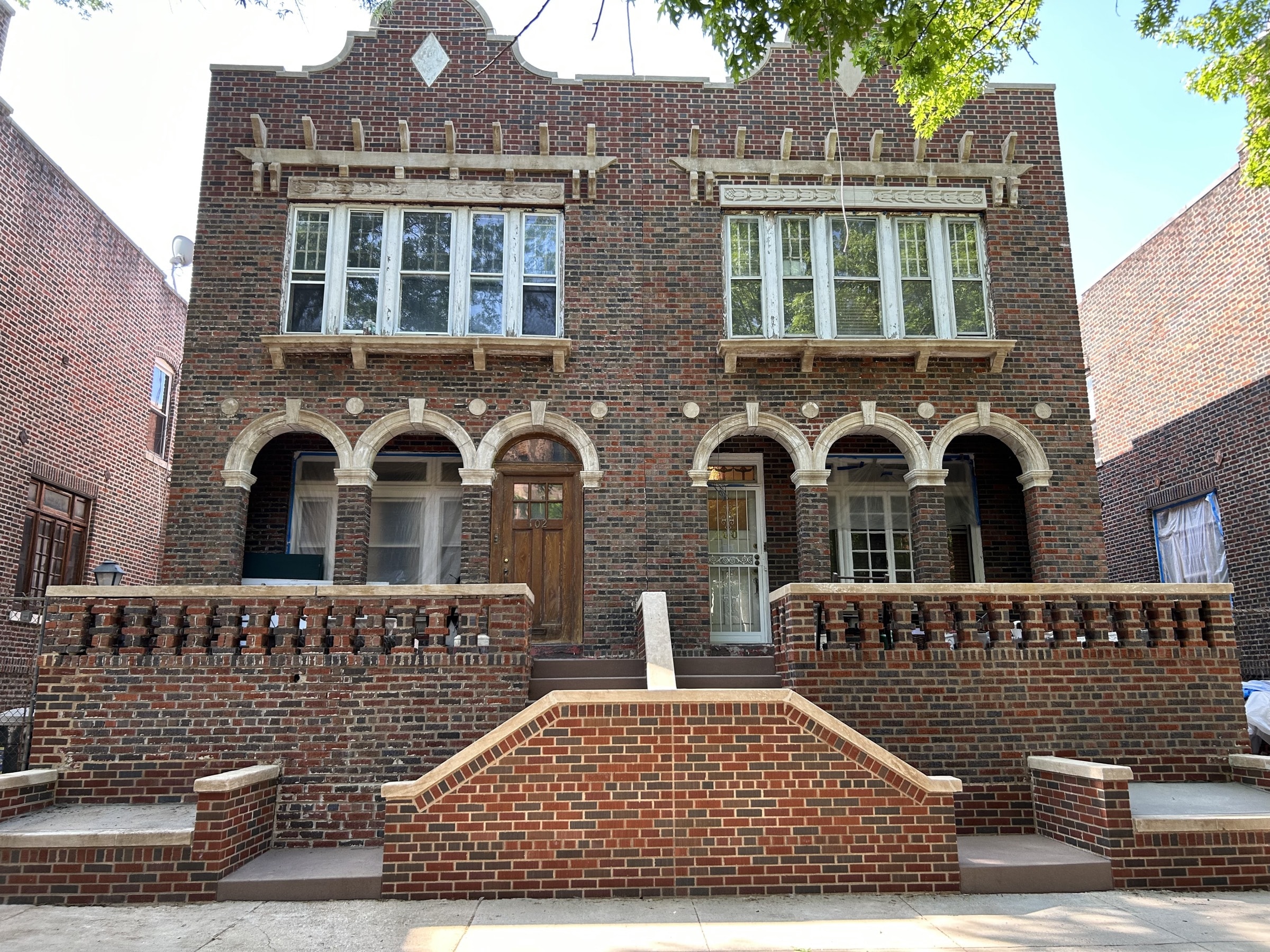
Winner of the highest honor from the New York Landmark Conservancy this project delivered a comprehensive technical restoration of two 1919 Spanish Renaissance residences located in Stuyvesant Heights Historic District. Addressing masonry buckling and structural cracks, the intervention replaced non-compliant wood framing with a new steel structure and rebuilt brick-walled parapets and stoops. The building envelope was secured by replacing roofing systems and historical windows, while removing rear stucco to repair original brickwork. Restoration of the signature triple-arched loggias culminated in theinstallation of custom-carved limestone elements, precisely replicating original floral and pineapple motifs to ensure the long-term structural and aesthetic integrity of these rare architectural assets.This restoration fits the Brooklyn NOW theme by exemplifying how the preservation of historic fabric is a vital, active component of the borough’s current evolution. Utilizing adaptive reuse to protect existing housing stock and honoring the long-term stewardship of Brooklyn’s residents.
Naim Construction
Stuyvesant Heights Historical District
https://aiabrooklyn.org/wp-content/uploads/bknow/details/RIDGES%20RESIDENCES_BK%20NOW%20PRESENTATION_APRIL%202026.jpg
 016
016
Ines Leong
Gowanus Canal: In Transition
#Community #Live
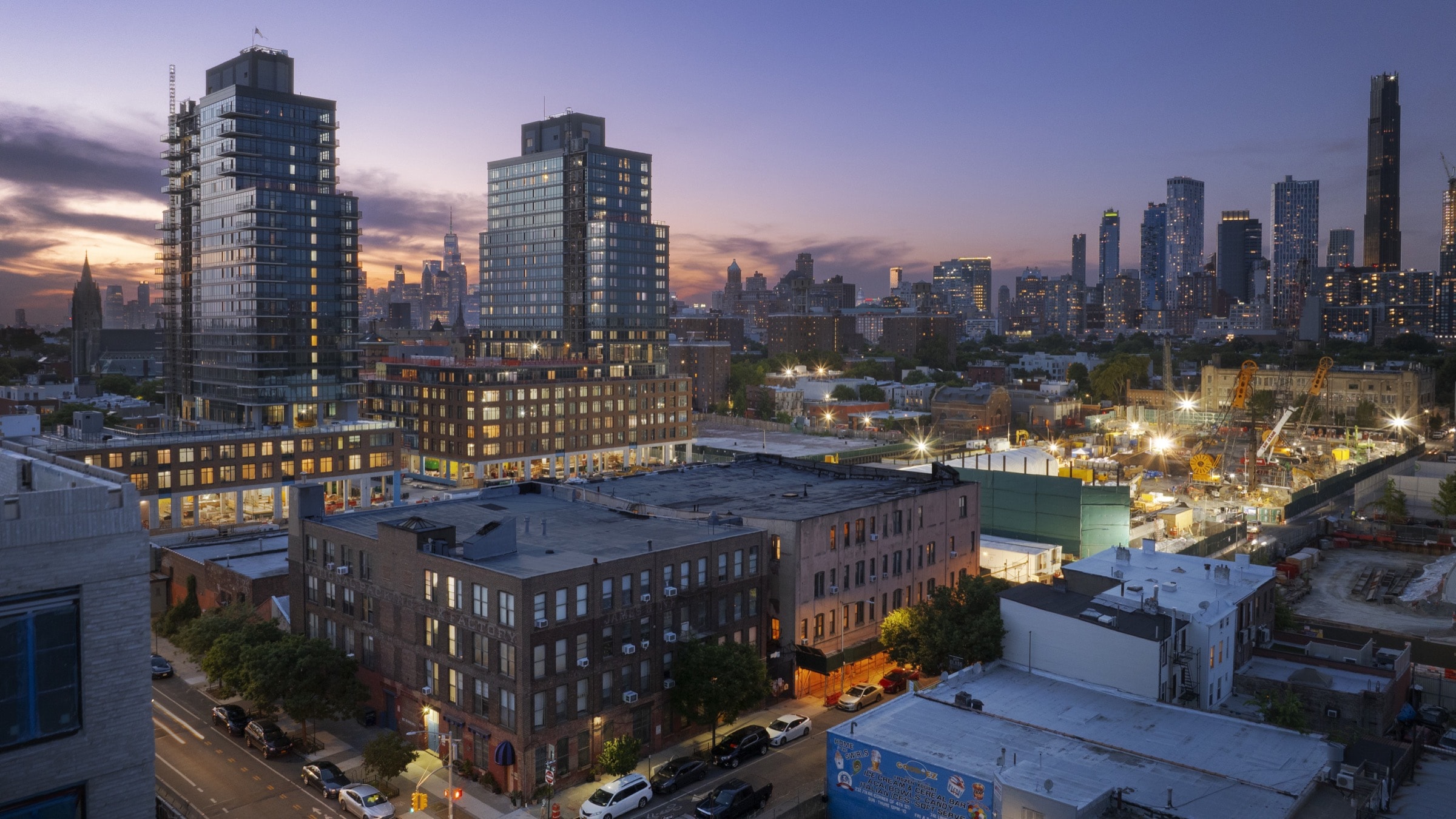
This project offers a rare aerial perspective on the rapid transformation of the Gowanus Canal waterfront following the 2021 neighborhood rezoning. While much architectural documentation focuses on completed buildings, this series captures the transitional moment when demolition, construction, and redevelopment unfold simultaneously. The photographs reveal a landscape where remnants of Brooklyn’s industrial past coexist with the emerging residential fabric that will shape the neighborhood’s future.
Photographer: Ines Leong
Gowanus Brooklyn
https://aiabrooklyn.org/wp-content/uploads/bknow/details/GowanusCanal-InTransition.jpg
 017
017
Alexandra Barker
City Kids Education Center
#Community #Learn #Play
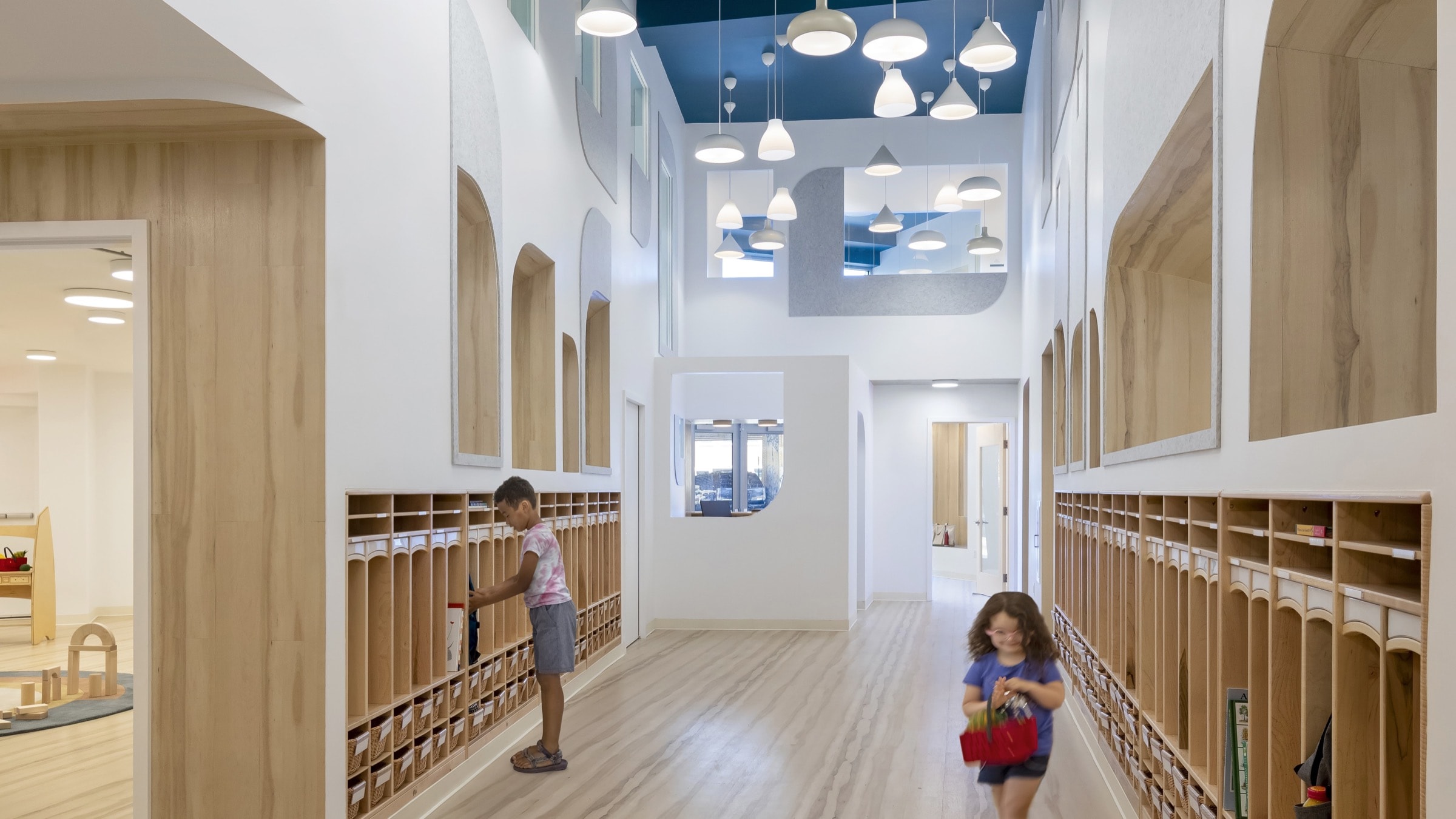
City Kids is a preschool and after-school program in Williamsburg, Brooklyn, organized around a double-height courtyard gathering space illuminated by a storefront window. A thickened wall integrates the reception desk, storage cubbies, and access to six preschool classrooms. Interior façade windows allow borrowed light to reach surrounding spaces on both levels while providing visual connection for children and teachers.Classrooms are linked by double doors and shared areas such as bathrooms and play sinks. Half-height walls create visual privacy for children while allowing teachers to supervise.The after-school program for elementary students is reached via stairs at reception. Openings at different heights frame views to the preschool level and street. Lockers wrap the courtyard, forming a playful city skyline. Upstairs, specialized rooms for cooking, theater, STEM, and movement line the hallway, while a lounge with bleacher seating supports informal gathering beneath a lively ceiling of varied light fixtures.
PSG Construction
Williamsburg, Brooklyn
https://aiabrooklyn.org/wp-content/uploads/bknow/details/City%20Kids%20-%20Board%20Layout.jpg
 018
018
Dameron Architecture, Chris Dameron and Emily Anderson
Carroll Hall Garden and Event Space
#Community #Craft #Materials
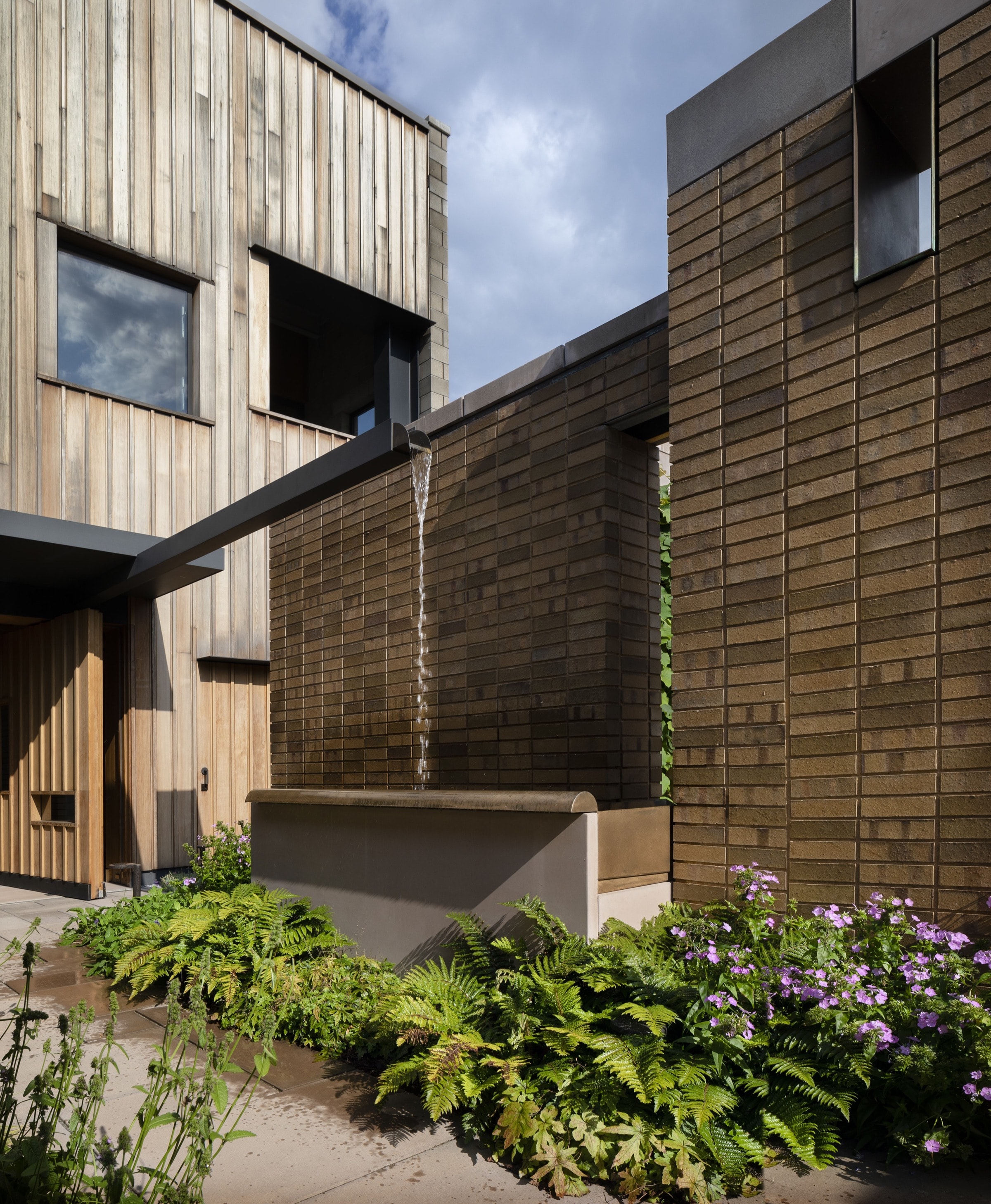
Carroll Hall is a walled botanical garden and collection of buildings exploring material reuse, ecological time, and the interdependence of living systems. Designed by Dameron Architecture, the buildings were reconstructed from demolished remains — brick, timber, and stone reclaimed on site, kept from waste and recomposed. The history of labor is legible in the walls.Visitors move through spaces that reveal themselves slowly: mosaic murals, moving walls, secret doors. The buildings are naturally ventilated through an automated window system — the first of its kind approved in New York City.The planting is deliberate: an idealized woodland of species once found at the edges of fields and farms, now returned. Birds, bees, and butterflies are invited. Rainwater collected from roofs drains to an underground cistern, powering the fountains and irrigating the plants.The architecture, plants, animals, and people each depend on the others. Carroll Hall makes that interdependence visible and inhabitable.
Silman Engineering, Sherwood Engineering, Kohler Ronan Engineers
Bushwick
https://aiabrooklyn.org/wp-content/uploads/bknow/details/Carroll%20Hall%20Gardeen%20Exhibition%20Board.jpg
 019
019
Pliskin Architecture: Barak Pliskin, Nishant Jacob, Samuel Warden-Hertz
Leonard Street Rowhouse
#Craft #Family #Live
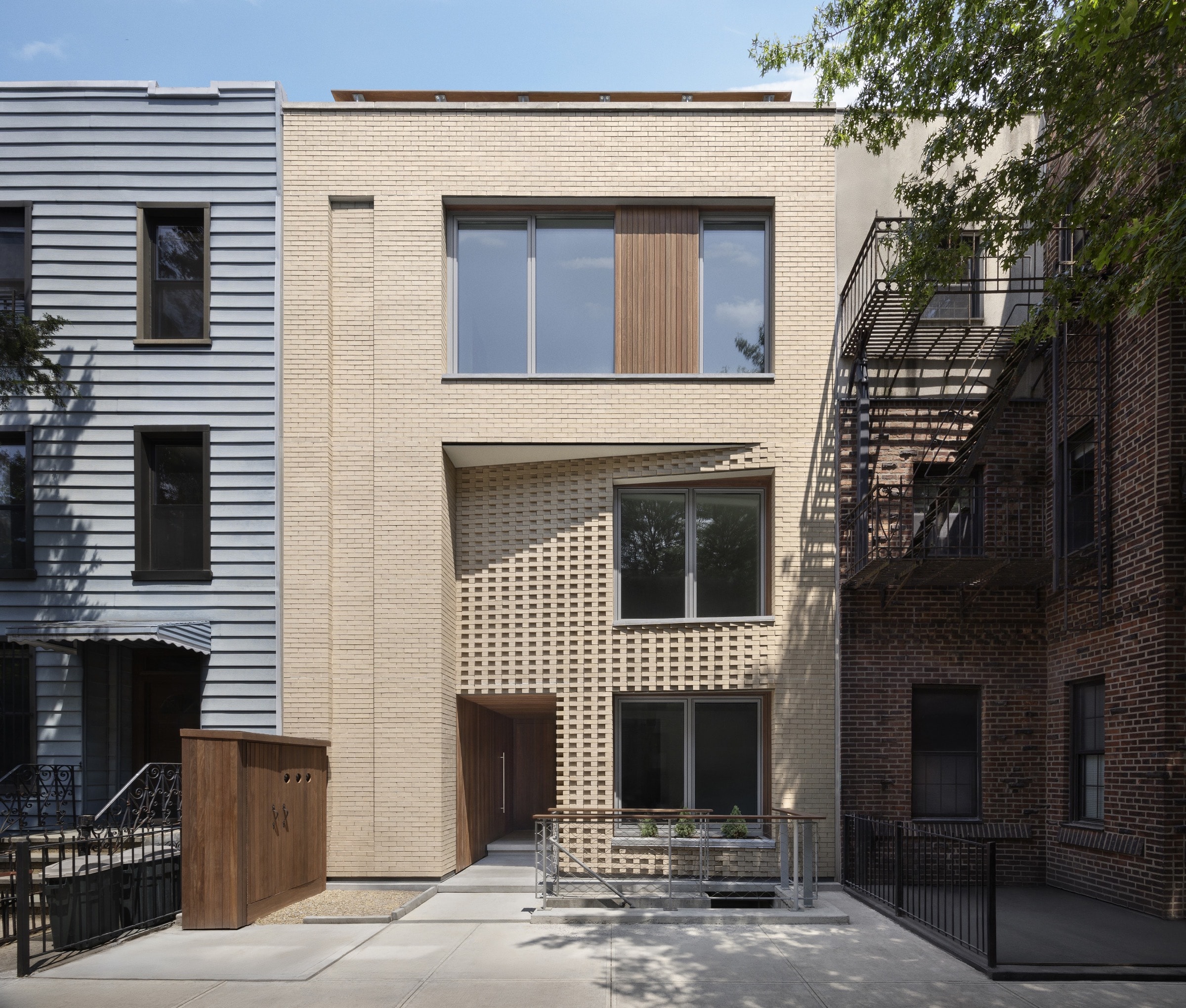
A penthouse and townhouse meet within the corbeled brick facade of an intimate, distinct rowhouse in Greenpoint. On the exterior, a modular brick unit is transformed and welcomes people into a warm wood threshold – a material found repeatedly inside that unites the interior and exterior. Both the penthouse and townhouse support family living, and articulate recognizable New York City typologies – the “penthouse”, with its views and connection to the sky – the “townhouse”, rooted in the ground, with opportunities for integrating with nature. The exterior mass subtly defines these two homes with a gentle push and pull of masonry, relief, and shadow. The building borrows from the residential vernacular of Brooklyn homes from the past two centuries – masonry façade, punched openings, a shared stoop, wood accents, and planters create a façade that is both contemporary and familiar, affording two families a home that is distinct and integrates into its context.
Photography – David Mitchell, Evan Joseph, Barak Pliskin, Styling - Monomid Design Studio, Client – LTNG, General Contractor - Trave, Structural Engineering / MEP Engineering – Sharon Engineering, Expediter – KM Associates
Greenpoint
https://aiabrooklyn.org/wp-content/uploads/bknow/details/Leonard%20Street%20Rowhouse%20Board%20with%20credits.jpg
 020
020
Studio Cadena - Benjamin Cadena
Domino Square
#Community #Play #Resilience
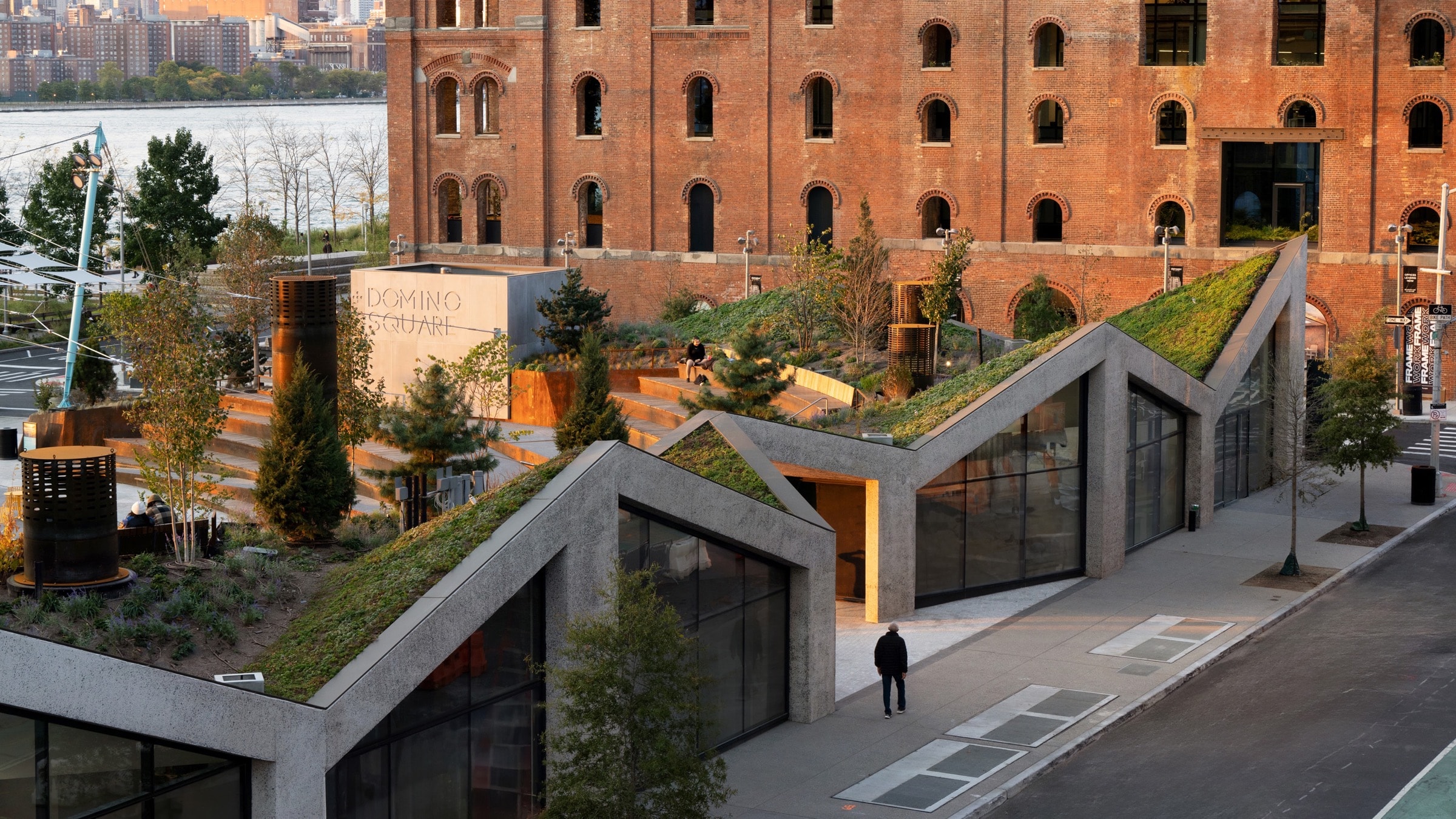
Domino Square is a layered hybrid of architecture, landscape and infrastructure that establishes a vibrant public space at the heart of Brooklyn’s waterfront.The one-acre site is a civic amenity anchoring the post-industrial redevelopment of the former Domino Sugar refinery. The architecture shapes the topography of the park above, creating a central public square at its center while concealing a water treatment facility for the community in its basement below. At street level, the building defines a porous edge, with piers of varying sizes lining three sides of the block to form a loggia that houses retail spaces and entry points to the park. This colonnade offers a soft, permeable edge, inviting the public in while providing a sense of enclosure and intimacy within the outdoor civic space.Conceived as scaffolding for community activity, it is a resilient hybrid space designed to enrich contemporary urban life.
Field Operations - Landscape Architect, Two Trees - Builder/General Contractor/Client
Williamsburg
https://aiabrooklyn.org/wp-content/uploads/bknow/details/Domino%20Square%20Exhibition%20Board.jpg
 021
021
Laura Heim, FAIA LEED AP, Principal, Laura Heim Architect PLLC
Scheuer House of Coney Island
#Community #Equity #Live
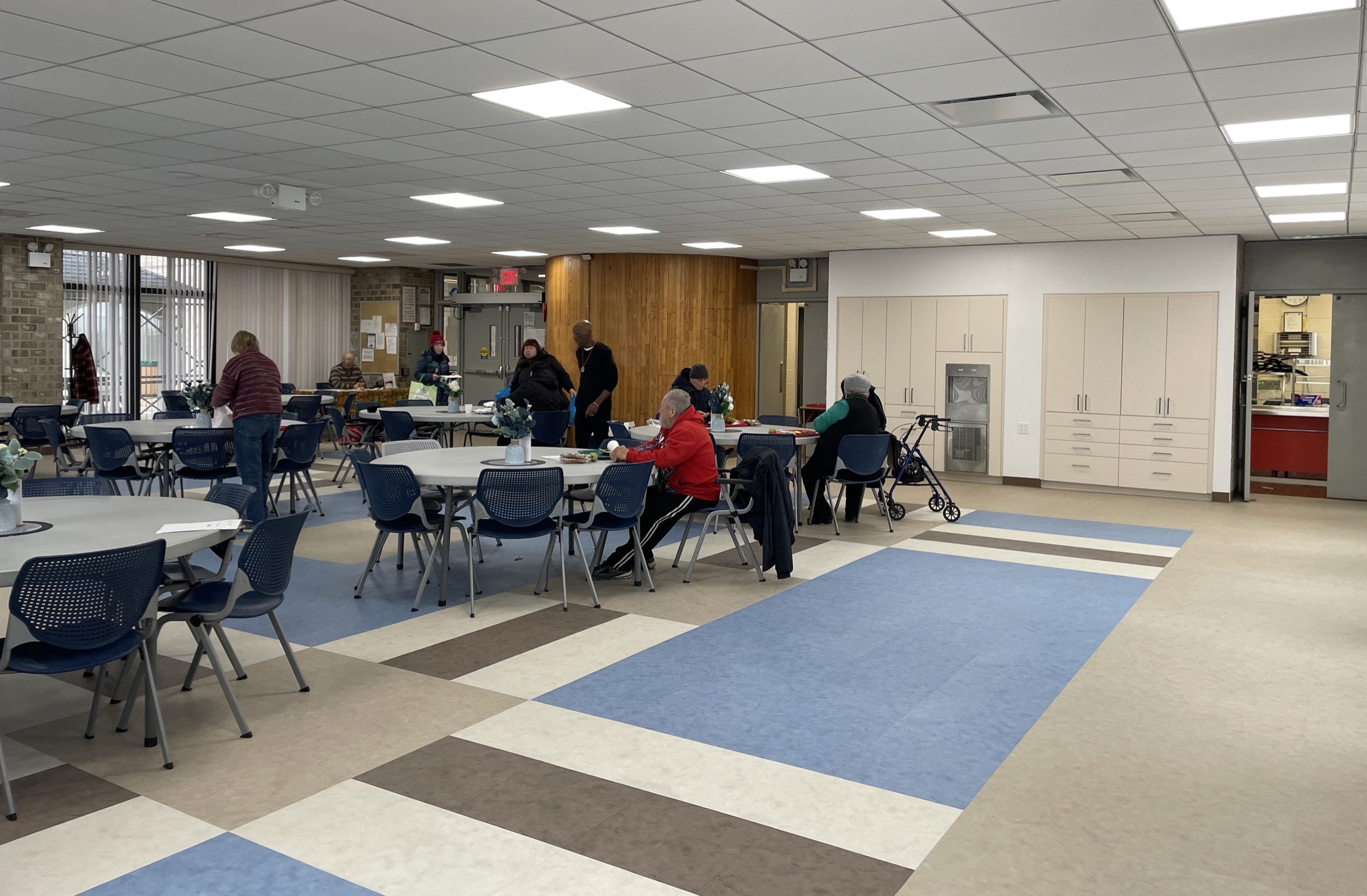
This senior affordable housing building, managed by the Jewish Association Serving the Aging (JASA), one of NYC’s largest non-profit agencies serving older adults, is dramatically located with ocean views in Coney Island. The 1970’s building required a complete ground floor redesign, in two phases, to provide a more comfortable, functional and contemporary space for seniors to circulate and gather. The community room’s flooring reflects the beach location, weaving blue (water) and beige (sand) to create a bold tartan grid, while the lobby responds with blond wood panels, wavy white tiles and gray driftwood-like wainscot tiling. JASA’s Centers’ mission is to provide activities to encourage seniors stay healthy and engaged. With the extensive renovations, these public spaces have been brought to new life!
Phase I: Barami Construction Group, Completed 2023; Phase II: G-Net Construction Corp., Completed 2026
Coney Island, Brooklyn, NY
https://aiabrooklyn.org/wp-content/uploads/bknow/details/Scheuer%20House%20of%20Coney%20Island%20Exhibit%20Board.jpg
 022
022
Paul A. Castrucci Architects. Key Team Members: Grayson Jordan, Rahul Shah
Bethany Senior Terraces
#Equity #Live #Resilience
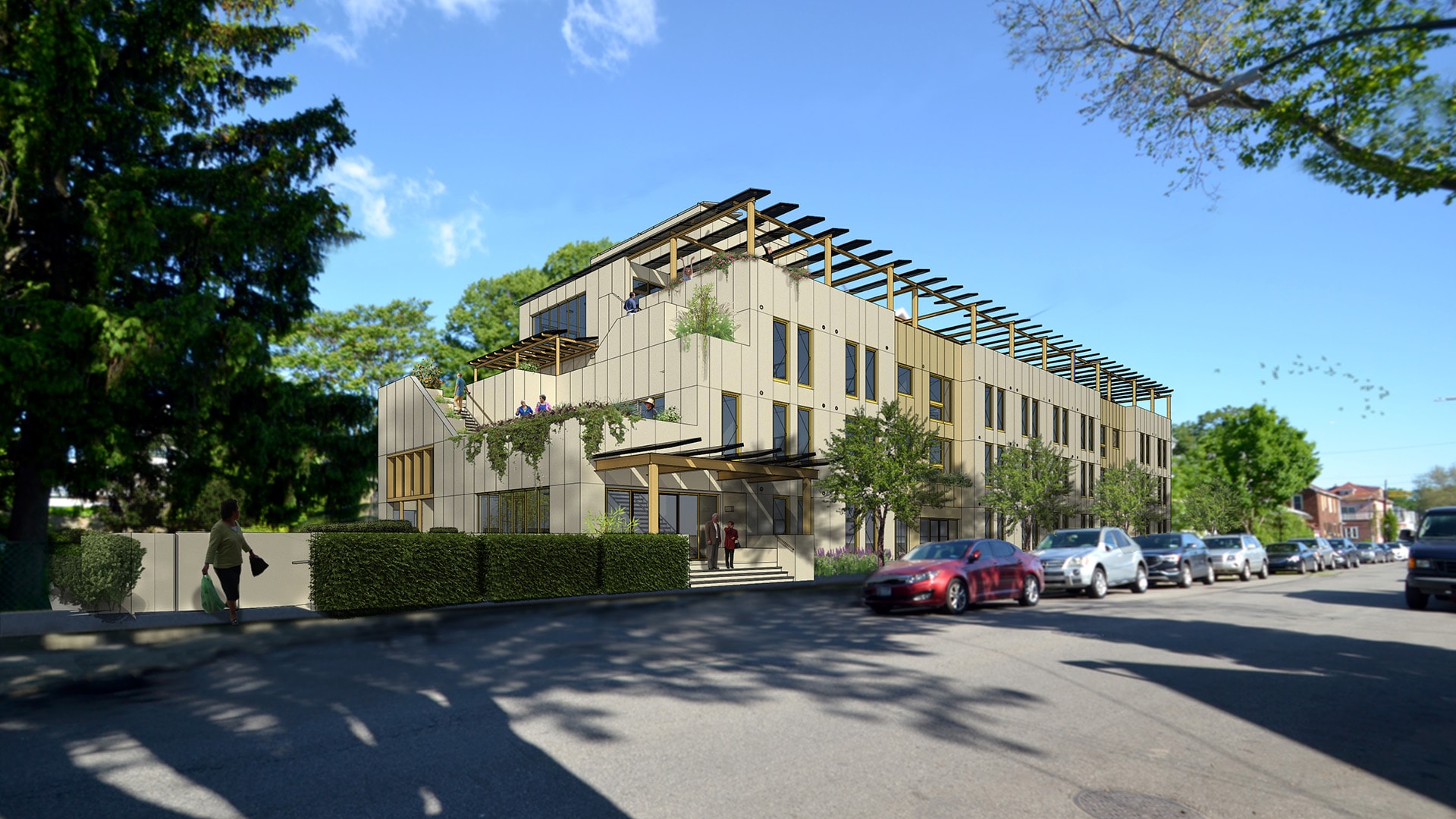
When Riseboro Community Partnership approached Paul A. Castrucci Architects with this project, their goal was ambitious: prove Passive House can be achieved affordably through modular construction. Bethany Terraces proves just that.As NYC’s first modular Passive House building, this 4-story, 57-unit, all-electric senior housing project demonstrates this model works. By completing 60% of construction off-site, the team cut 8 months from the schedule and saved $800,000 in financing costs. A 130 kW solar array powers common areas, ensuring long-term affordability for seniors on fixed incomes.Beyond energy, health and community resources include cascading terraces, a greenhouse, and test kitchen, making it a great place to live for a good long time. Bethany Terraces stands as a replicable blueprint proving that high-performance, affordable housing can and should be built at scale.
Riseboro Community Partnership – Developer, Briarwood Organization – General Contractor, Whitley Manufacturing East – Modular Fabricator, New York Engineers – Mechanical, Electrical, and Plumbing Engineer, Murray Engineering – Structural Engineer, Zero Energy Design – Passive House Consultan, Bright Power – PHIUS Verifier & Building Commissioning, OKO Farms – Greenhouse & Aquaponics Farm Program
East Flatbush
https://aiabrooklyn.org/wp-content/uploads/bknow/details/Bethany%20Senior%20Terraces%20Exhibition%20Board.jpg
 023
023
Sasha Chavchavadze
Battle Pass/Revolution II
#Community #Learn #Materials #Resilience
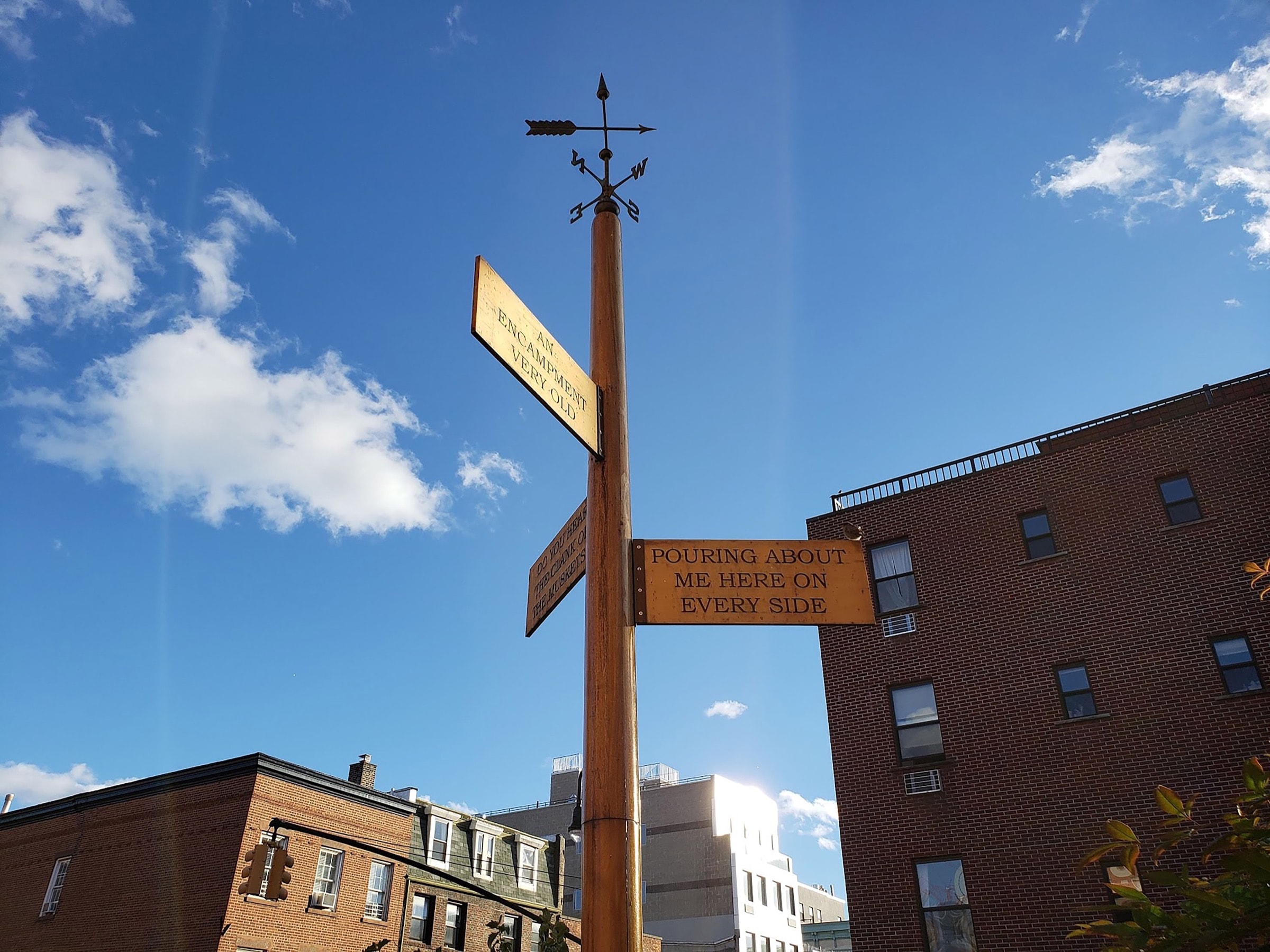
Created by Gowanus-based artist Sasha Chavchavadze, Battle Pass/Revolution II was a public art installation commissioned by the NYC DOT Public Art Program. The installation explored conflict and memory by marking sites of the often-forgotten Revolutionary Battle of Brooklyn. It included a 16-foot mahogany pole inspired by “Liberty Poles,” shipmasts that were planted in the ground by revolutionaries as a symbol of resistance. Positioned next to the F-train subway entrance, the installation became a vibrant Brooklyn placemaker, suggesting resilience and survival at times of social upheaval.
Commissioned by NYC DOT Urban Art Program
Corner of Bergen Street and Smith Street, Boerum Hill, Brooklyn
https://aiabrooklyn.org/wp-content/uploads/bknow/details/Sasha%20Chavchavadze_Battle%20PassRevoultion%20II_revised%20storyboard.jpg
 024
024
Brendan Coburn, FAIA, Jenna Balute, Nadia Johnson
Cobble Hill Greek Revival
#Craft #Family #Live
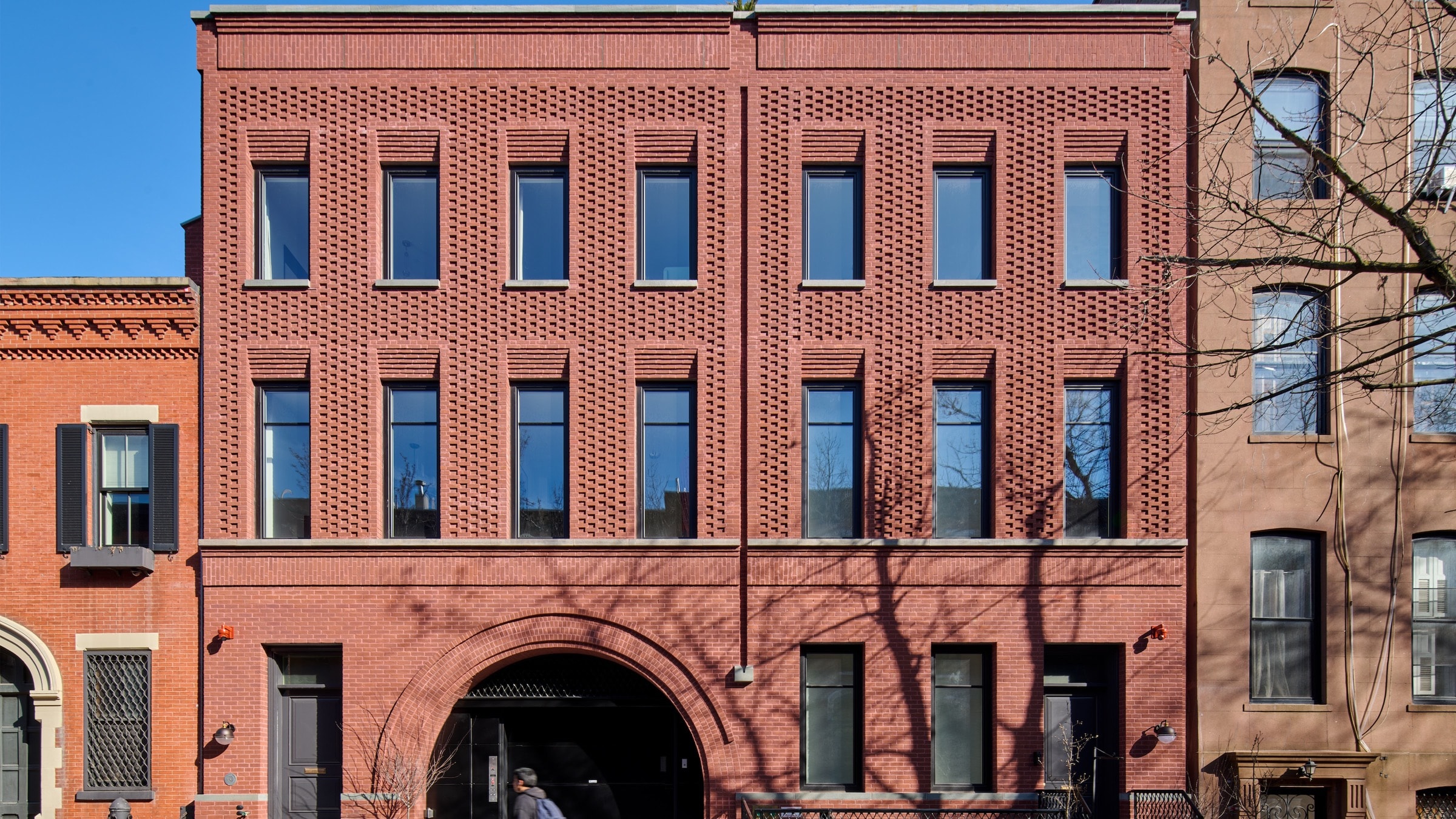
Built in the 1840’s, this Greek Revival rowhouse in the Cobble Hill Historic District is emblematic of the neighborhood’s 19th-century architectural heritage. Altered though generations, the house had lost its defining details and suffered significant structural failure, including a collapsing rear wall and deteriorated extension.We restored the home’s proportions and introduced a new two-story addition that extends into the garden, marked by a sculptural bay window. A dome-crowned spiral stair connects the parlor and the garden levels, inspired by the clients’ interest in ancient Roman architecture. It’s minimalist mahogany form echoes the surviving Queen Anne staircase, creating a quiet dialogue between old and new. Above, a recessed penthouse with a terrace offers a private retreat while preserving the historic cornice line.
Contractor: Chilmark Builders, Inc.; Structural Engineer: Dominick R. Pilla Associates; Interior Design: Augusta Hoffman; MEP Engineer: Charles G. Michel Engineering PC
Cobble Hill Historic District
https://aiabrooklyn.org/wp-content/uploads/bknow/details/BLYN-NOW%20POSTER_COBBLE%20HILL%20GREEK%20REVIVAL.jpg
 025
025
Brendan Coburn FAIA, Andrew Acevedo, Franklin Chuqui, Henry Aguilar, Mario Joya
Brooklyn Heights Townhouses
#Community #Craft #Materials
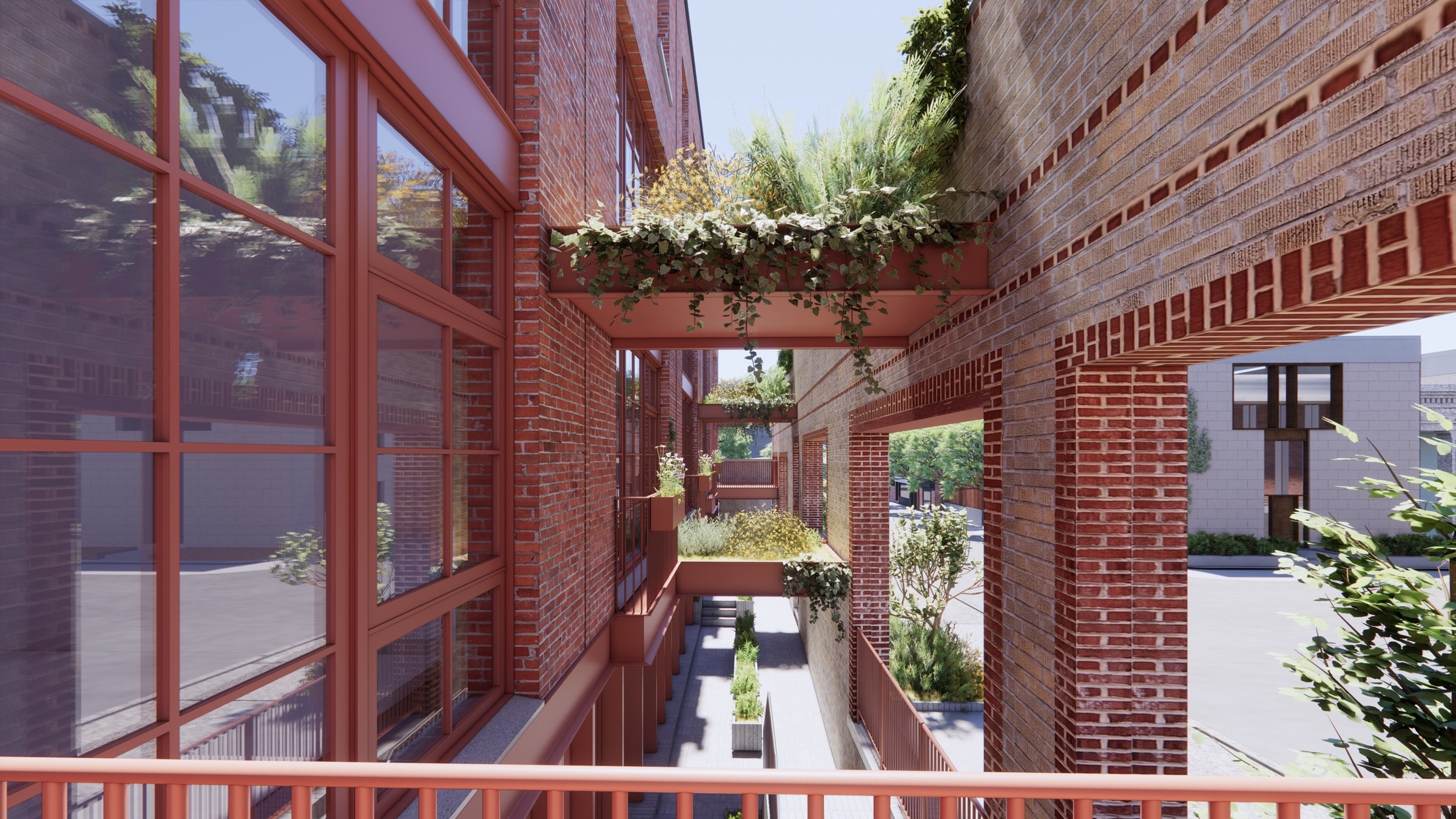
Commissioned by a private developer, we designed a pair of new single-family rowhouses on one of the few remaining vacant lots in the Brooklyn Heights Historic District. The 50-foot wide site was divided into two unequal parcels—27.5 and 22.5 feet—prompting a “Mansion House” strategy in which the two private residences read as a single, unified architectural composition. Set on an eclectic stretch of Hicks Street, the project responds to a streetscape shaped by Greek Revival, Italianate, and Queen Anne rowhouses, historic carriage houses and the neighborhoods rigorously neoclassical firehouse.
Builder: Brodmore, LLC, Structural Engineer: BGM Engineering LLC, MEP Engineer: Chosen MEP Engineering
Brooklyn Heights Historic District
https://aiabrooklyn.org/wp-content/uploads/bknow/details/BLYN-NOW%20POSTER_BKLYN%20HEIGHTS%20TOWNHOUSES.jpg
 026
026
Brendan Coburn FAIA, Andrew Acevedo, Sara Najar, Sam Friedlander
State Street Condominium
#Community #Craft #Materials
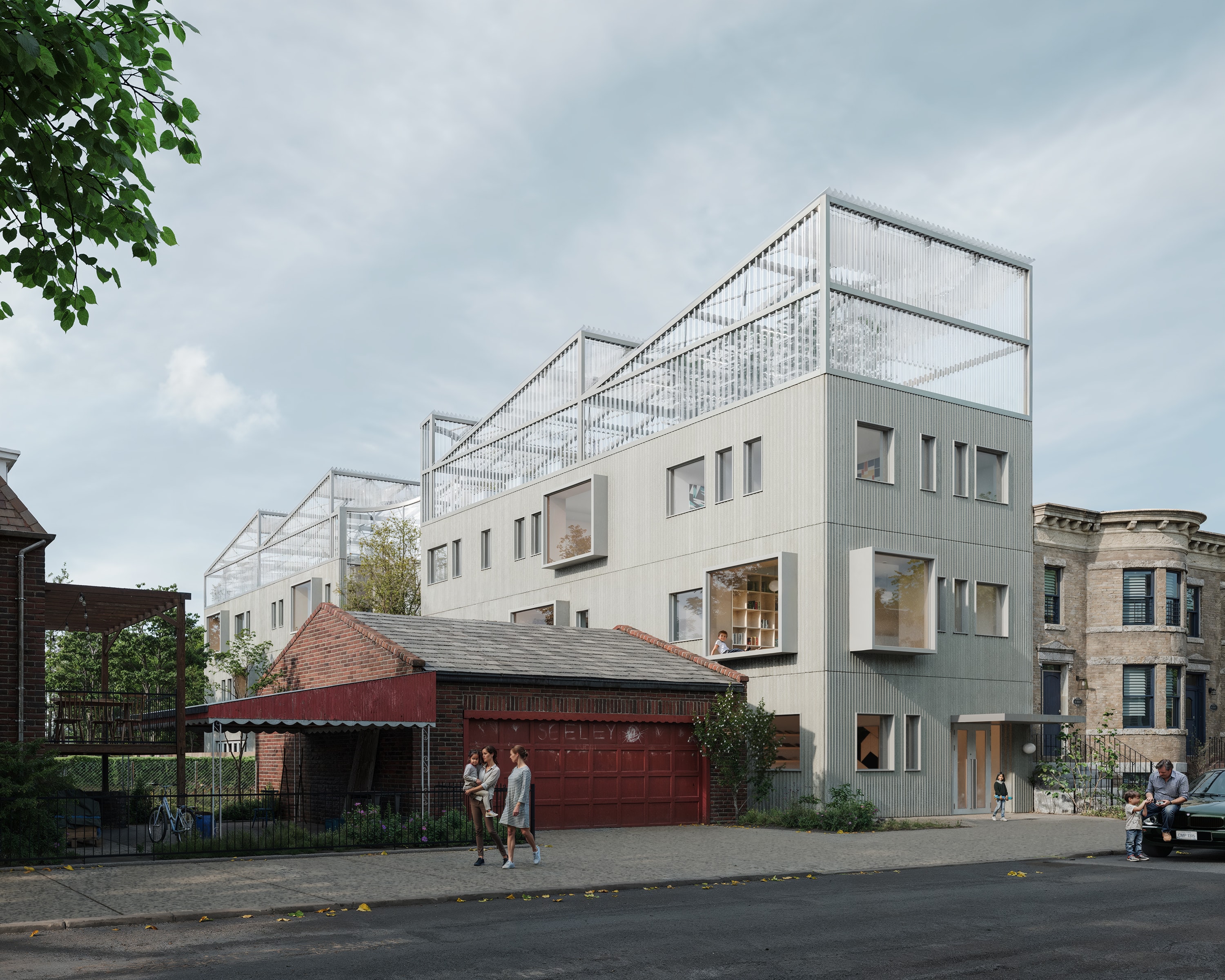
The architectural design transformed 38 State Street, a 1920s Art Deco garage and former IRT trolley shed, into a five-unit condominium within the Brooklyn Heights Historic District. The project preserves the historic vehicle-scaled garage façade while introducing five vertical townhouse residences behind it, confronting a central challenge: how to reconcile the monumental proportions of the existing structure with a new set of human-scale dwellings that bear no alignment in height, rhythm, or proportion.Rather than forcing a correspondence, the design separates the historic façade from the new construction, inserting a layered zone of terraces and planters between them. This interstitial space stabilizes the historic wall, creating inhabitable outdoor rooms that mediate between the two scales.The residences are conceived as loft-like dwellings. The south-facing façade adopts a more civic scale, directing views toward the garden and harbor while presenting a strong architectural gesture to Atlantic Avenue and the BQE.
Builder: Brodmore LLC
Brooklyn Heights Historic District
https://aiabrooklyn.org/wp-content/uploads/bknow/details/BLYN-NOW%20POSTER_STATE%20STREET%20CONDOMINIUMS.jpg
 027
027
Fernando Fisbein Architect
One World School and Community Center
#Community #Learn #Play
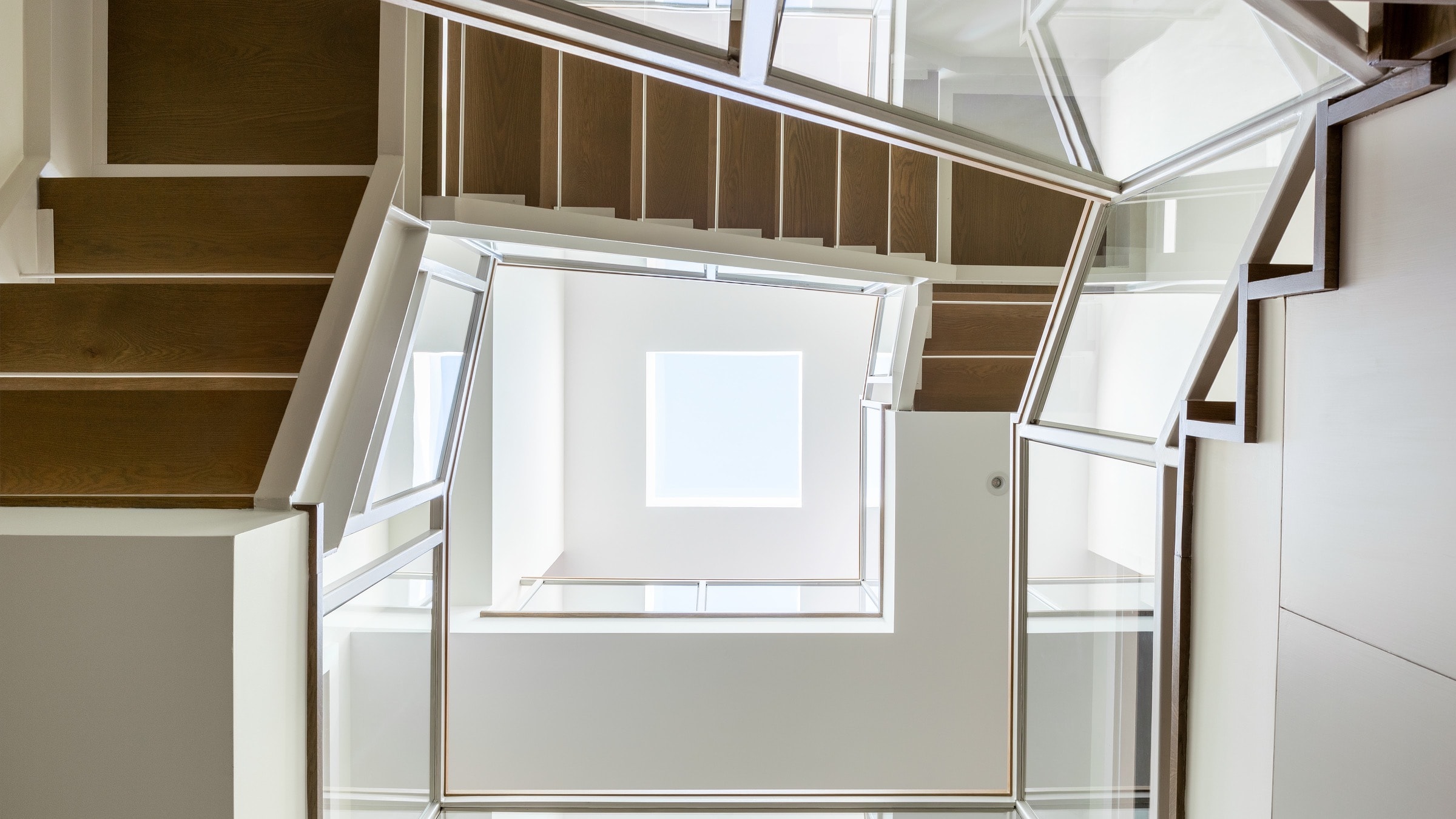
The design for this Spanish-immersion school is shaped by its Brooklyn site. The building preserves existing mature trees, occupying only the area outside their driplines. “Connecting slices” form around them to bring light into the building, while creating visual connection between classrooms.The building’s footprint was reduced to provide maximum area for outdoor activities. Natural playgrounds diversify the student’s experience—concentrated sensory exploration under the trees and gross motor activities at the rear yard. A rooftop greenhouse offers space for “growing in community.” In this learning lab, students and visitors can engage with local, sustainable food production.Inside, bright, interconnected spaces feature natural materials. A series of “activation elements” foster a sense of belonging and dovetail with the school’s core values of curiosity, openness, stewardship, imagination, and collaboration. Colors, lighting, materials, wayfinding, and technology are designed for neurodiversity, ensuring that everyone, regardless of neurological profile, is set up for success.
Structural: Murray Engineering, MEP: ANZ Engineering, Sustainability: Atelier Ten, AV/IT/Security/Acoustics: Shen Milsom & Wilke, Geotechnical: Ancora Engineering, Civil: Derosier Engineering, Lighting Design: Dot Dash, Landscape Design: LVF, Landscape Architecture, Cost Estimate: Ellana Construction, Code/Expediting: Code Consultants, Renderings: Campo Viz, General Contractor: Consigli Construction
Windsor Terrace
https://aiabrooklyn.org/wp-content/uploads/bknow/details/One%20World%20School%20and%20Community%20Center_Fernando%20Fisbein%20Exhibit.jpg
 028
028
Kimberly Neuhaus AIA, Bijan Haghnegadar, Karin Ames
Clinton Hill Carriage House
#Craft #Family #Live
Originally built in the 1880s as a horse stable for a neighboring mansion, this late-19th-century vernacular masonry structure was later converted into an automobile garage with a chauffeur’s quarters above, before ultimately being rehabilitated into a single-family home.When the property came to market, a neighborhood family saw its potential. The challenge was to transform a raw garage and a deteriorated apartment into a light-filled residence large enough for a family of four, while also respecting the front facade’s historic qualities and the low-rise scale of the streetscape. While horse-drawn carriages and detached neighborhood garages have disappeared, this revitalized building endures as a reminder of an earlier era—thoughtfully reimagined for modern living and renewed for the generations ahead.
Builder: Pilaster Development, LLC; Structural Engineer: D'Huy Engineering, Inc.; MEP Engineer: Guth DeConzo Consulting Engineers
Clinton Hill Historic District
https://aiabrooklyn.org/wp-content/uploads/bknow/details/BLYN-NOW%20POSTER_CLINTON%20HILL%20CARRIAGE%20HOUSE.jpg
 029
029
Brent Buck Architects -- Staff: Brent Buck, AIA & Sarp Arditi, RA
Clinton Hill Apartments
#Community #Live #Materials
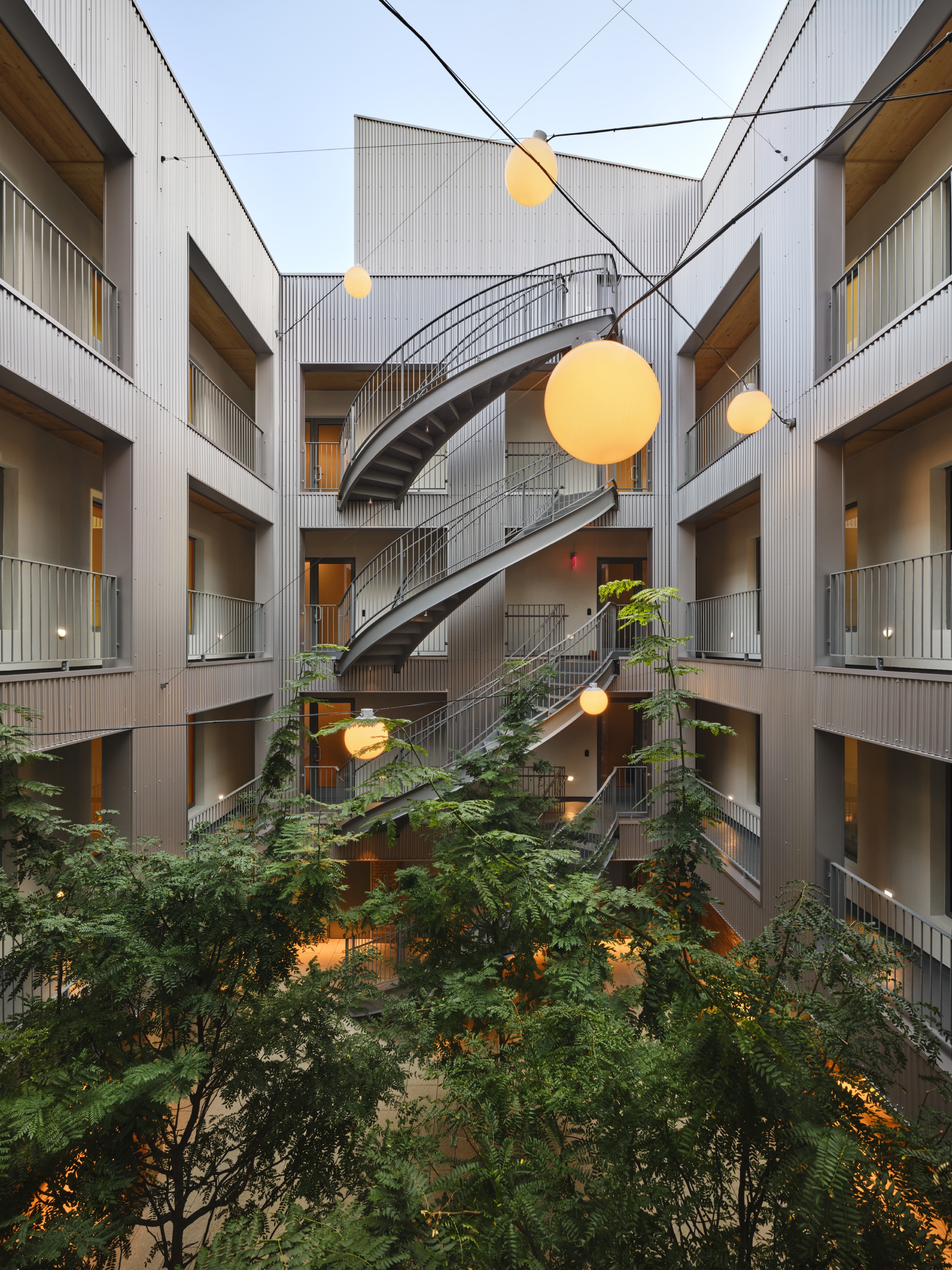
The latest Frame Home apartment building transforms a former parking garage, located on a tree-lined residential block in Brooklyn. At street level, a wood and glass block entry screen hints at Frame 122’s wooden structure and allows glimpses onto the central courtyard where dual exterior staircases lead to open-air walkways. Apartments ring the courtyard on all sides and each apartment features three solar exposures to maximize daylight and engagement with context. Mass timber serves as the structural system for the building; Cross Laminated Timber (CLT) panels support the floor and roof assemblies. CLT offers sustainability, biophilic qualities, and prefabricated efficiency, which reduced on-site construction. Unit interiors showcase the mass timber structure throughout. ERVs bring fresh air into each apartment and blower door tests ensured passive house standards were met. This project is New York City’s first Mass Timber project constructed under the 2022 NYC Building Code.
General Contractor: CM & Associates, Structural Engineer: Murray Engineering, PC, MEP+S Engineer: ANZ Consulting Engineering, SOE Engineer: Ancora Engineering, Landscape Architect: MKM Landscape Architecture, Code Consultant: William Vitacco Associates
Clinton Hill
https://aiabrooklyn.org/wp-content/uploads/bknow/details/Clinton%20Hill%20Apartments.jpg
 030
030
Key Team Members: Julie Nelson, Partner in Charge; Cindy Lordan, Project Manager; Matthew Richardson, Sustainability Director; Gerry Ende, Interior Designer; Marcel Perez-Pirio, Interior Designer
The Center for Fiction
#Community #Learn #Work
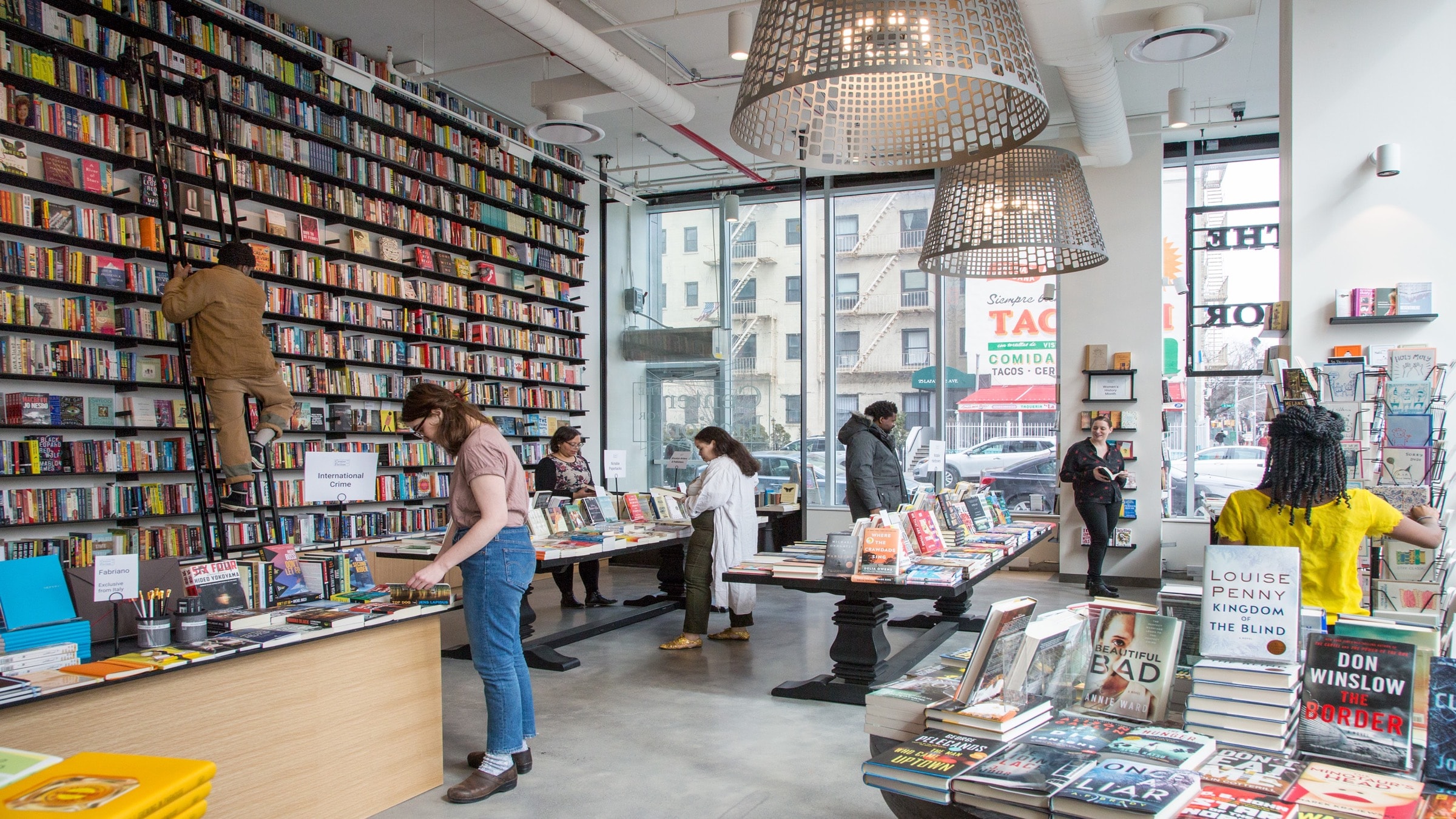
The Center for Fiction, founded in 1820 as the Mercantile Library, is the only organization in the United States devoted solely to the art of fiction. Relocated from Manhattan to Downtown Brooklyn, its headquarters provides 17,000 square feet of resource-rich space for literary professionals and enthusiasts. The program includes a circulating collection of more than 100,000 fiction titles, a bookstore, café, auditorium for programming, a writer’s studio, discussion rooms, and administrative offices.BKSK’s design vision creates a locally rooted framework for timeless stories—those already written, those being put to paper, and those yet to unfold between New Yorkers and the world around them. Books, text, and art are woven throughout the space to create an architecture of stories that is open and welcoming. Warm natural materials, 19th-century-inspired metalwork, and environmental graphics establish the Center as a vibrant “third place” for reading, research, and inspiration. The project is LEED Gold certified.
Developer - Jonathan Rose Companies; Base-Building Architect - Dattner Architects (with Bernheimer Architecture); Consulting Contractor - Archstone Builders; MEP Engineer - Dagher Engineering; Structural Engineer - Weidlinger Associates; Graphics - Doyle Partners; Lighting Design – HLB Lighting; AV - Cerami & Associates; Expeditor/Code Consultant – J.Callahan Consulting; Owner’s Rep - Séamus Henchy and Associates; Photography – Michelle Rose
Fort Greene, Brooklyn
https://aiabrooklyn.org/wp-content/uploads/bknow/details/The%20Center%20for%20Fiction%20Exhibition%20Board.jpg
 031
031
Yi Wang(Yione Studio), Wentao Guo
Staggering of Urban Lifestyles
#Community #Live #Resilience
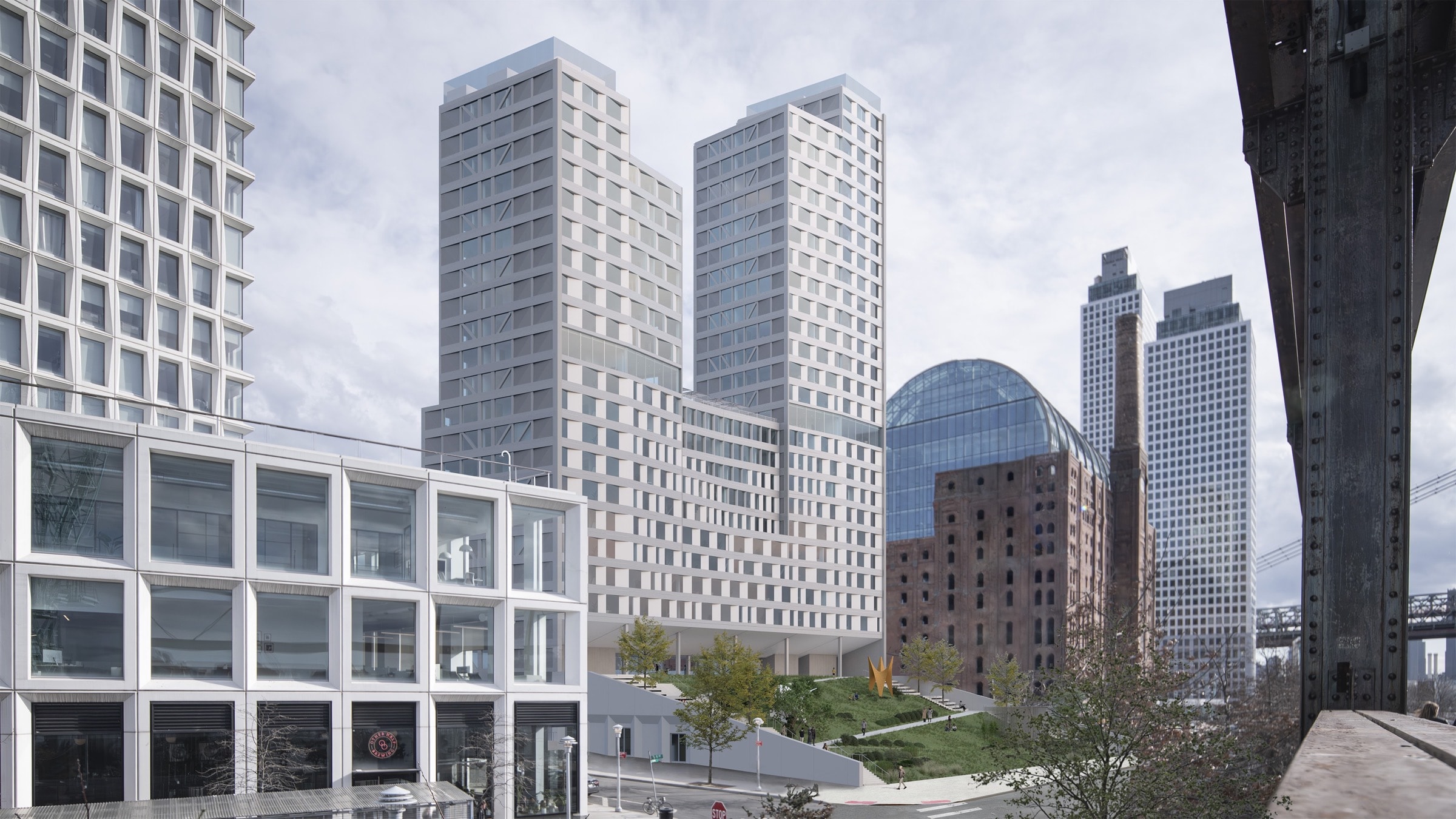
Staggering of Urban Lifestyles proposes a prefabricated residential high-rise that responds to Brooklyn’s evolving urban life. A system of staggered steel trusses in askew configurations and varying spans creates a compact floor-to-floor height, lightweight, rapidly deployable modular structure while offering open, flexible living spaces. The free plan accommodates both young residents and future family expansion, allowing homes to adapt over time for diverse lifestyles. Strategically floating above an extension of the Williamsburg Waterfront park, the massing responds to zoning, wind, and floodplain conditions. Its modular construction, varied unit types, and inserted public amenities foster contextual, community-centered urban living.
N/A
Williamsburg
https://aiabrooklyn.org/wp-content/uploads/bknow/details/Staggering%20of%20Urban%20Lifestyles.jpg
 032
032
W. Douglas Romines
Polhemus Townhouses
#Community #Craft #Family
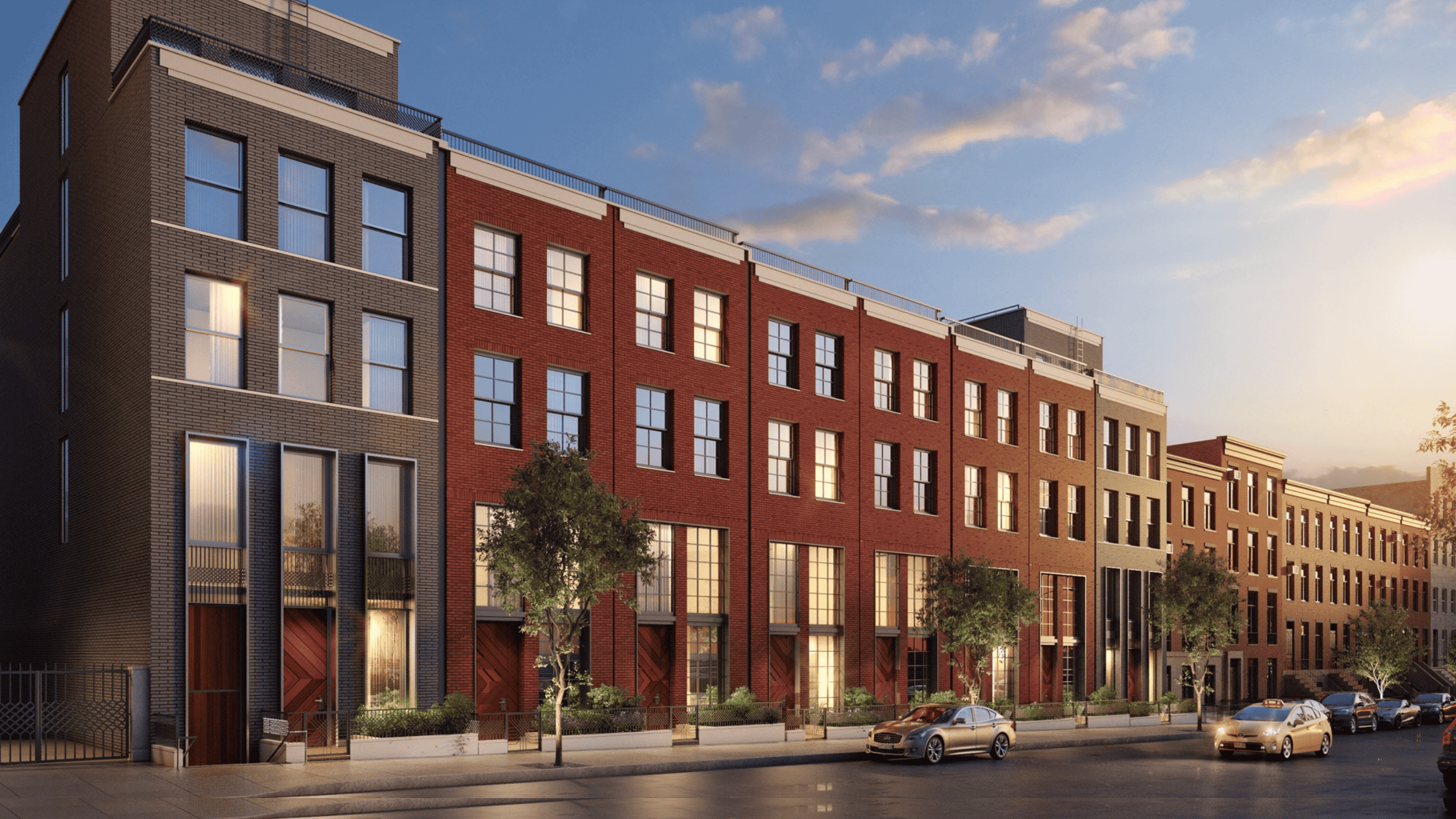
Eight ground-up townhomes that reinterpret the classic Brooklyn townhouse through a contemporary design lens that blends traditional materials with modern detailing. The design emphasizes timeless proportions, fine CRAFT, and a livable elegance tailored for modern FAMILY life and long-term adaptability. Together, these homes form a unified streetscape that brings a fresh architectural rhythm to a historic block in the Cobble Hill COMMUNITY—at once stately and thoroughly contemporary.
Project Team: ROMINES Architecture, Architect | Rodkin Cardinale, MEP Engineer | WSP Group, Structural Engineer | RA Consultants, SOE Engineer | Williams NY, Marketing | dslv, Decor
Cobble Hill, Brooklyn
https://aiabrooklyn.org/wp-content/uploads/bknow/details/Brooklyn%20Now_RA.jpg
 033
033
In Cho, Timothy Shields, Dr. Grecian Harrison
Boys and Girls High School Passive House Training Center
#Community #Equity #Learn
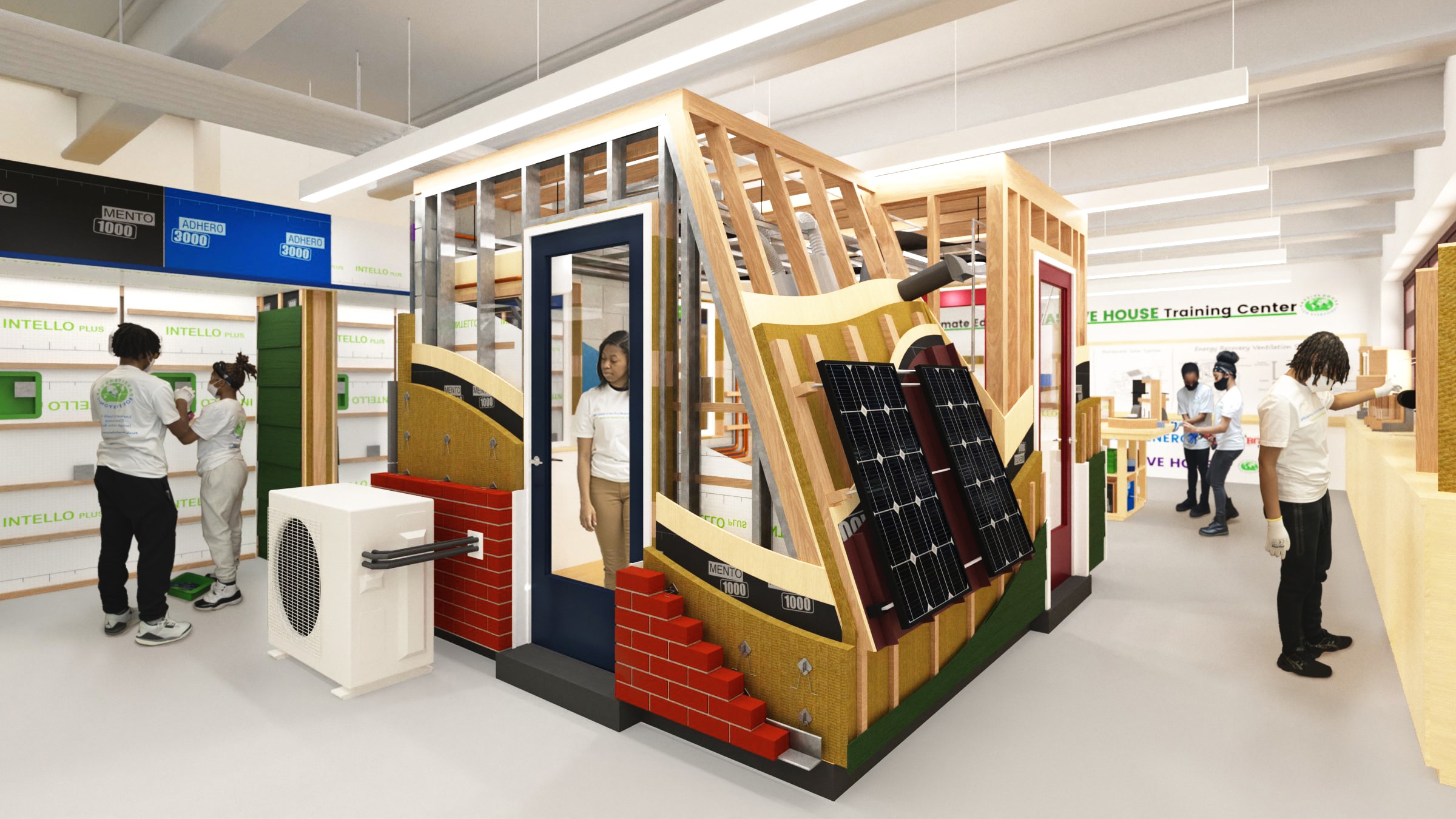
The Passive House Training Center at Boys and Girls High School in Bed-Stuy Brooklyn will be the first facility of its kind in a New York City public school. The training center will transform an underused classroom into a hands-on hub linking climate literacy with equitable workforce development for a front-line community. Built on long-term partnerships with NYC Public Schools and Pratt, the center will be a home for programs delivering practical training in energy-efficient construction and high-performance building systems. Student learning outcomes are tracked through skills-based assessments, project completion, and participation in certification-aligned activities, while career pathways are supported through exposure to post-secondary programs, internships, and green workforce networks. Curriculum, outcomes, and partnerships are documented to support future replication and adaptation across school districts here and abroad.
Boys and Girls High School. New York City Public Schools: Office of Energy and Sustainability, Office of Student Pathways, Office of Space Planning, Fund for NYC Public Schools. Brooklyn Org, ChoShields Studio, The William and Mary Greve Foundation, Passive House for Everyone, PRATT Center for Community Development.
Bed-Stuy Brooklyn
https://aiabrooklyn.org/wp-content/uploads/bknow/details/Boys%20and%20Girls%20High%20School%20-%20Deanonymized.jpg
 034
034
In Cho, Timothy Shields
Pratt Ice Box Challenge
#Craft #Learn #Resilience
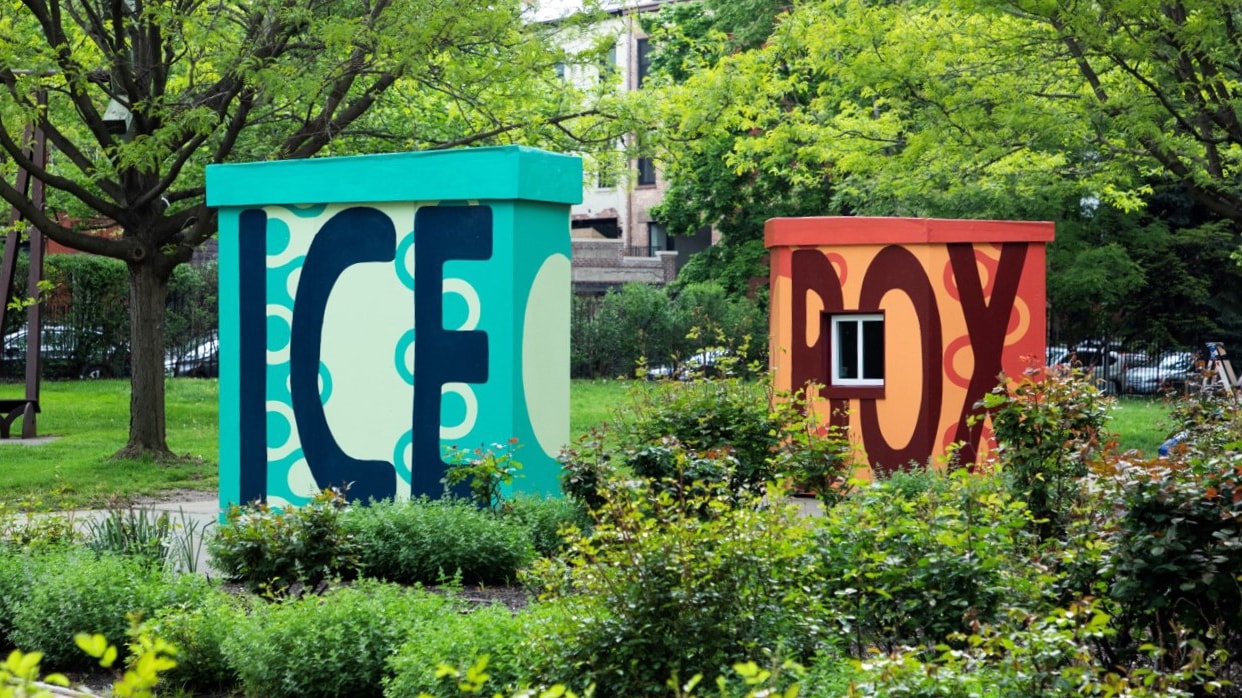
The first-ever collegiate Ice Box Challenge took place at Pratt Institute, demonstrating the advantages of Passive House in a student-led design-build project. Two boxes were built, one to NYC Energy Code, and the other to the Passive House Standard. They were filled equally with ice and displayed at Pratt for a week. The challenge, was brought to Brooklyn by a Pratt Institute architecture professor, who discovered Passive House while confronting mold-prevention challenges during a major renovation. She was drawn to the strategy, which centered building health, performance, and resilience while reducing energy use. She launched the project at Pratt, where her students constructed the two Ice Box structures in the Spring of 2023. At the end of the week, the Passive House structure retained far more ice than the standard enclosure, offering a visible demonstration of the benefits of high-performance building for decarbonization, health, and affordable clean energy.
475 High-Performance Building Supply, Choshields Studio, International Passive House Association, Klearwall, Passive House for Everyone, Rockwool, Square Indigo, Sto-Corp.
Pratt Institute, Clinton Hill, BK
https://aiabrooklyn.org/wp-content/uploads/bknow/details/Pratt%20Ice%20Box%20Challenge.jpg
 035
035
Candy Chan
Project Subway NYC
#Community #Craft #Equity #Family
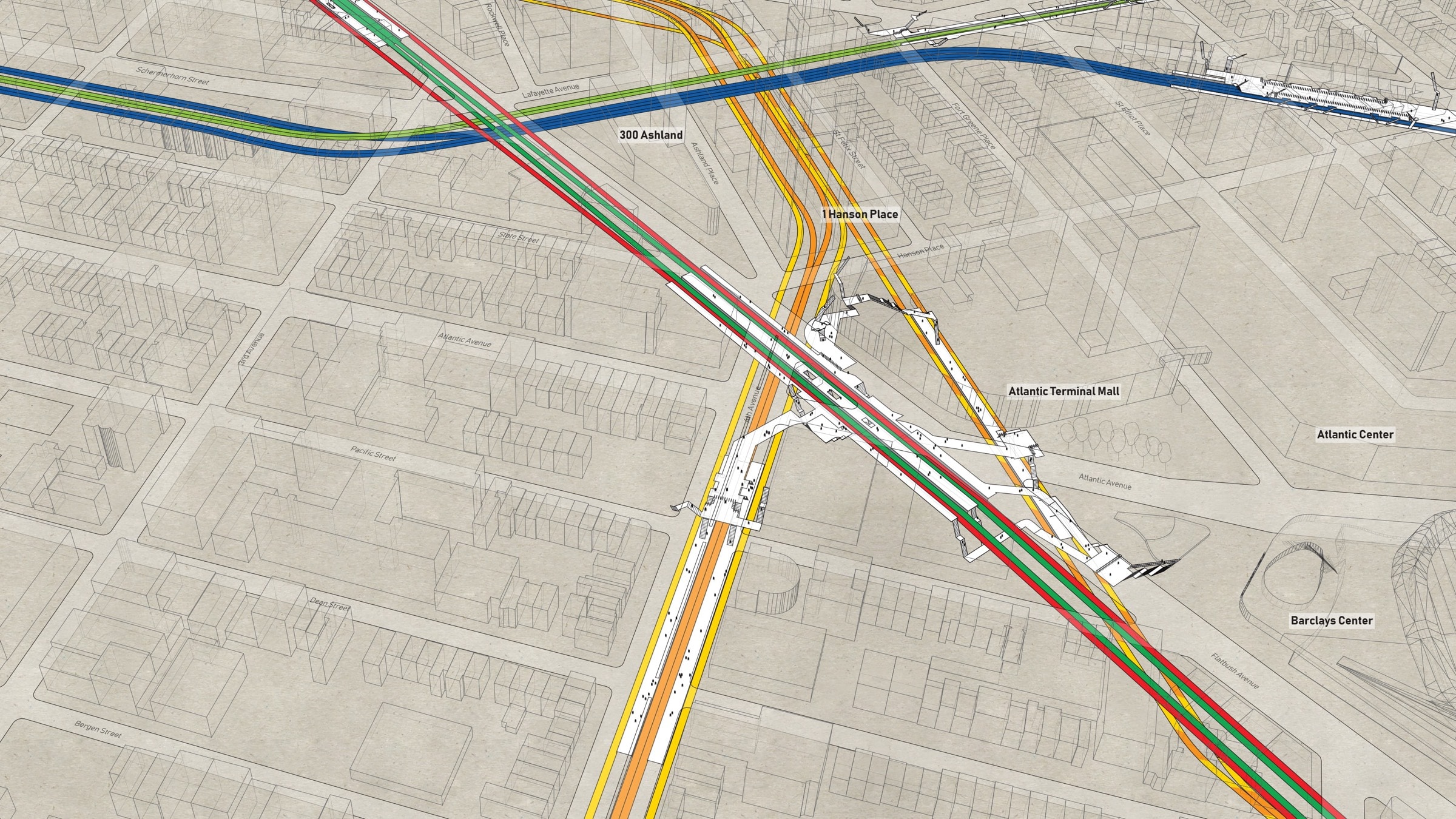
Project Subway NYC is a multidisciplinary exploration of the city’s transit labyrinth, born from the author’s fascination and frustration with its infrastructure. Through a collection of sketches, photography and architectural drawings, it serves as an ongoing thesis on wayfinding, signage, architectural representation, and the nuances of underground accessibility.While the project remains a creative outlet, its architectural insights have found significant real-world application over the last ten years- from helping The New York Times visualize the location of a bomb threat to contributing to the ‘Accessible Station Lab’, a pilot program focused on enhancing wayfinding for the disabled.Moving forward, Project Subway NYC will continue to evolve as an open-ended investigation. It intends to push the boundaries of the archive by experimenting with new media and emerging technologies, ensuring that the study of “the city under the city” stays as dynamic and adaptive as the subway system itself.
n/a
Brooklyn
https://aiabrooklyn.org/wp-content/uploads/bknow/details/Project%20Subway%20NYC%20Exhibition%20Board.jpg
 036
036
Pablo De Miguel Iglesias
The Family Room
#Family #Live #Play #Work
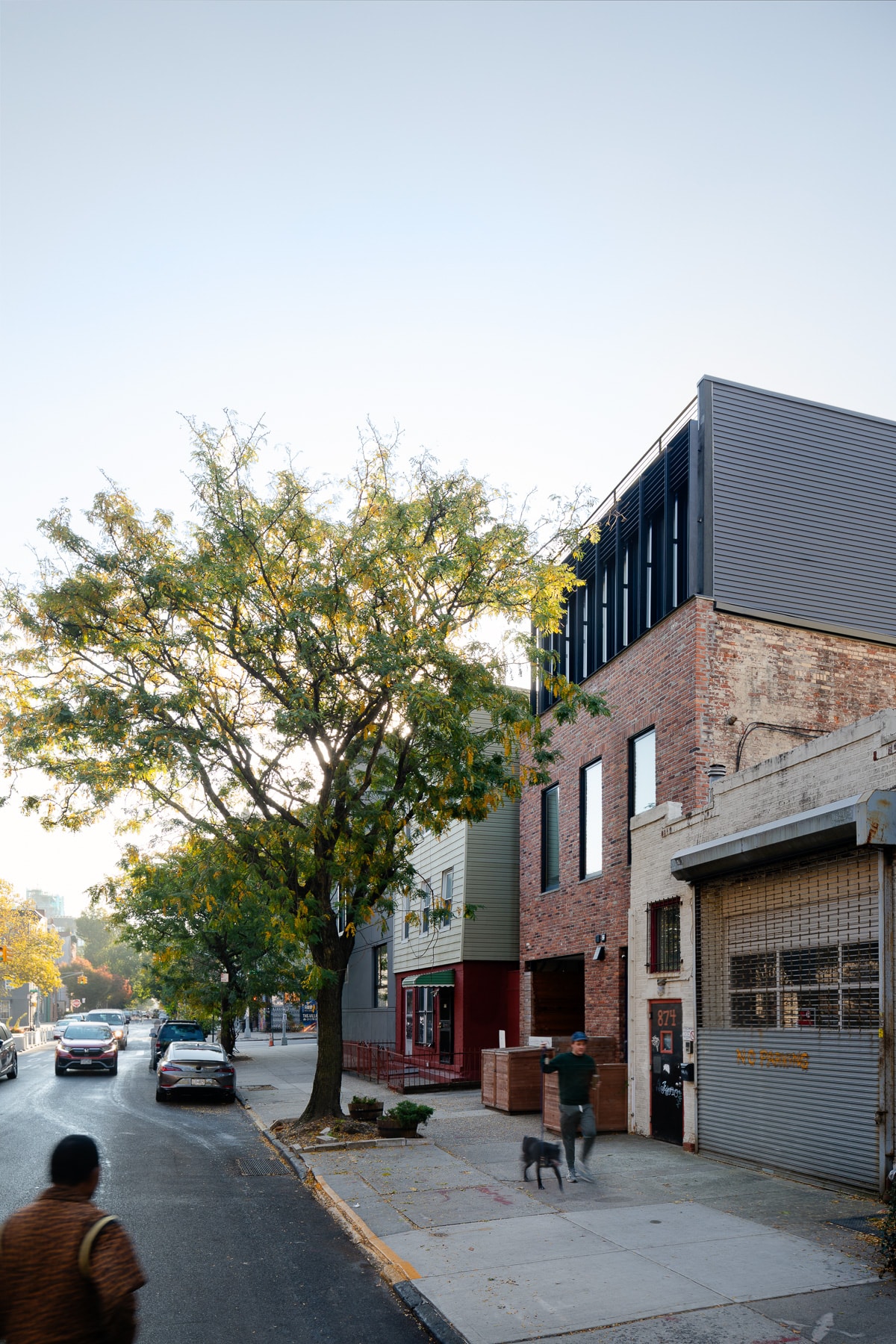
The project is a vertical addition to a hundred year old two-story brick building. Formerly a warehouse and then an artist’s loft, it’s now a bright, multigenerational home for a creative mother, her twin boys, and their grandfather. By adding a new level to the building, they were able to create separate rooms for everyone and bring in more light, openness, and flexibility to suit their growing needs. The new third floor establishes a clear material and stylistic contrast with the existing brick. At the same time, the addition becomes the final piece that completes the building. The street facade is covered with thin vertical steel fins that provide privacy while on the south facade, horizontal fins regulate sun exposure, and large glass doors connect the children’s playroom to a rooftop garden extending the play space into the outdoors.
General Contractor: Tomek Builders Corp.; Architecture: Jun Nam, Brett Barshay, Ian Romo; Structural engineer: Gerard Santora PE; MEP engineer: Nic Crosetto PE; Expediting: Ida Galea AIA; Photography: Amy Barkow / Barkow photo
Prospect Heights
https://aiabrooklyn.org/wp-content/uploads/bknow/details/The%20Family%20Room.jpg
 037
037
FXCollaborative Architects: Dan Kaplan, Brian Fanning, Toby Snyder, Ted Lampa, Erica Alonzo, Illiana Ivanova
1 Park Point
#Community #Craft #Equity
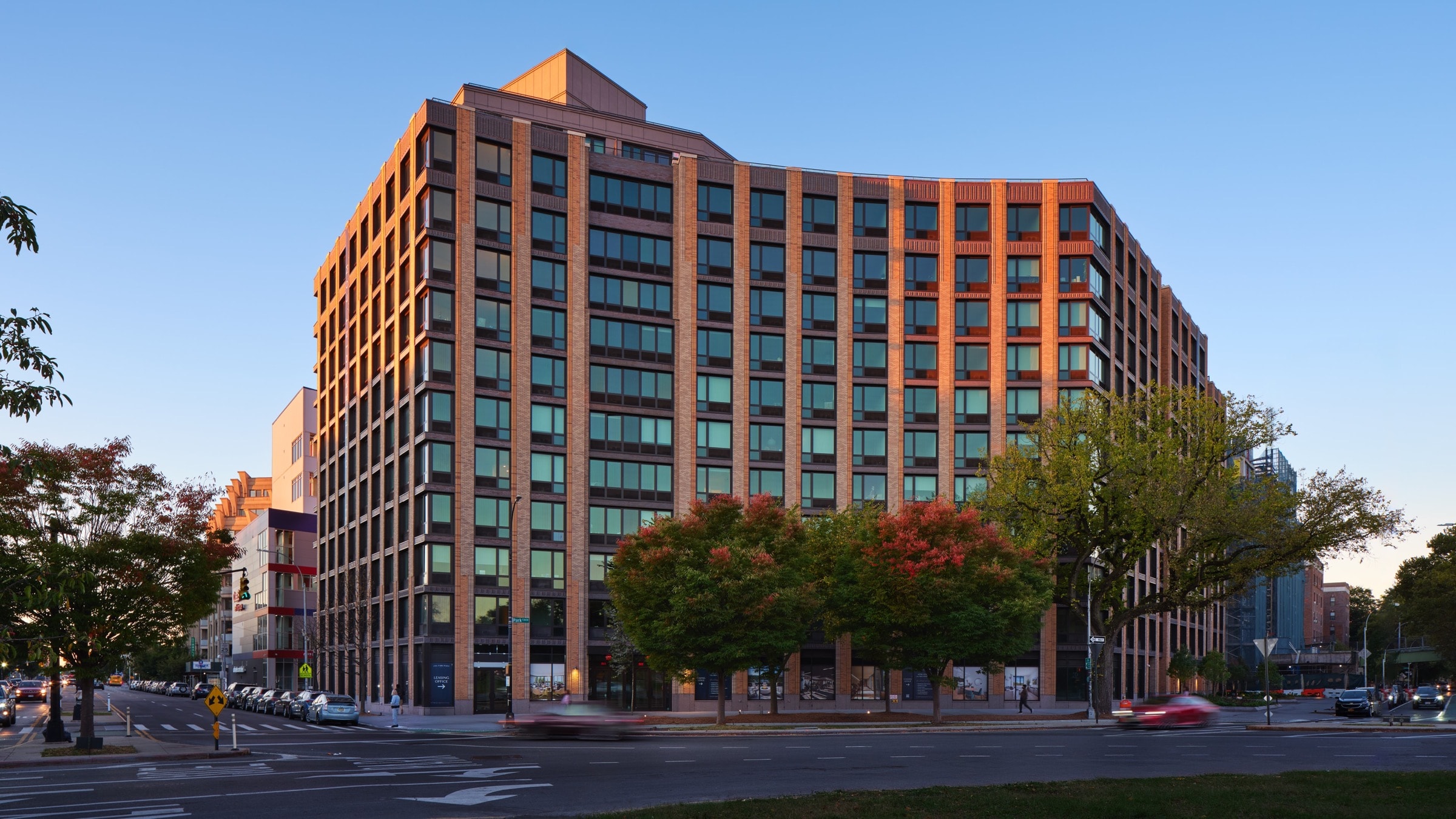
A new community hub at Prospect Park maximizes an unusually shaped site to bring vitality through a mix of uses, with affordable housing integrated throughout.In the Windsor Terrace neighborhood of Brooklyn, 1 Park Point fosters a sense of community with a new hybrid building that brings together a mix of ground floor uses and residential units. The building relates to its large, irregularly shaped site, framing the curve of Machate Circle, and facing a grand entrance of Prospect Park. Across the building’s expansive façade, a vertical expression of masonry piers and horizontal masonry spandrels breaks the rigidity of a typical grid, while notches and open corners highlight the location of entrances on the building’s façade. The building’s nearly 400,000 square feet includes a mix of uses, each with entrances on different street frontages.
Client: JEMB Realty
Windsor Terrace
https://aiabrooklyn.org/wp-content/uploads/bknow/details/1ParkPoint_board.jpg
 038
038
FXCollaborative Architects: Dan Kaplan, John Schuyler, Sisto Tallini, Lee Hantz
420 Carroll Street
#Community #Live #Resilience
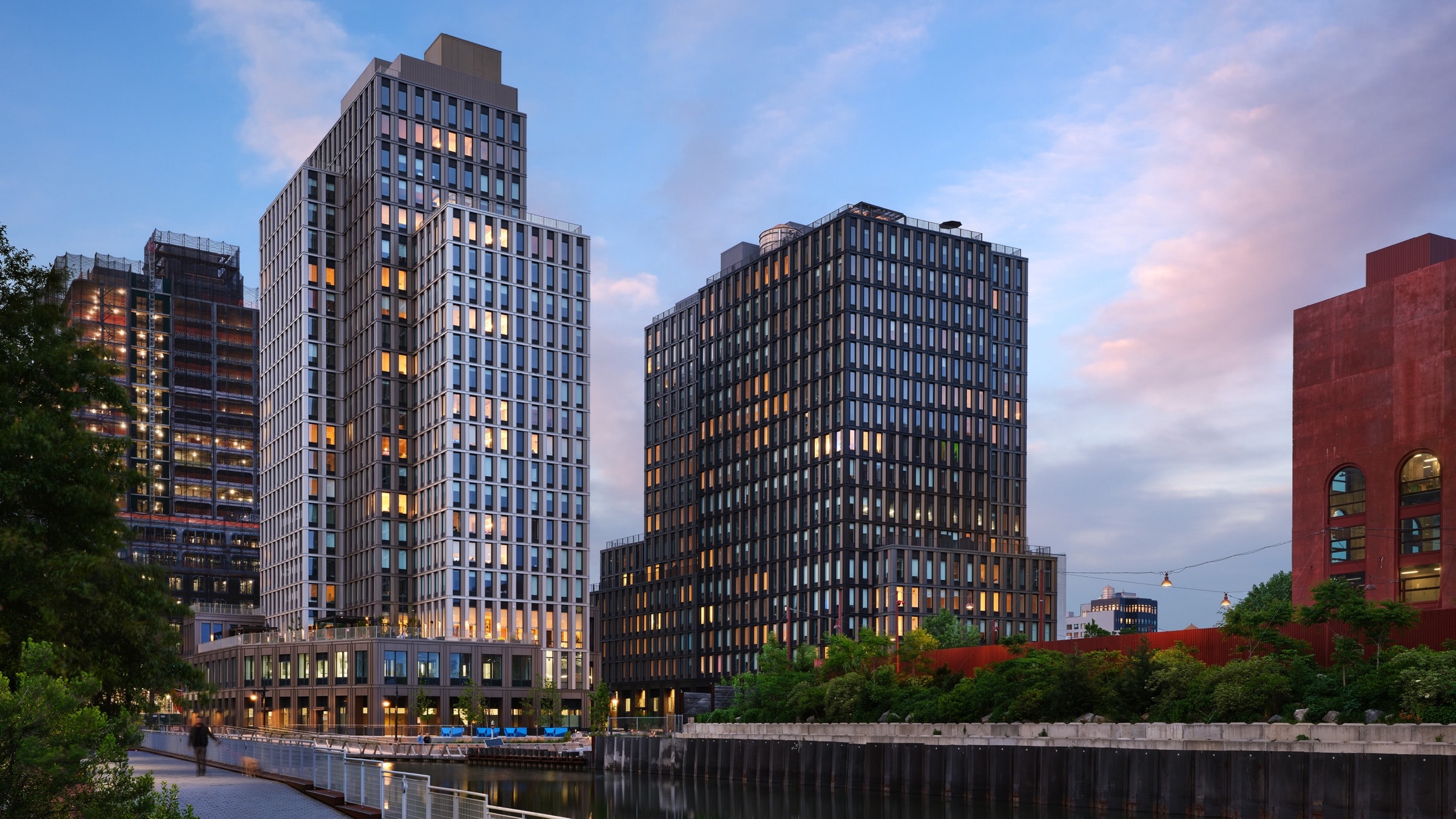
Resilient, industrial-inspired design and shared public space breathe new life into the Gowanus Canal.Occupying the very center of the new Gowanus neighborhood, 420 Carroll Street embodies the singular qualities of this post-industrial waterfront: a well-crafted public realm, an architectural vocabulary that is a sophisticated take on the area’s industrial heritage, and a deep commitment to sustainability. Consisting of two towers and a network of open spaces, the project has a mix of residential, co-working, and retail programming. The building podiums are defined by active retail frontages at the pedestrian level. A portion of the non-residential space is dedicated to commercial and makerspaces, the so-called “Gowanus Mix,” that allows local industry to continue to thrive. Located at a critical intersection of the Gowanus Canal, a 30,000 SF destination public open space and waterfront promenade integrate space for passive recreation and canal access.
Client: Vorea/The Domain Companies, CM: Mega Contracting Group
Gowanus Canal
https://aiabrooklyn.org/wp-content/uploads/bknow/details/420Carroll_board.jpg
 039
039
FXCollaborative Architects: Dan Kaplan, Brian Fanning
1 Willoughby Square
#Learn #Materials #Work
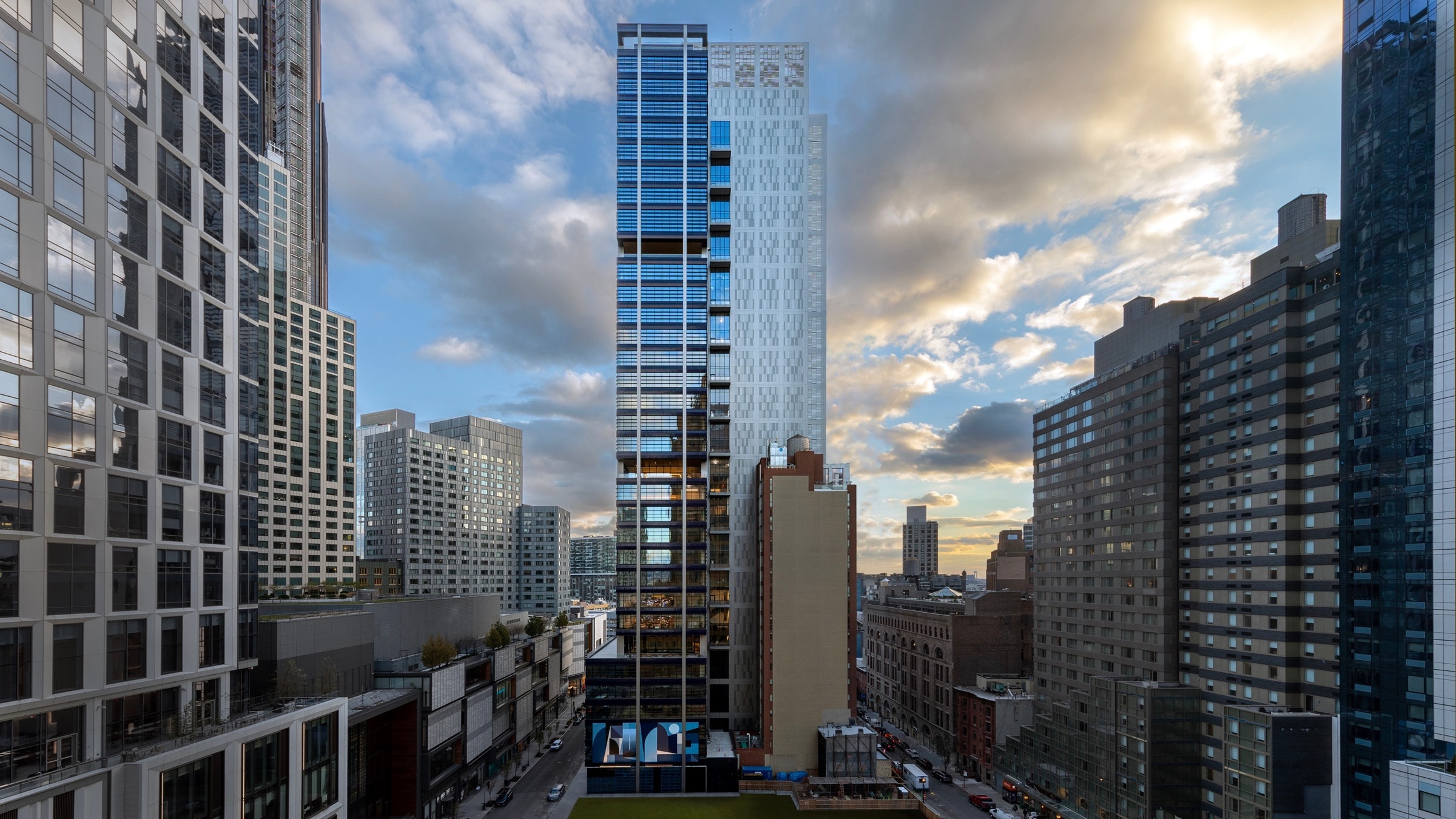
A contemporary take on the Brooklyn industrial loft, the office development meets the ethos of today’s creative enterprises.As the first ground-up office to be constructed in Downtown Brooklyn in decades, it was important that 1 Willoughby Square be anchored to its local heritage while forward-looking in its functionality. The iconic 34-story mixed-use tower is crafted to reflect its context while offering healthy and dynamic work environments for clients in the high-tech and creative industries. The building is organized to promote social and natural connectivity; a strategically located side core and column-free, exposed structure allows for wide-open work environments without obstruction and surrounded by daylight. The design is a contemporary take on the famed New York industrial loft with gridded, oversized windows, distinctive blue glazed brick spandrels, and exposed concrete structure. The base of the building houses a new 320-seat public school with its own entrance.
Client: JEMB Realty, CM: Gilbane
Downtown Brooklyn
https://aiabrooklyn.org/wp-content/uploads/bknow/details/1WSQ_board.jpg
 040
040
FXCollaborative Architects: Heidi Blau, Martin Scott, Melanie Strieder, Elva Ye
Webster Apartments
#Community #Equity #Live
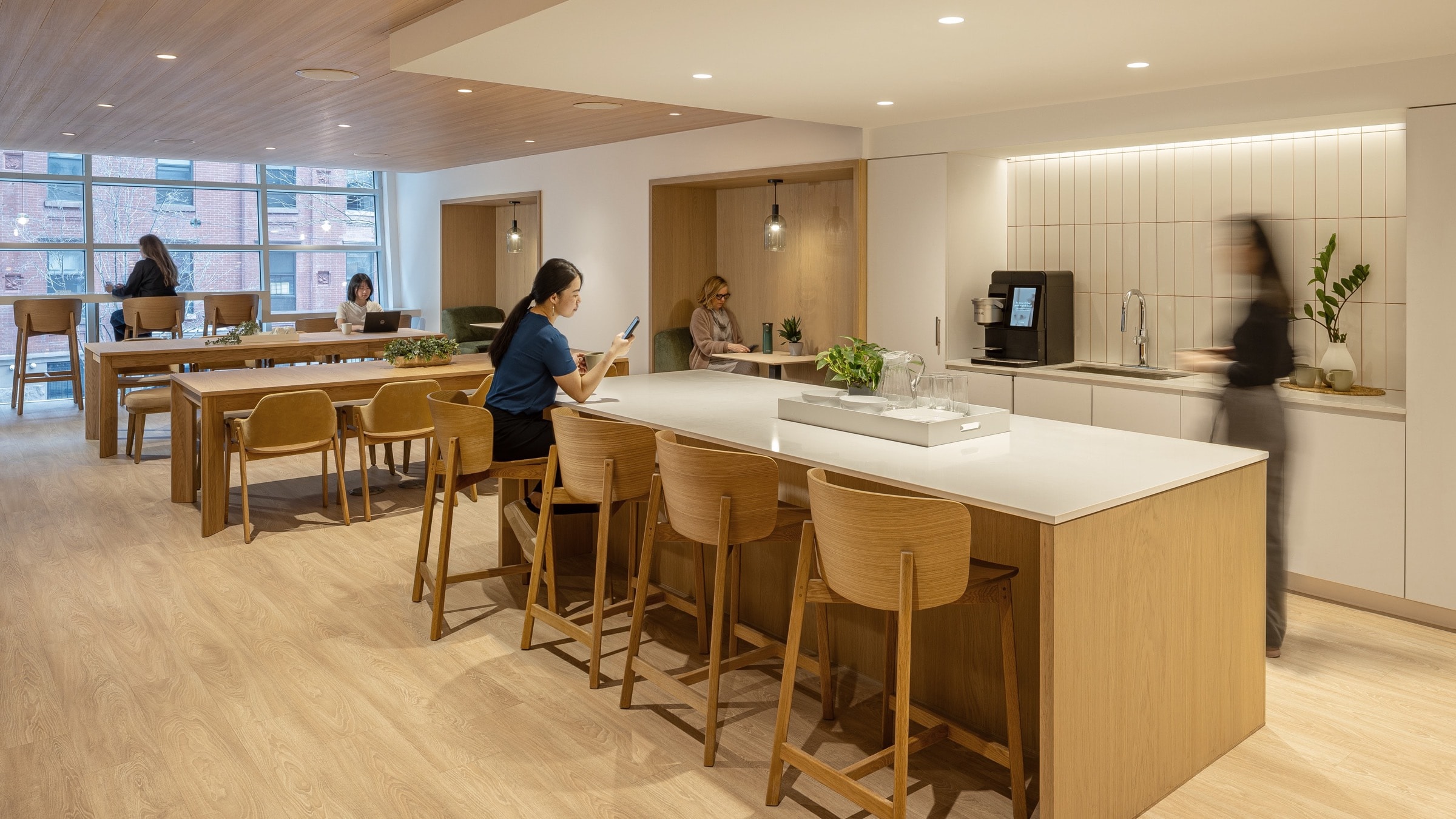
A former hotel, the building supports the success of professional women in New York City by addressing one of their biggest practical challenges—safe and affordable living accommodations.The Webster Apartments is a mission-driven, nonprofit organization dedicated to providing affordable, safe, and healthy residences for women working in New York City. Our design transforms the public spaces and guest rooms of a former Brooklyn hotel into spaces where the women can live, connect, and network, and upgrades the fire protection and life safety systems. The public-facing spaces on the lower levels are designed to be bright, welcoming, and open.
Client: The Webster Apartments, CM: JRM Construction Management
Downtown Brooklyn
https://aiabrooklyn.org/wp-content/uploads/bknow/details/WebsterApartments_board.jpg
 041
041
Samanta Lopez Gil
Red Hook Water Society
#Community #Learn #Resilience
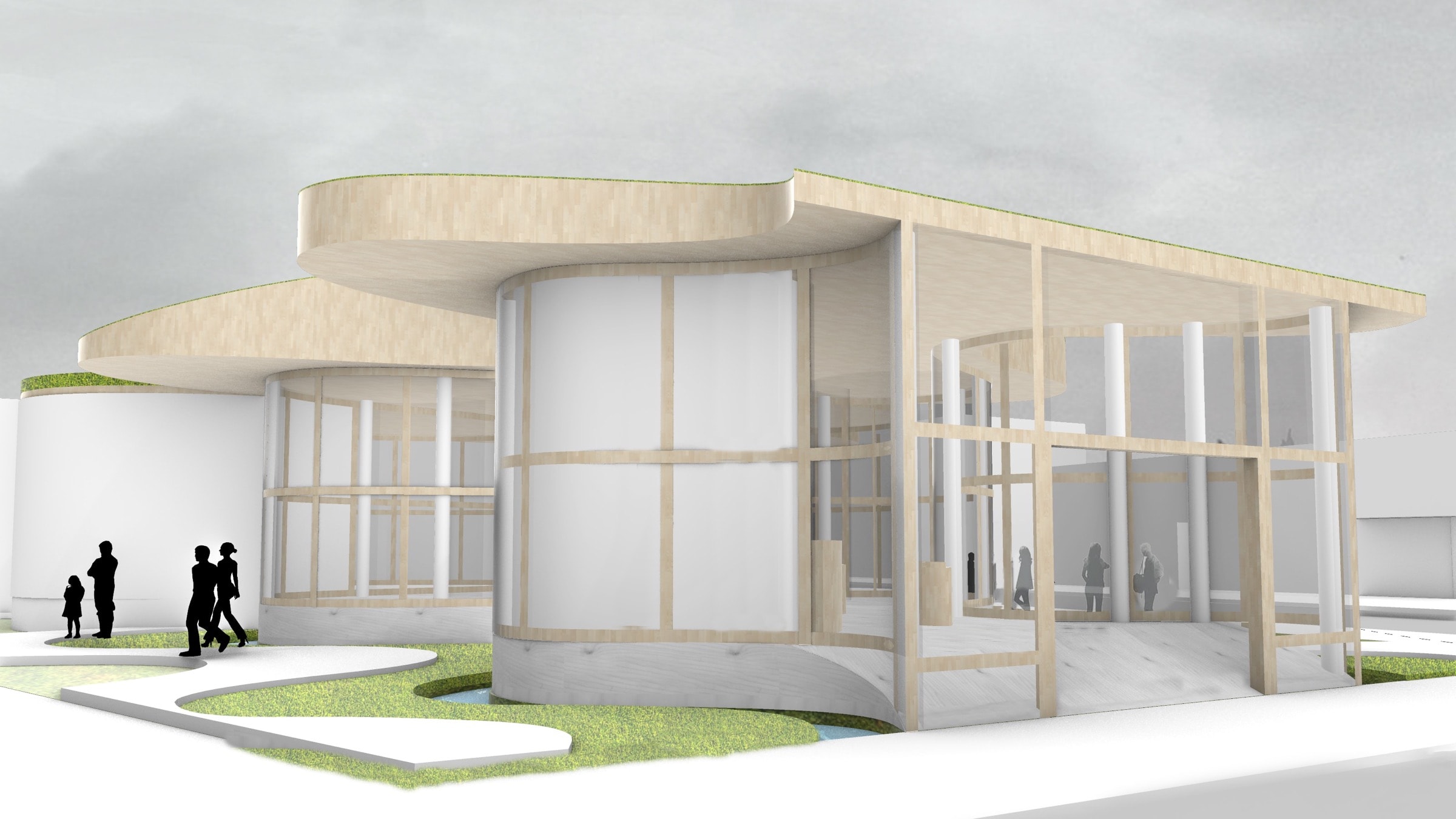
Located in Red Hook, Brooklyn, a neighborhood vulnerable to flooding and rising sea levels, Red Hook Water Society is designed as a resilient community water facility that addresses climate challenges while serving the public. The building is elevated to protect key spaces during flood events and incorporates drainage systems and water collection strategies that manage stormwater across the site. Collected water can be filtered, stored, and reused for future needs. The architecture combines wood, glass, and landscape elements to create a sustainable environment that supports education, research, and community engagement while strengthening the neighborhood’s resilience to climate change.
Professor: Paul Coughlin - Design lll
Red hook (Dwight St, Brooklyn,)
https://aiabrooklyn.org/wp-content/uploads/bknow/details/SamantaLopez_RedHookWaterSociety_Board.jpg
 042
042
Angela de Riggi Architectural Designer, Patricia Semmler PEMstudio energy efficiency consultant/architectural designer
High Performance Retrofit for a Historic Brooklyn Brownstone
#Craft #Family #Live #Materials #Play #Resilience
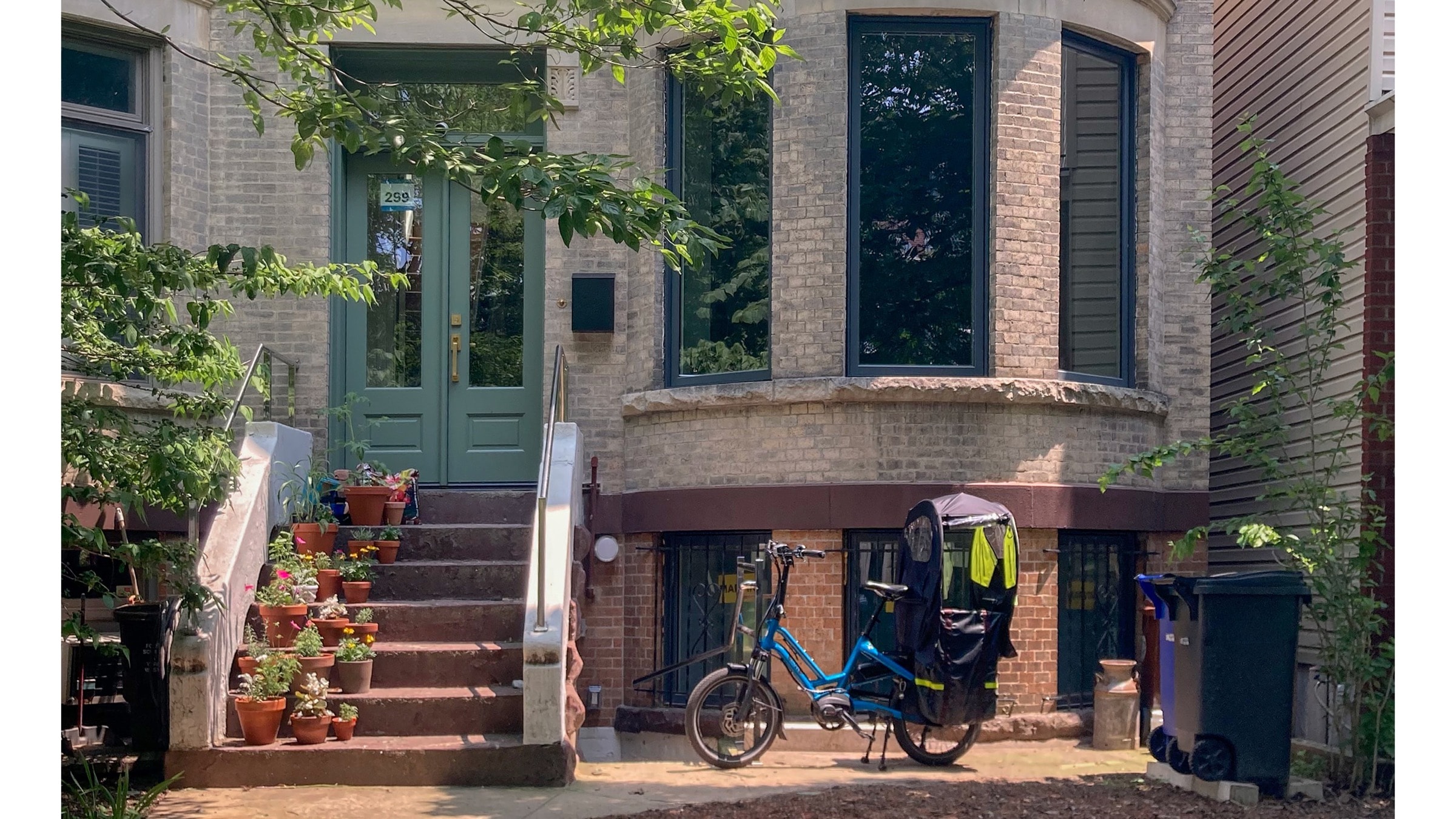
This project transforms a historic brownstone into a home that exceeds energy code requirements, demonstrating that high-performance design and heritage can coexist. A deep energy retrofit upgraded the envelope with cellulose insulation, high-performance windows and doors, and improved airtightness. An all-electric heat-pump system and an energy-recovery ventilator provide continuous filtered fresh air. The roof is planned for future solar panels, enabling on-site energy generation.The home is designed around the family’s life, integrating individual wishes throughout. An exposed brick party wall adds texture and history to a bedroom. A custom basement sauna provides space for wellness, while beneath the metal deck, a pull-up bar with a swing attachment accommodates play and exercise. Restored pocket doors allow the TV room to fully darken for movie time.Healthy materials and historic details balance comfort and craftsmanship, achieving near Passive House performance and offering a model for retrofitting the city’s iconic row houses.
Eugene Colberg, Architect of Record
Brooklyn, Windsor Terrace
https://aiabrooklyn.org/wp-content/uploads/bknow/details/brooklyn%20now%20board.jpg
 043
043
pH design - Hilary Padget and Anthony Harrington
Williamsburg Split
#Craft #Family #Live
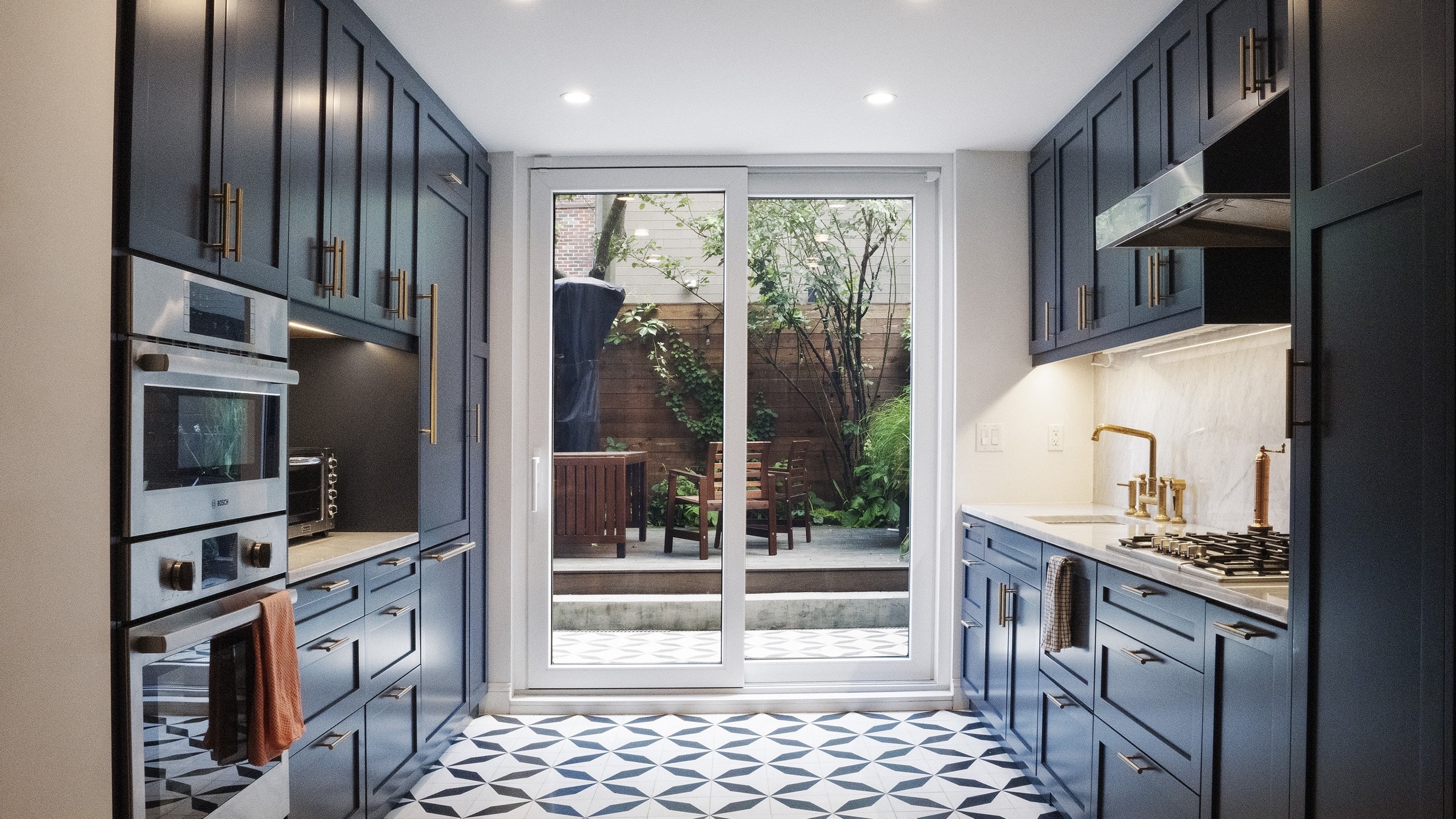
A young family purchased this narrow Williamsburg rowhouse knowing it needed everything — floors sagging six inches out of level, a facade hidden behind aluminum siding, and an interior in full gut condition. What it had was good bones and enough potential to make the work worthwhile.The houses in the row had each been altered over the years with coatings and cladding that quietly made things worse. We stripped ours back — repointing, selectively replacing brick, and applying a consolidating coating that stabilizes the masonry without concealing it.Inside, leveled floors, a heat pump system, and high-performance tilt-turn windows with larger unobstructed openings updated the envelope and brought more natural light throughout. A rebuilt central stair with a large skylight above and slatted walls draws daylight through the full height of the house. At the rear, a glass door opens the kitchen directly to the yard.
Trivia Renovations Inc. - Andrey Bogachuk, Barry Structural Engineering, LLC - Michael Barry, Pavane & Kwalbrun Consulting Engineers - David Kwalbrun
Williamsburg
https://aiabrooklyn.org/wp-content/uploads/bknow/details/WILLIAMSBURG%20SPLIT.jpg
 044
044
Farai Matangira
Repurposing the Gowanus Expressway
#Community #Equity #Resilience
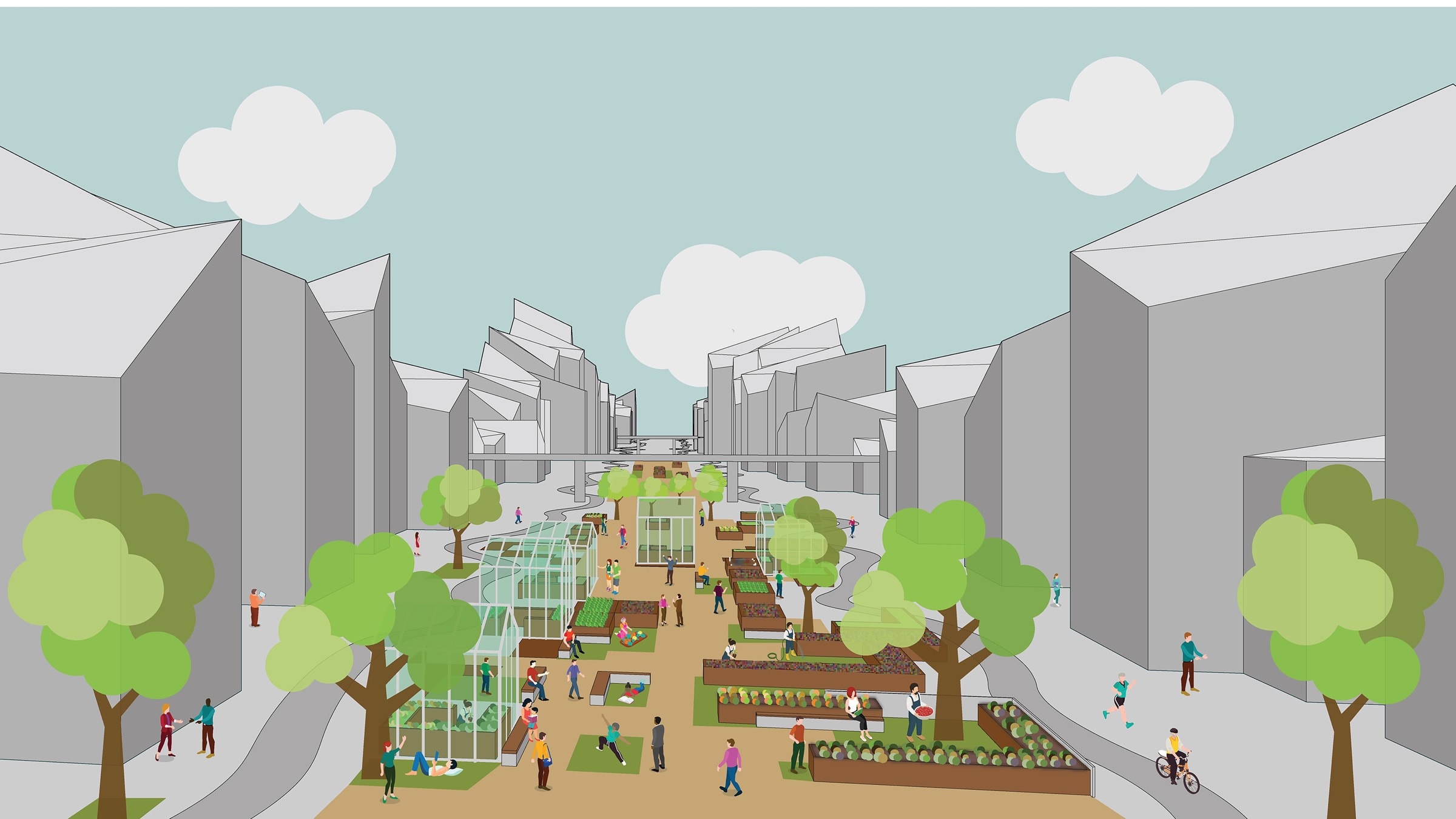
This project explores how cities shaped by automobile infrastructure can be reimagined around people rather than vehicles. Focusing on a residential neighborhood along the Gowanus Expressway in Brooklyn—where a 20-foot-deep highway trench divided a once vibrant community—the proposal investigates how the corridor could be transformed from a barrier into a connective urban space. By prioritizing walking, cycling, public transportation, and new housing opportunities, the project envisions repairing the neighborhood’s severed urban fabric while creating spaces that encourage social interaction, safety, and environmental sustainability. In doing so, the project embodies the spirit of Brooklyn NOW! by demonstrating how contemporary design thinking can confront the legacy of car-centered planning and reimagine Brooklyn’s streets and public spaces as places for people, community, and everyday urban life.
CUNY New York City College of Technology, Faculty Advisors:Jill Bouratoglou, Michael Duddy, Phillip Anzalone
Gowanus
https://aiabrooklyn.org/wp-content/uploads/bknow/details/REPURPOSING%20THE%20GOWANUS%20EXPRESSWAY.jpg
 045
045
Ash Low, Rishad Choon, Nicky Sundholm
Lefferts Rooftop
#Craft #Live #Resilience
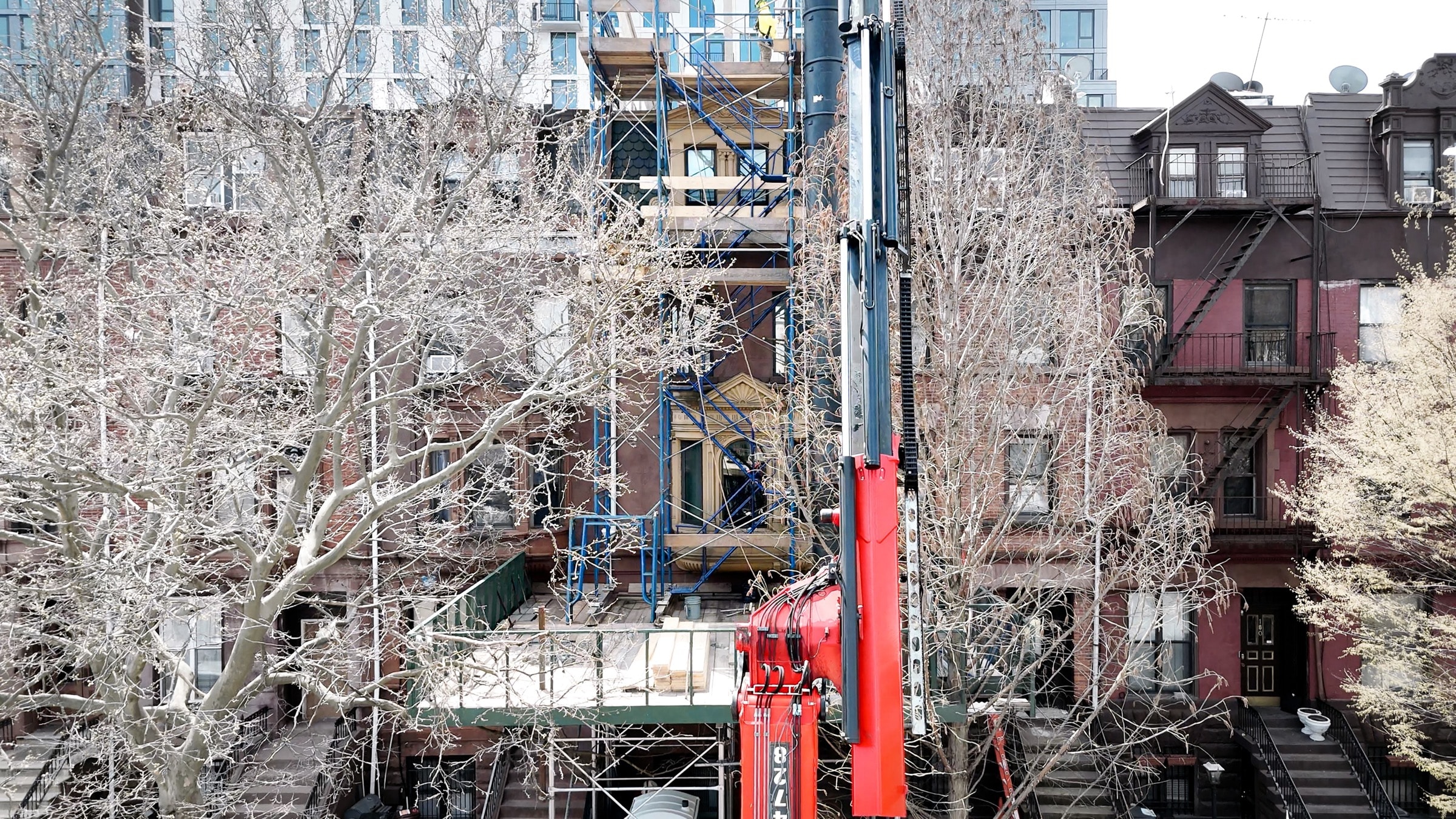
What began as a rooftop solar canopy installation uncovered something far more complex: two failed roofs, thoroughly saturated with water and structurally insufficient to carry the new loads. The project scope expanded accordingly, requiring a full upper and lower floor rehabilitation carried out while the building remained occupied throughout.The key to making it work was a full “doghouse” enclosure spanning the entire townhouse footprint and supported by 50-foot beams on front and rear pipe scaffolding. This protected the building and its occupants during demolition across a particularly wet April and May, and provided exterior access for all materials and labor.The original scope of work included two roofing systems on both upper roof levels, new structural beams, a concrete slab on metal decking, and a new code-compliant staircase. The overall scope expanded to facade work which included bay window restoration, new dormer slate, and full rear stucco remediation.
lowkey - Architect, AGC - Avant-Garde Contracting, General Contractor, Cabane - design + build partnership between lowkey & AGC, Sundholm Engineering - Structural Engineer
Bedford-Stuyvesant
https://aiabrooklyn.org/wp-content/uploads/bknow/details/Lefferts%20Rooftop%20Exhibition%20Board.jpg
 046
046
Studio A+H / Matthias Altwicker with Ariel Lorenzi
Atlantic Inclusionary Senior Housing
#Community #Live
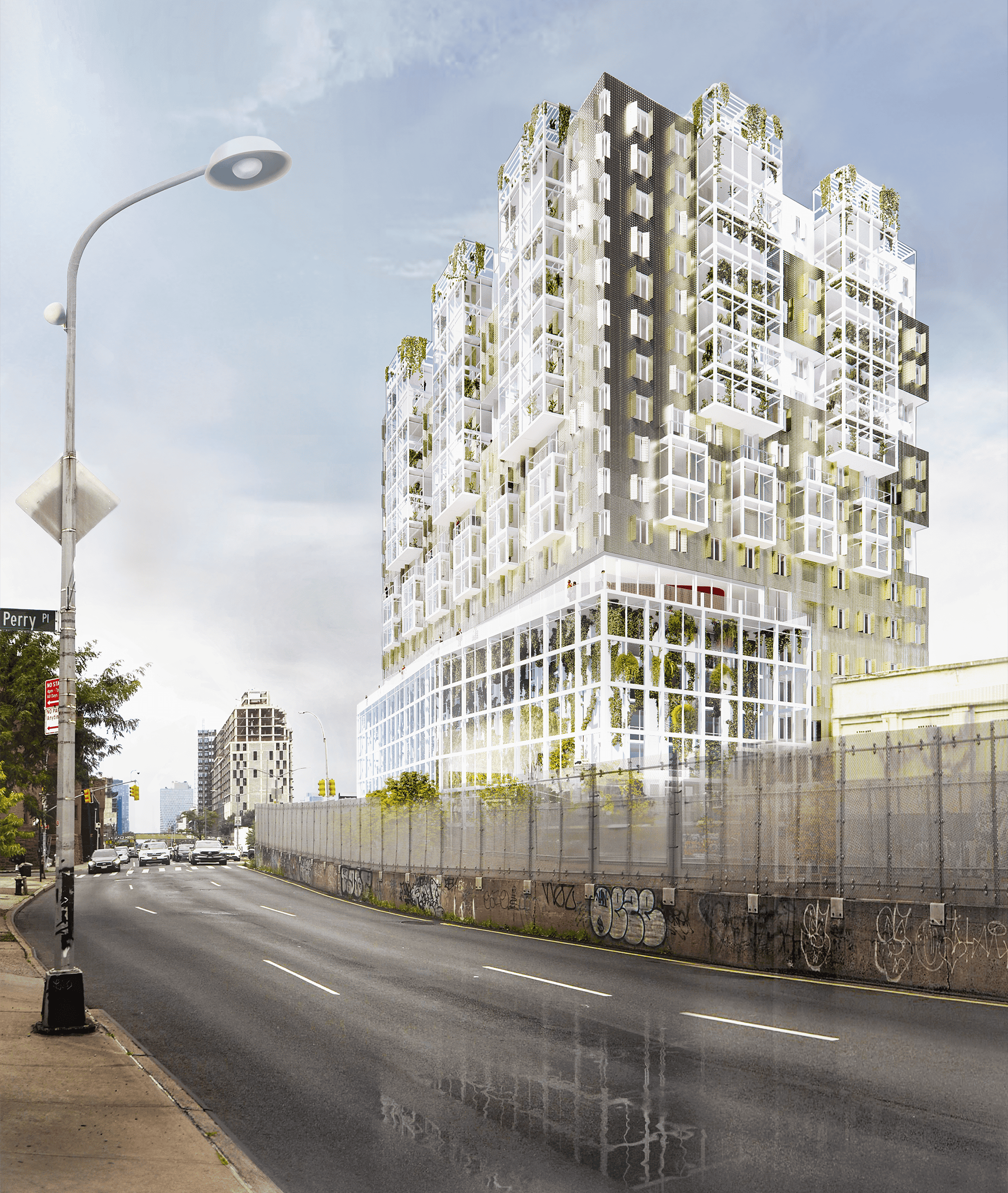
This 500-unit development uses varied massing and materiality to reduce the project’s scale. This allows the residents of the building to recognize their own place within the project. The mixture of supportive/senior housing and market-rate units over the 18 stories are subdivided into three 6 story sections articulated through various green spaces related to the apartment types.The first six stories are senior housing with access to a greenhouse space that mediates the traffic noise and a courtyard space that includes the senior amenities and a FRESH grocery store. The other sections have a wider mix of unit types, many with their own wintergardens. The top six floors are linked by vertical farms that are adjacent to shared spaces on each floor.The building is clad with golden yellow metal paneling with varying degrees of perforation that also acts as solar shading, creating a constantly changing surface in the light.
AAA Development / Artan Muriqi
Bedford-Stuyvesant
https://aiabrooklyn.org/wp-content/uploads/bknow/details/Atlantic%20Inclusionary%20Senior%20Housing.jpg
 047
047
Jun Aizaki
Timber Bridge
#Community #Materials #Work
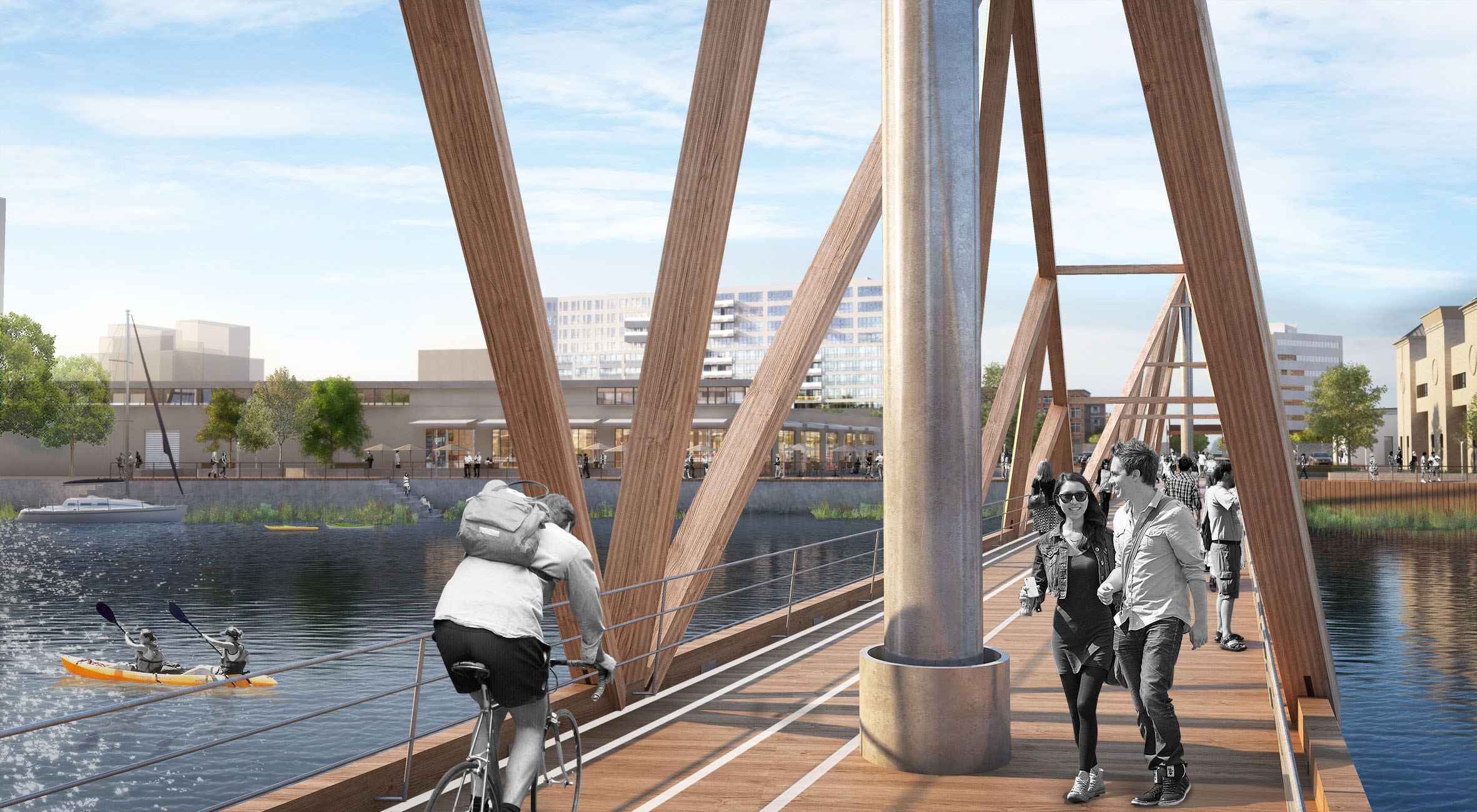
The Timber Bridge proposes a new connection between Greenpoint and Long Island City, addressing a long identified gap across Newtown Creek. The project introduces a dedicated pedestrian and bicycle crossing that expands access to transit, the waterfront, and adjacent neighborhoods.Designed as a floating timber structure, the bridge prioritizes non vehicular movement, offering a safer, more direct alternative to the heavily trafficked Pulaski Bridge. The bridge is conceived as a floating timber structure supported on pontoons, using a lightweight system that allows for efficient construction and adaptability.In addition to circulation, the project engages underutilized waterfront and rail yard edges, supporting new opportunities for public space and connectivity. It reflects Brooklyn NOW through its focus on access, reuse of existing urban conditions, and a more human centered approach to infrastructure.
n/a
Newtown Creek / Greenpoint
https://aiabrooklyn.org/wp-content/uploads/bknow/details/Timber%20Bridge.jpg
 048
048
Ben Baxt, Alina Cravero, Ashley Griffith
Asia Art Archive in America
#Community #Craft #Learn
Asia Art Archive in America is an adaptive reuse retrofit of an early-1900s automobile garage into the US headquarters of Asia Art Archive and two residential apartments. From the 1960s until our clients acquired the building, artists John and Richanda Rhoden lived, worked, and created in the building. Preserving the building’s history as an artists’ residence and, previously, a functional auto garage, was integral to the renovation. Remnants of this history appear throughout the building, from bluestone in John Rhoden’s foundry, which is now a meeting space, to the vehicle elevator shaft which now houses a staircase.
Architect: Ingui Architecture, Contractor: Dynamic Reconstruction
Brooklyn Heights
https://aiabrooklyn.org/wp-content/uploads/bknow/details/Asia%20Art%20Archive%20in%20America_Credits.jpg
 049
049
Eric Liftin / MESH Architectures
Timber House
#Craft #Materials #Play
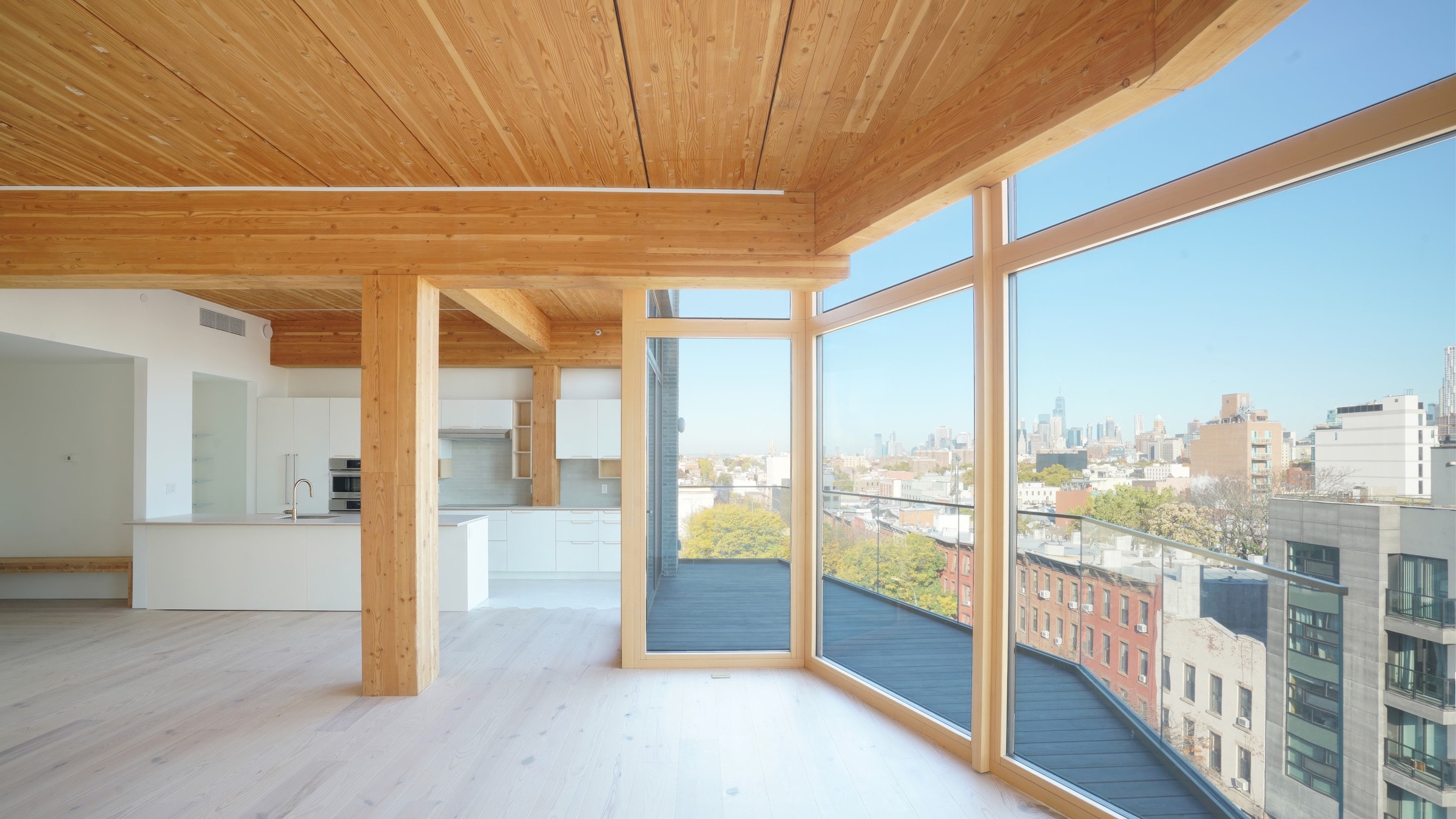
Timber House, the first mass timber condo in NYC, offers comfort, health, efficiency, and the beauty of natural structure. Spaces are generous and sunlit. A landscaped deck shares the roof with photovoltaic panels. Windows are triple-glazed wood. Lighting is from low-profile, warm linear LEDs. Built to passive house standards, clad in handmade brick, it exemplifies the creative innovation of Brooklyn architecture.
GC: SBG Development, landscape design: Outdoor Habitat, timber supply: Vaagen Timbers, structure: TYLin
Park Slope
https://aiabrooklyn.org/wp-content/uploads/bknow/details/MESH%20Timber%20House%20Board.jpg
 050
050
david cunningham architecture planning
Belle Gardens
#Community #Equity #Family
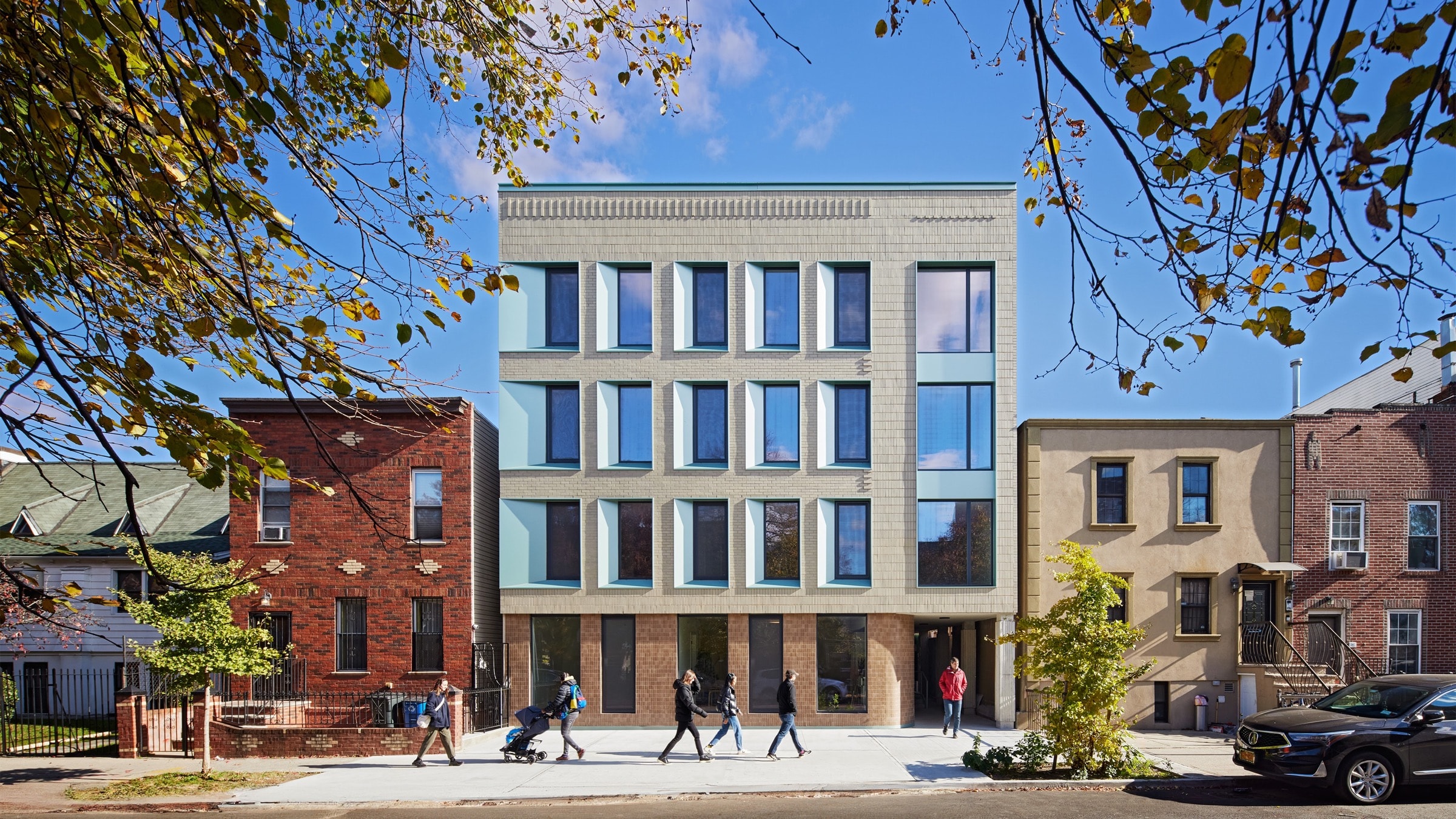
How do we rejuvenate empty lots?Scattered across twelve blocks along Herkimer Street in the Bedford Stuyvesant neighborhood of Brooklyn are thirteen abandoned lots owned by New York City. The project proposes seven new buildings with 78 affordable apartments for an unusual target audience – homeowners. The design pursued the following agenda through a complex regulatory review:how can new buildings complement the existing neighborhoodhow to connect garden spaces and encourage community bondshow to provide graceful entrances to new homeshow to promote healthy and energy efficient lifestyle
contractor: ZHL Group Incowner: BJF Development LLCcollaborator: Fulcrum Architecture DPC
Bedford Stuyvesant
https://aiabrooklyn.org/wp-content/uploads/bknow/details/belle%20gardens%20board%20REVISED%2026.03.jpg
 051
051
Andrew Bernhimer, Meredith Kole, Brandon Pietras, Caleb Sillars, Ayman Rouhani
300 Huntington
#Community #Craft #Work
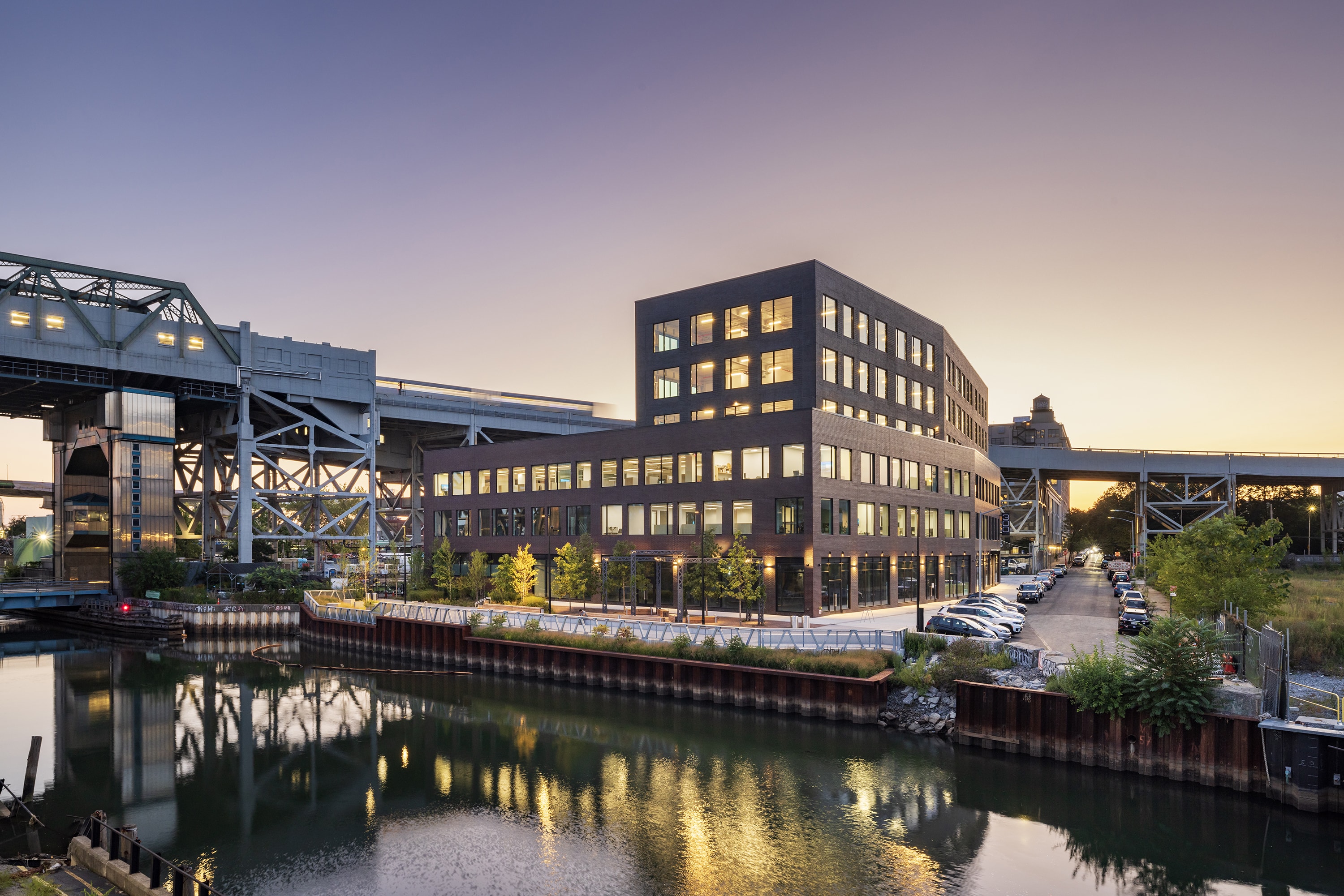
Perched at the crossroads of Gowanus and tree-lined Carroll Gardens, 300 Huntington is one of the first new-construction office/commercial properties in the redeveloping neighborhood.300 Huntington provides a new headquarters for Monadnock Construction and Development’s staff along with nearly 70,000 square feet for new commercial tenants. Spaces have 13’ ceilings, and panoramic windows providing sweeping views of Manhattan, Downtown Brooklyn, and western sunsets. The building is proximate to mass transit – adjacent to the Smith/9th Street F&G station and multiple bus lines, and it is one block from Court Street (the main commercial thoroughfare in the area).The overall building was designed in collaboration with Dattner Architects with landscape design by SCAPE and lighting design by FLUX Studio.Monadnock’s headquarters comprise 30,000 square feet across the second and third floors, with interiors planned and designed by BA (also in collaboration with Dattner Architects).Photography by Albert Vecerka/ESTO
Owner: Monadnock Development; Collaborating Architect: Dattner Architects; Landscape Architect: SCAPE Landscape Architecture; GC: Monadnock Construction; Structural Engineer: De Nardis Engineering; MEP Engineer: Dagher Engineering; Civil Engineer: Philip Habib & Associates; Lighting Consultant: FLUX Studio, Sighte Studio
300 Huntington Street, Brooklyn NY, 11231
https://aiabrooklyn.org/wp-content/uploads/bknow/details/AIA%20Brooklyn%20Brooklyn%20Now%202026%20Board%20-%20300%20Huntington%20Updated.jpg
 052
052
Eugene Seungho Park (CUNY City Tech) + Will Fryer (Will Fryer Interior Design, Parsons School of Design)
Aquadapting
#Community #Materials #Resilience
Aquadapting: Building Resilience in Red Hook with Low Carbon & Water Resilient Street Furniture”Aquadapting” reimagines street furniture in Red Hook as climate-resilient civic infrastructure. In a neighborhood shaped by repeated flooding, and limited public amenities, the project responds to both environmental risk while addressing the lack of everyday civic space for underserved communities. Using low-carbon, lime-based composites, Aquadapting develops dual-use public objects – benches that also function as micro flood barriers – integrating daily use with resilience.Rather than relying on bulky, industrial protection systems, the project proposes small-scale interventions embedded within the streetscape. Developed in collaboration with local community organizations and students, it engages residents in the design of the street furniture – advancing a community-driven design approach over the conventional top-down design methods.Currently in a preliminary research and prototyping phase, the project is advancing toward full-scale testing while establishing local partnerships and exhibition opportunities in Red Hook.
N/A
Red Hook, Brooklyn
https://aiabrooklyn.org/wp-content/uploads/bknow/details/Aquadapting%20Exhibition%20Board.jpg
 053
053
Jenny Peysin, Jack Grover
Past, Present, Passive
#Family #Live #Resilience
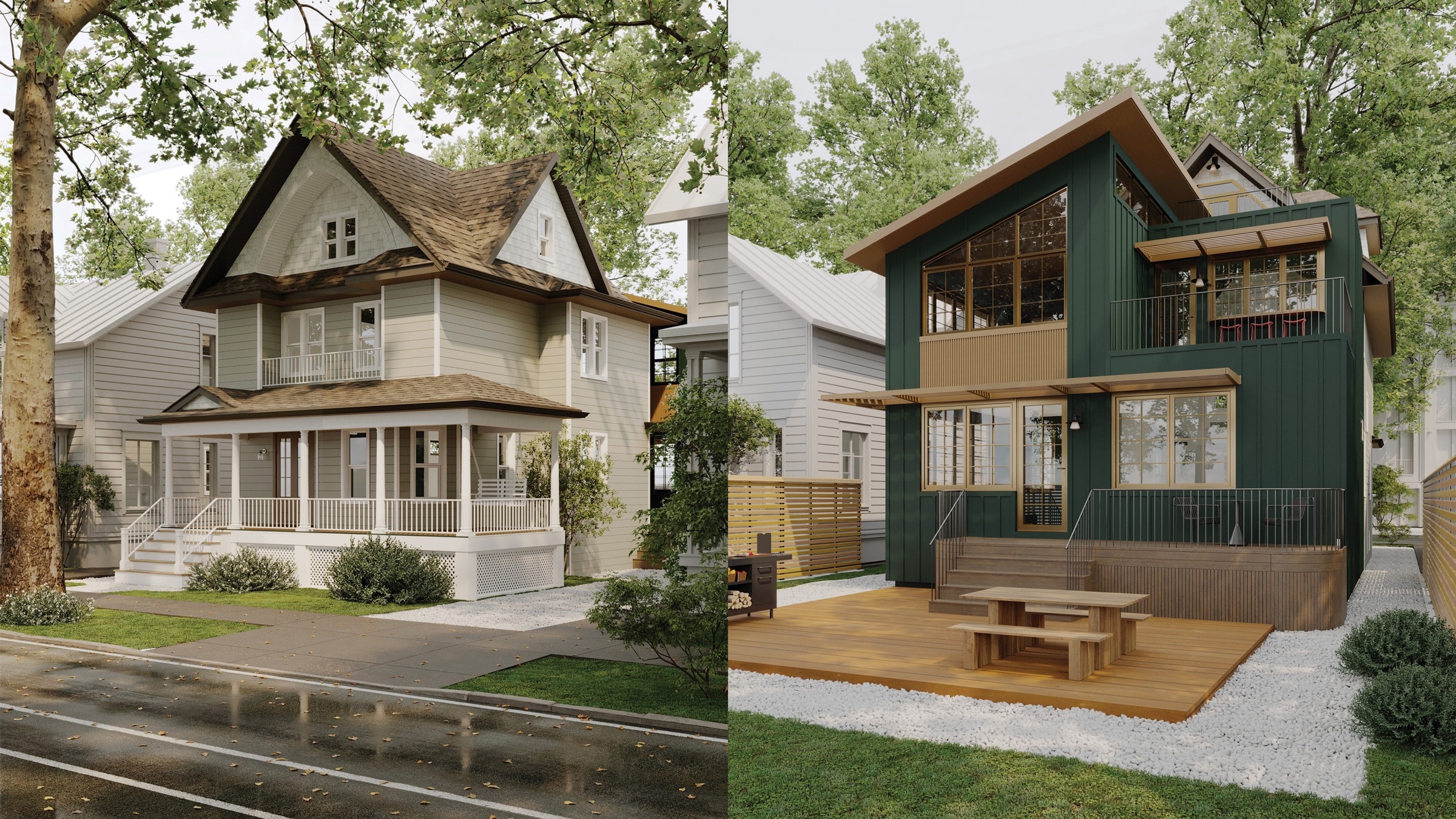
This project transforms a 1928 Colonial Revival home in Ditmas Park into a high-performance, multigenerational residence. Beyond the meticulous restoration of its historic facade, the home is engineered to Passive House standards, utilizing an airtight envelope, continuous insulation to eliminate thermal bridges, and high-performance triple-glazed windows that maintain the historic profile.The interior is divided into two tailored apartments. The first floor offers refined, single-level living for a retired couple, with a central kitchen flowing into a light-filled rear addition and primary suite. The upper unit and attic embrace a mid-century modern sensibility for the next generation, centered on an open-concept addition that extends to a private terrace.Powered by all-electric systems and balanced Energy Recovery Ventilation (ERV), this dual-key home ensures superior air quality and thermal comfort. By integrating cutting-edge sustainability with heritage architecture, the project creates a resilient, future-proof dwelling for two generations.
Axea Construction Group
Ditmas Park
https://aiabrooklyn.org/wp-content/uploads/bknow/details/Past%20Present%20Passive.jpg
 054
054
Jared Della Valle, AJ Pires, Jeff Sullivan, Jen Grosso, Ben Meade, Tara Mrowka, Ali Militano, David McCarty, Andrew Graham,
505 State Street and 489 State Street
#Community #Learn #Resilience
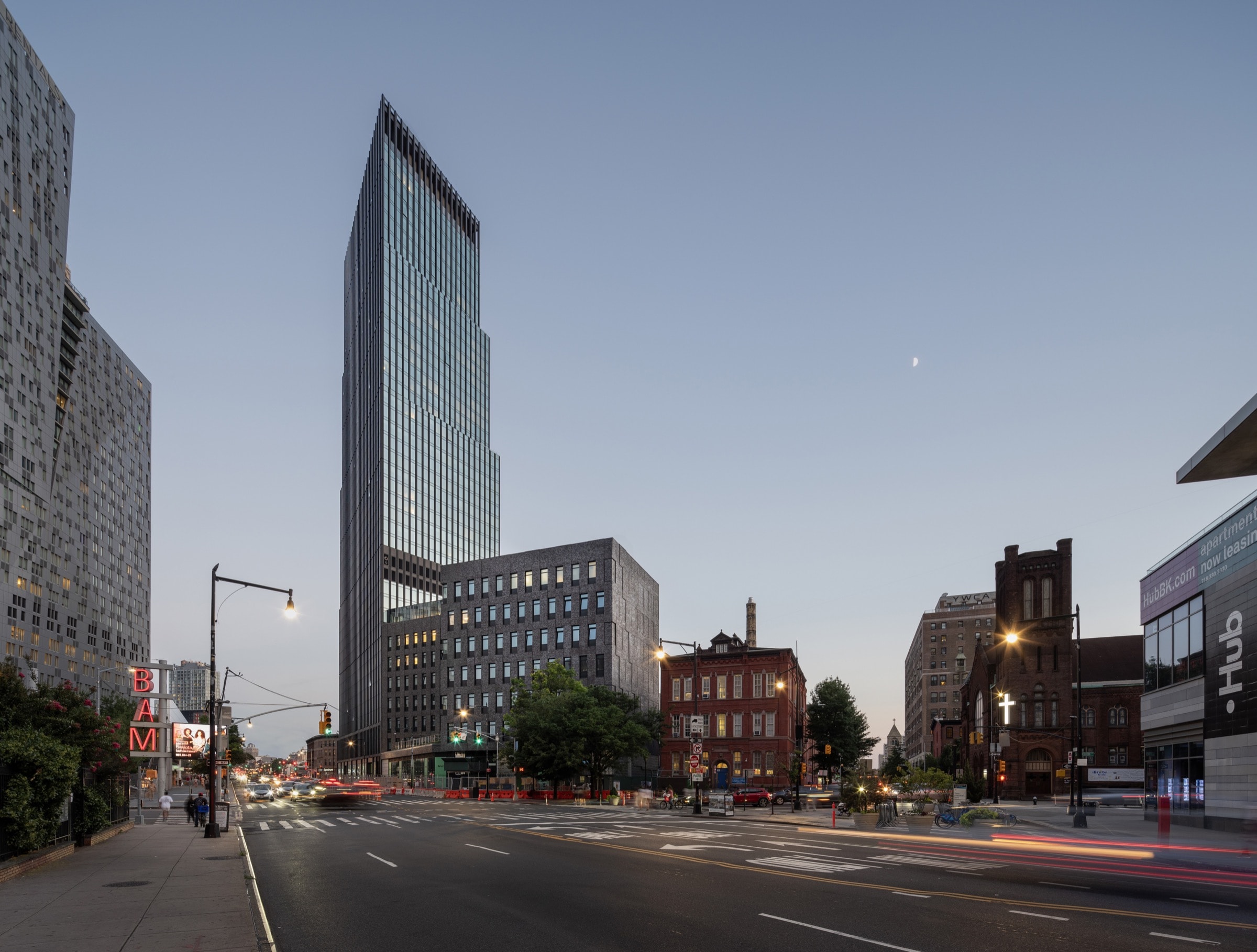
We are commited to making Brooklyn beautiful, sustainable and equitable. The urban plan for the block is to preserve historic structures, build schools, housing, office and retail space for the community. Our goal is to build the most sustainable block in Brooklyn. The first phase is now complete delivering New York City’s first all-electric tower, passive house schools and LEED community. Phase 2 is now underway to deliver more housing, office and retail space in the world’s tallest passive house tower which will complete the block. We are living in a climate emergency, and we have the capacity to address this challenge to show how we can live sustainably in Brooklyn.
Developer: 100 Flatbush Developer, LLC (Alloy Development); Tower Architect: Alloy Architecture; School Architect: Architecture Research Office (design Architect), Ishmael Leyva Architects (Architect of Record); Tower Contractor/CM: Urban Atelier Group – Andrew D-Amico; School Contractor: Hunter Roberts; Structural Engineer: Silman & Magnusson Klemenic Associates; Site/ Civil & Acoustical Engineer: AKRF – Sarah Wilk; MEP Engineer: Cosentini; Sustainability Consultant: Thornton Tomasetti; Commissioning agent: Brightpower; Façade Consultant: Front, Inc.; Geotechnical Engineer: Langan; Expeditor: William Vitacco Associates; Lighting consultant: Lighting Workshop; Street Landscape: Nelson Byrd Woltz
Downtown Brooklyn
https://aiabrooklyn.org/wp-content/uploads/bknow/details/The%20Block%20-%20Board%20Layout.jpg
 055
055
WXY architecture + urban design
BQE Corridor Vision
#Community #Equity #Live
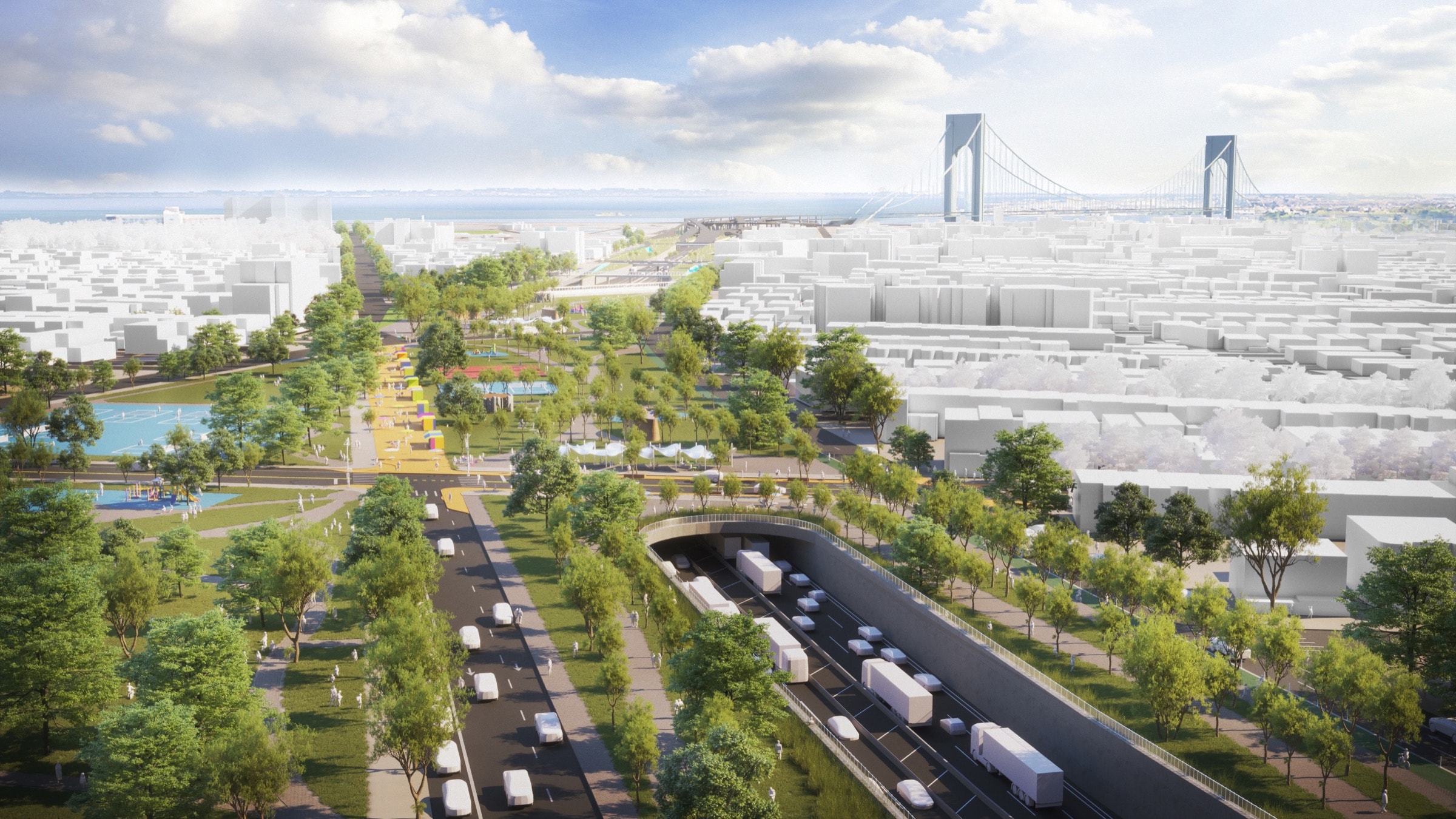
The Brooklyn-Queens Expressway (BQE) has long served as a critical artery for Brooklyn and New York City, but at significant cost to surrounding communities—dividing neighborhoods and contributing to safety and environmental concerns. WXY developed the BQE Corridor Vision with NYC DOT to create a more connected, sustainable, and livable corridor.Community priorities—street safety, climate resilience, and access to public space—inform the design. We propose capping below-grade sections to create park space above and enhancing ground-level areas where the highway is elevated. Green infrastructure, expanded pedestrian connections, improved bus access, and EV charging support a shift to more sustainable travel.The vision was shaped by three rounds of public outreach beginning in Fall 2022, including 13 workshops and over 400 grassroots activities through NYC DOT’s first Community Partners program, setting the stage to transform more than 10 miles of highway.
New York City Department of Transportation, WSP USA, Inc.3x3
Brooklyn, NY
https://aiabrooklyn.org/wp-content/uploads/bknow/details/BQE%20Exhibition%20Board.jpg
 056
056
WXY architecture + urban design
Downtown Brooklyn Public Realm Action Plan
#Community #Live #Work
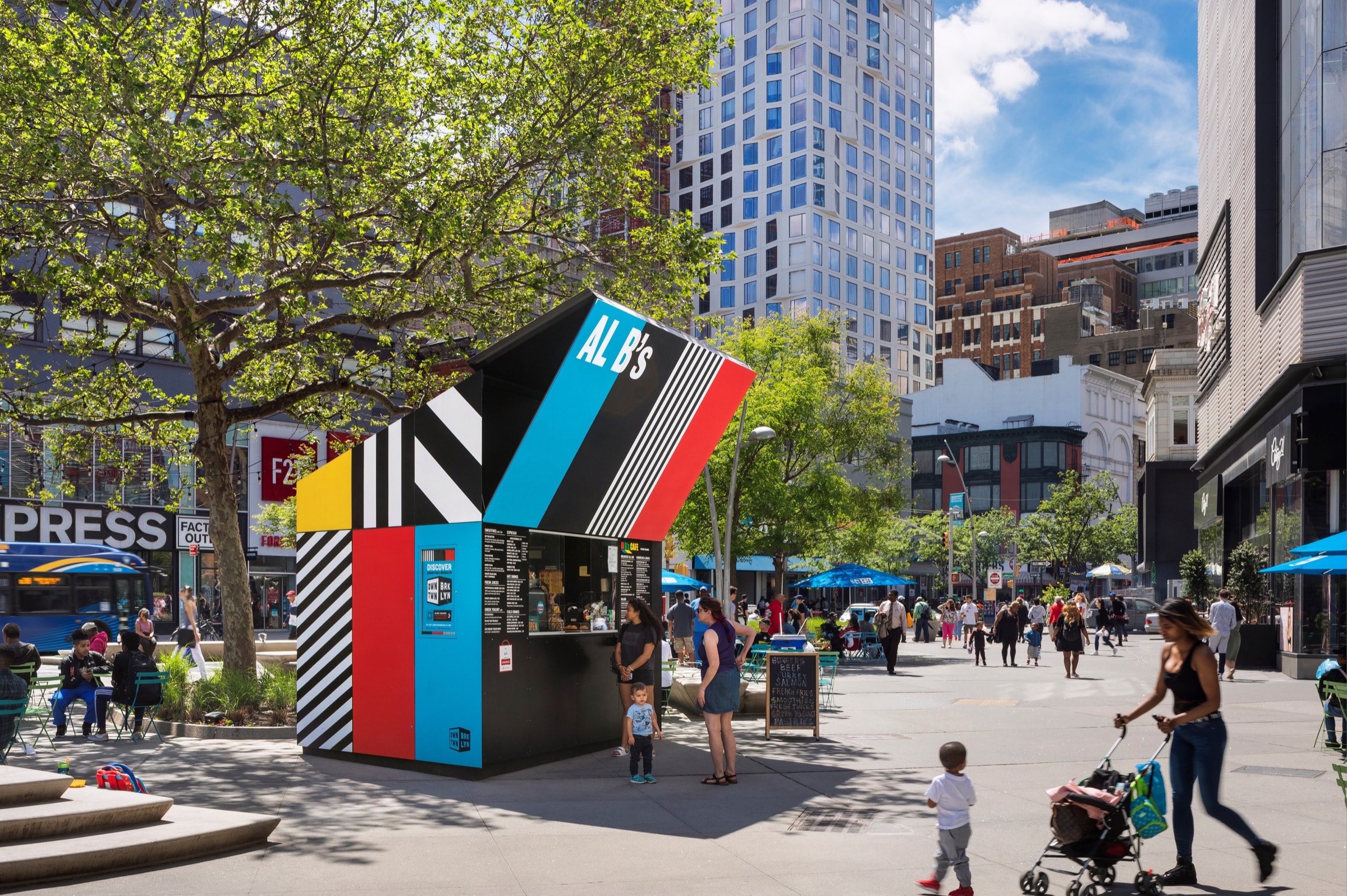
Since its 2004 rezoning, Downtown Brooklyn has become a mixed-use central business district. Our Downtown Brooklyn Public Realm Plan reimagines its wide, busy streets as pedestrian-first, adding parks and public spaces while creating a cohesive network of safer, more walkable streets with improved wayfinding. The plan introduces the largest shared street district in New York City and supports safer, more efficient movement for cyclists and public transit users.The plan integrates green infrastructure—bioswales, porous surfaces, and over 900 new trees—to address stormwater and heat reduction. Well-lit spaces, street furniture, and public art create inviting environments that support community use day and night.BIG and WXY collaborated with the Downtown Brooklyn Partnership to establish a distinct identity for a vibrant, connected district that promotes sustainability and livability while reducing vehicular access and expanding bike lanes.
Downtown Brooklyn Partnership, Sam Schwartz Engineering (TYLin), BIG, MNL, AVJ Associates
Brooklyn, NY
https://aiabrooklyn.org/wp-content/uploads/bknow/details/Downtown%20Brooklyn%20Exhibition%20Board.jpg
 057
057
Gerner Kronick + Valcarcel, Architects, DPC - Randolph Gerner, AIA, Founding Principal
The Dupont
#Community #Materials #Resilience
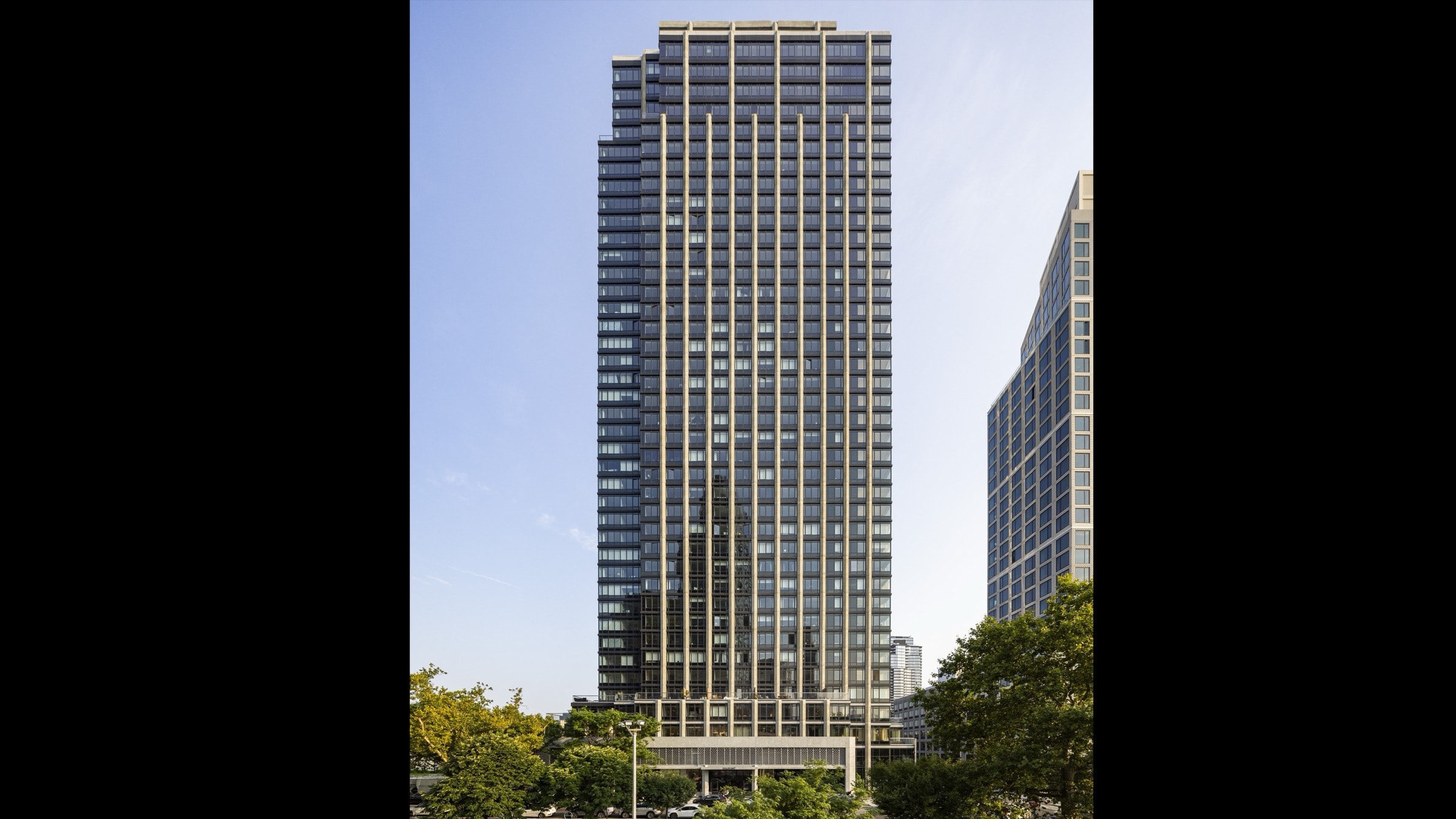
The project is part of a revitalization of the Greenpoint neighborhood area, as part of the Greenpoint Landing master plan, which was once an industrial neighborhood of factories, lumber yards, and an active working waterfront, located in the northernmost section of Brooklyn. The residential tower is constructed in Architectural Concrete (known by the French term Béton Brut ), with etched granite columns contrasting with horizontal bronze banding.The pattern of the expressive architectural concrete facade is a nod to one of the most famous nineteenth-century cut-glass factories called the Greenpoint Glass Works, founded in 1852 by Christian Dorflinger, an immigrant from Alsace, France. To achieve a high-quality casting for the façade, the Architect chose to use Self Consolidating Concrete yielding façade features of an intricate pattern reminiscent of fine cut and engraved lead crystal. The Beton Brut aesthetic celebrates the cast-in-place system.
Monadnock Construction
Greenpoint
https://aiabrooklyn.org/wp-content/uploads/bknow/details/The%20Dupont%20Exhibition%20Board.jpg
 058
058
1100 Architect
NYC Parks Calvert Vaux Park Pavilion
#Community #Equity #Play
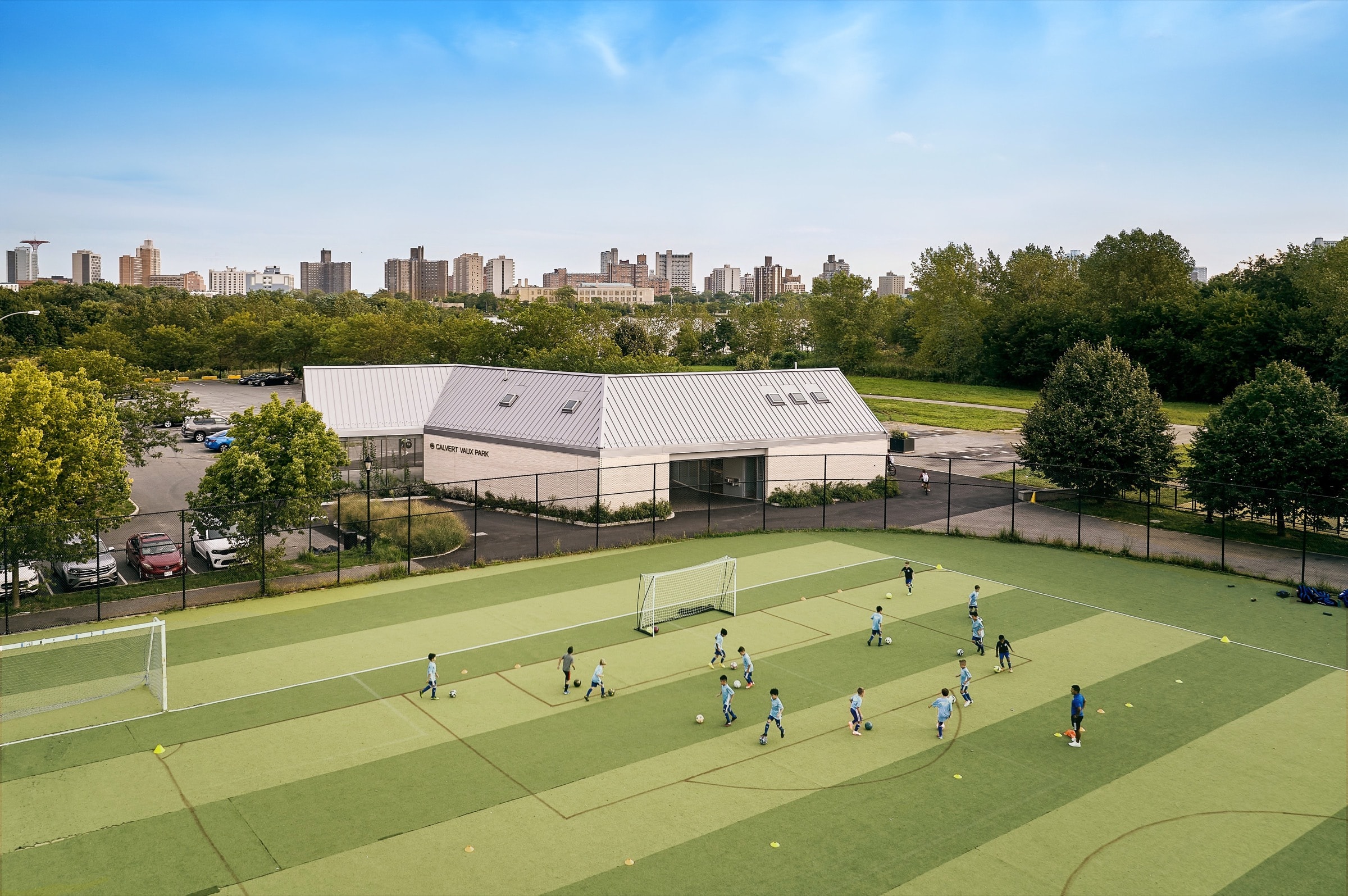
The Park Pavilion is a welcoming gateway to Calvert Vaux Park that provides support facilities for recreational programming in a previously underserved part of the South Brooklyn waterfront.Five distinct programs, a public restroom, staff office, work area, equipment storage and parking, are unified by a simple gabled roof. The design encourages openness and transparency, with visual corridors from athletic facilities to the public restrooms and skylights that provide natural lighting. The roof collects rainwater to irrigate native plantings that integrate the building into the landscape, and stormwater is handled on site to reduce the burden on city drainage systems.
Architect of Record: 1100 Architect, Juergen Riehm, FAIA, BDA; General Contractor: Welkin Construction
Gravesend Neighborhood, Brooklyn, NY
https://aiabrooklyn.org/wp-content/uploads/bknow/details/NYC%20Parks%20Calvert%20Vaux%20Park%20Pavilion%20Exhibition%20Board.jpg
 059
059
Jennifer Sage, FAIA LEED AP Peter Coombe, AIA LEED AP Christina Draghi, AIA Max St. Pierre, AIA Annabel Coleman
BPL Ryder Branch Public Library
#Community #Learn #Materials
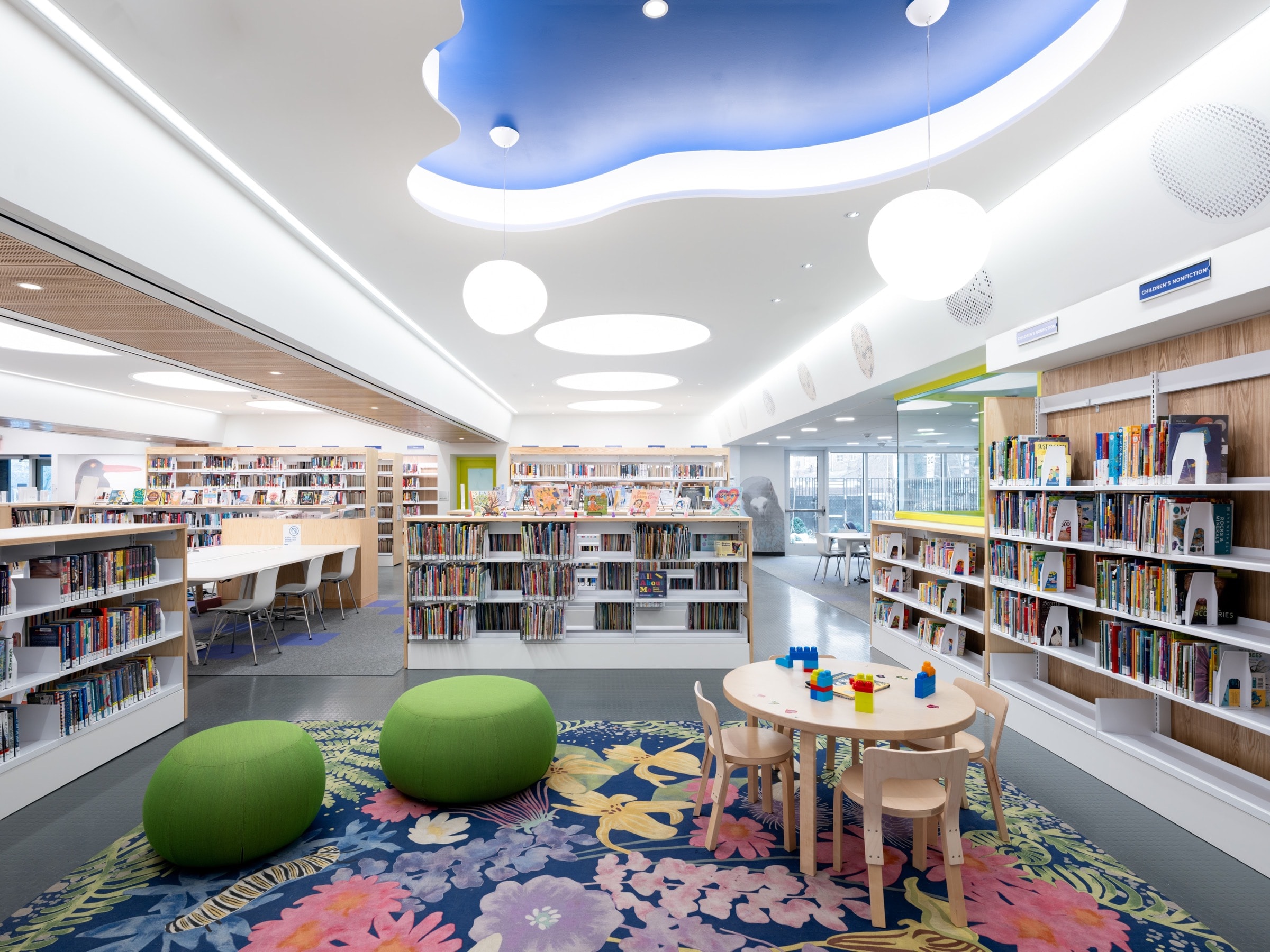
Brooklyn Public Library’s Ryder Branch in Bensonhurst was first opened in the Spring of 1970 by Mayor Lindsay. Designed by Mid Century Modernist Arthuir Whitthoeft of Skidmore Owings and Merrill, the building had seen very few improvements since the 1970s and did not meet 21st-century library standards. In addition to the two planted courtyards providing daylight to lot line spaces, the original design’s most dramatic feature was the linear ceiling coffers expressing building services. The renovation celebrates Witthoeft’s parti with dramatic lighting, a brighter palette, spaces for teens, adults, and children, including a project room and tech lab. To that, we have added a bit of biophilic whimsy: native birds.
Structural Engineer - KPFF; Civil Engineer - Collado Engineering; AV / IT - NV 5 Engineering; Construction - Erin Construction; Brooklyn Public Library - Project Manager, Philip Jenkin
Brooklyn, NY
https://aiabrooklyn.org/wp-content/uploads/bknow/details/Sage_and_Coombe_BPL_Ryder_Branch.jpg
 060
060
Elijah Roman
Porous Terrains
#Community #Learn #Resilience
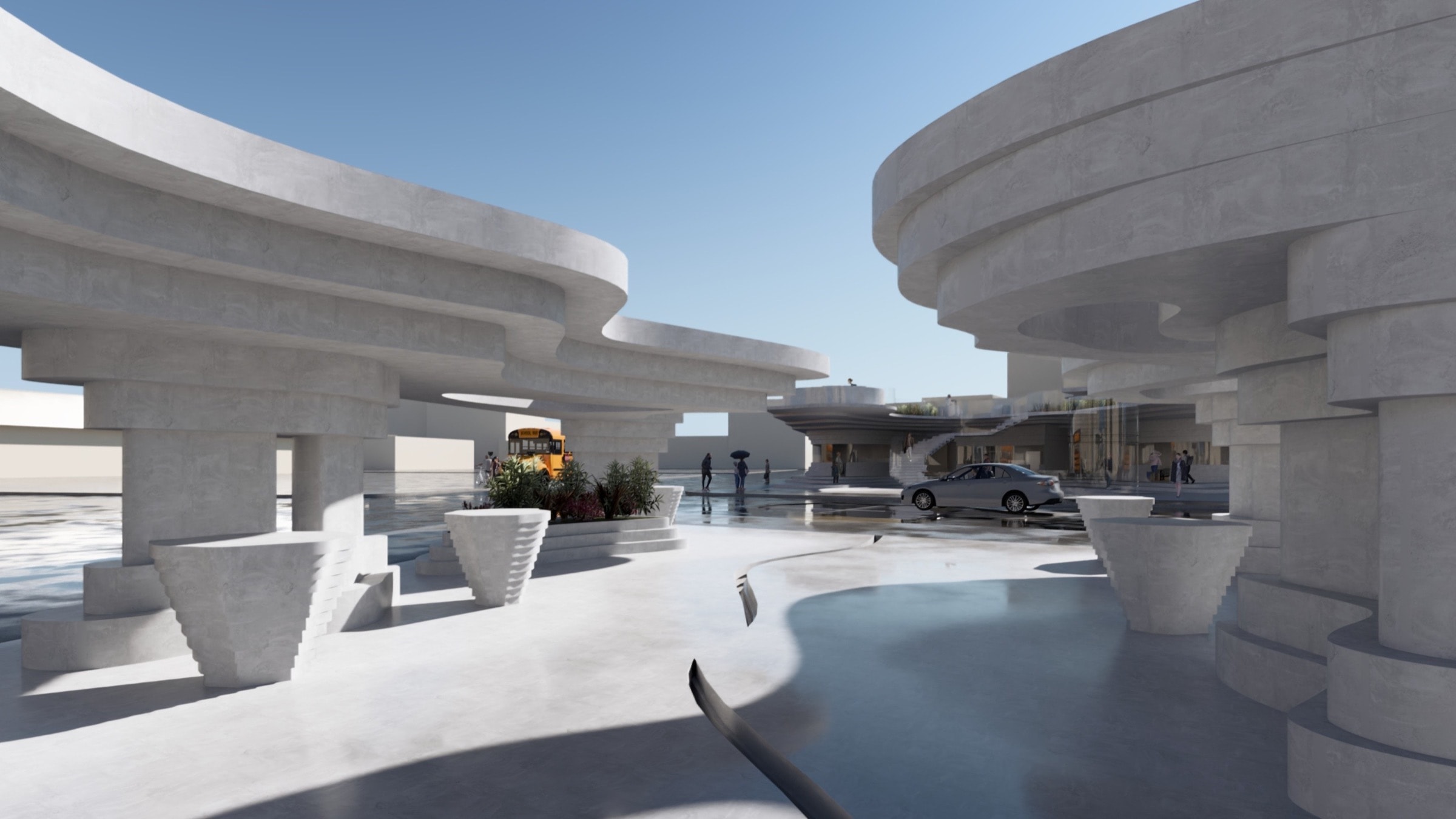
The project aims to create a community center that responds to the flooding crisis and resiliency displayed throughout Red Hook. The center celebrates the collection of water by creating an intimate underground experience that acts as both an educational space and water treatment facility. The center composed of porous concrete that allows water to be absorbed and collected into visible treatment tanks. Inviting the community to be exposed to water infrastructure in a positive light within a unique atmosphere.
New York City College of Technology; Professor Eugene Park
Red Hook
https://aiabrooklyn.org/wp-content/uploads/bknow/details/Porous%20Terrains.jpg
 061
061
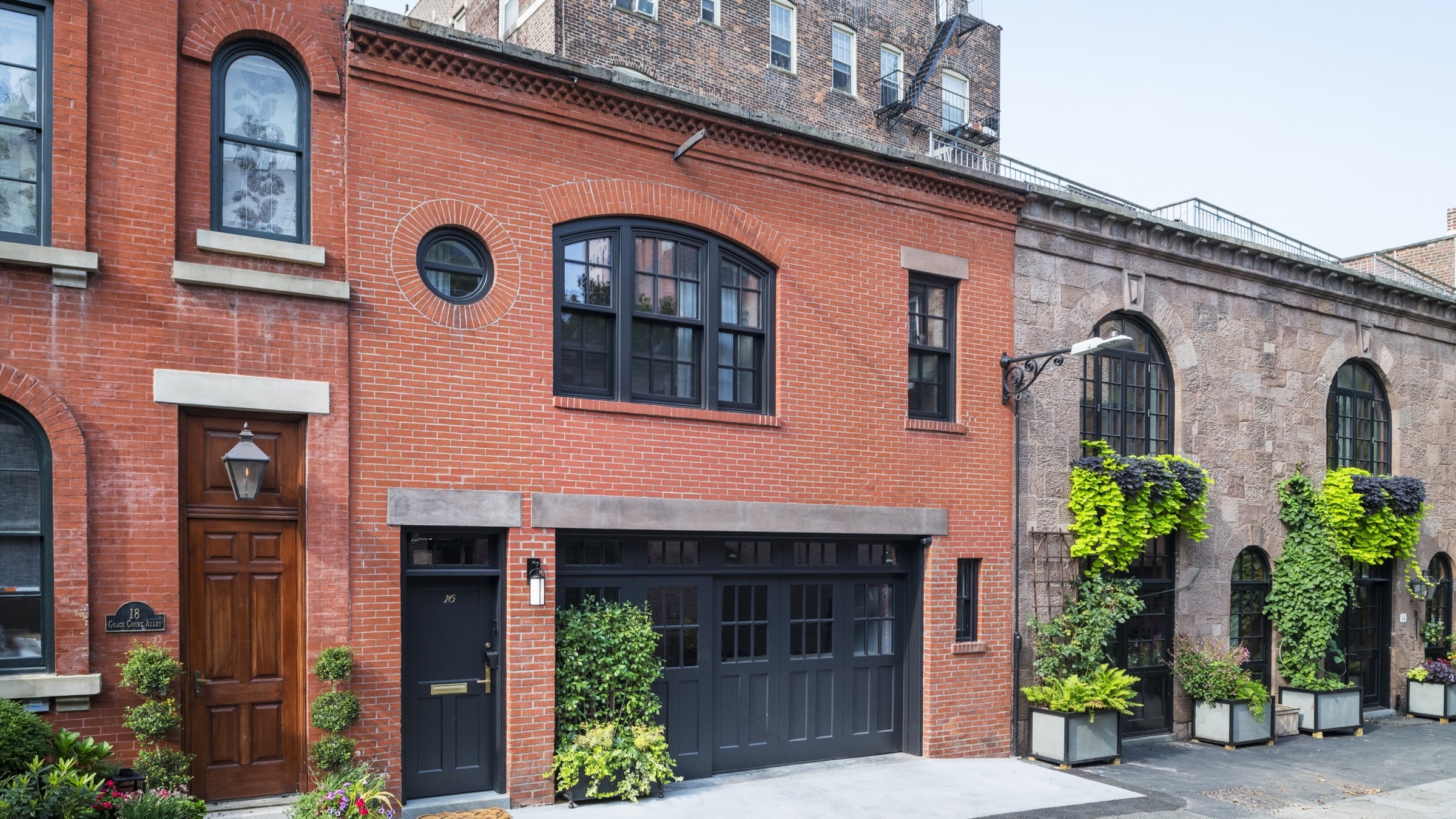
Michael Ingui, Marc Fabris, Ashley Griffith, Meghan Laky
Brooklyn Heights Carriage House
#Family #Live #Materials
We transformed this Brooklyn Heights carriage house into a young family’s forever home. The adaptive reuse involved converting a four-car garage into the main living space, excavating to create a new cellar, and creating a rooftop addition. A sculptural staircase pours light into the building’s core. The staircase’s continuous railing and large openings visually and spatially connect each level, enabling spaces on different floors to function as one. The project blends modern amenities and finishes with the building’s historic fabric, including exposed joists and masonry walls. As a certified Passive House, the 100-year-old building will survive for generations to come.
Architect: Ingui Architecture, Interior Design: BIA Interiors, Contractor: Taffera Fine Building & Finishes
Brooklyn Heights
https://aiabrooklyn.org/wp-content/uploads/bknow/details/Brooklyn%20Heights%20Carriage%20House.jpg
 062
062
james baer
bergen place
#Community #Family #Live
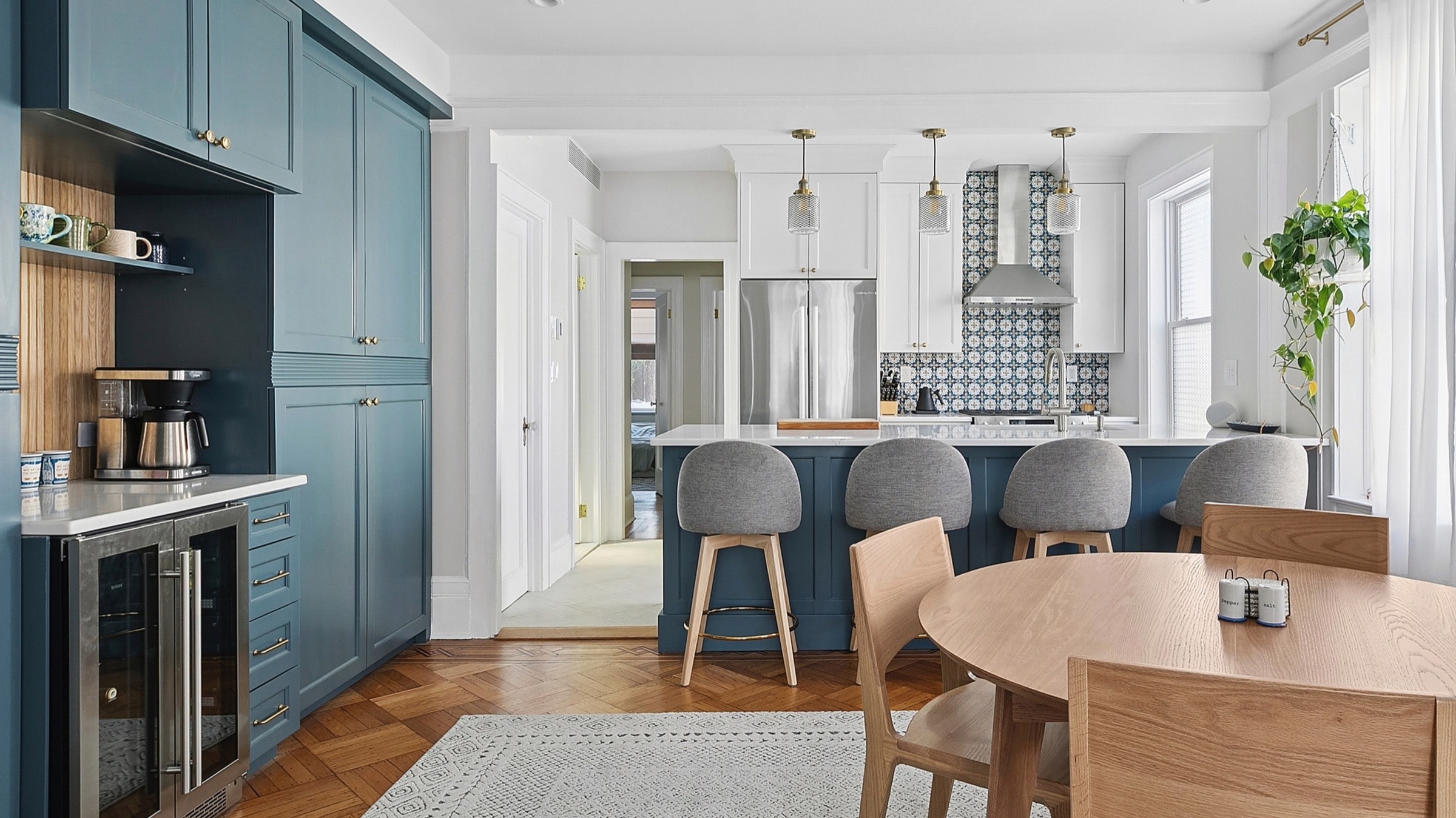
the project is the renovation of a 2-family house by the two siblings that grew up in the building. the house was originally owned by the sibling’s grand parents who lived on the first floor, while the siblings’ family occupied the second floor apartment. 2-family houses have a long brooklyn history of providing a foot-hold in the city, affordable housing and generational wealth
bernard doyle, gbi construction corporation
bay ridge
https://aiabrooklyn.org/wp-content/uploads/bknow/details/Bergen%20Place-Exhibit%20Board.jpg
 063
063
james baer
sterling place
#Community #Family #Live
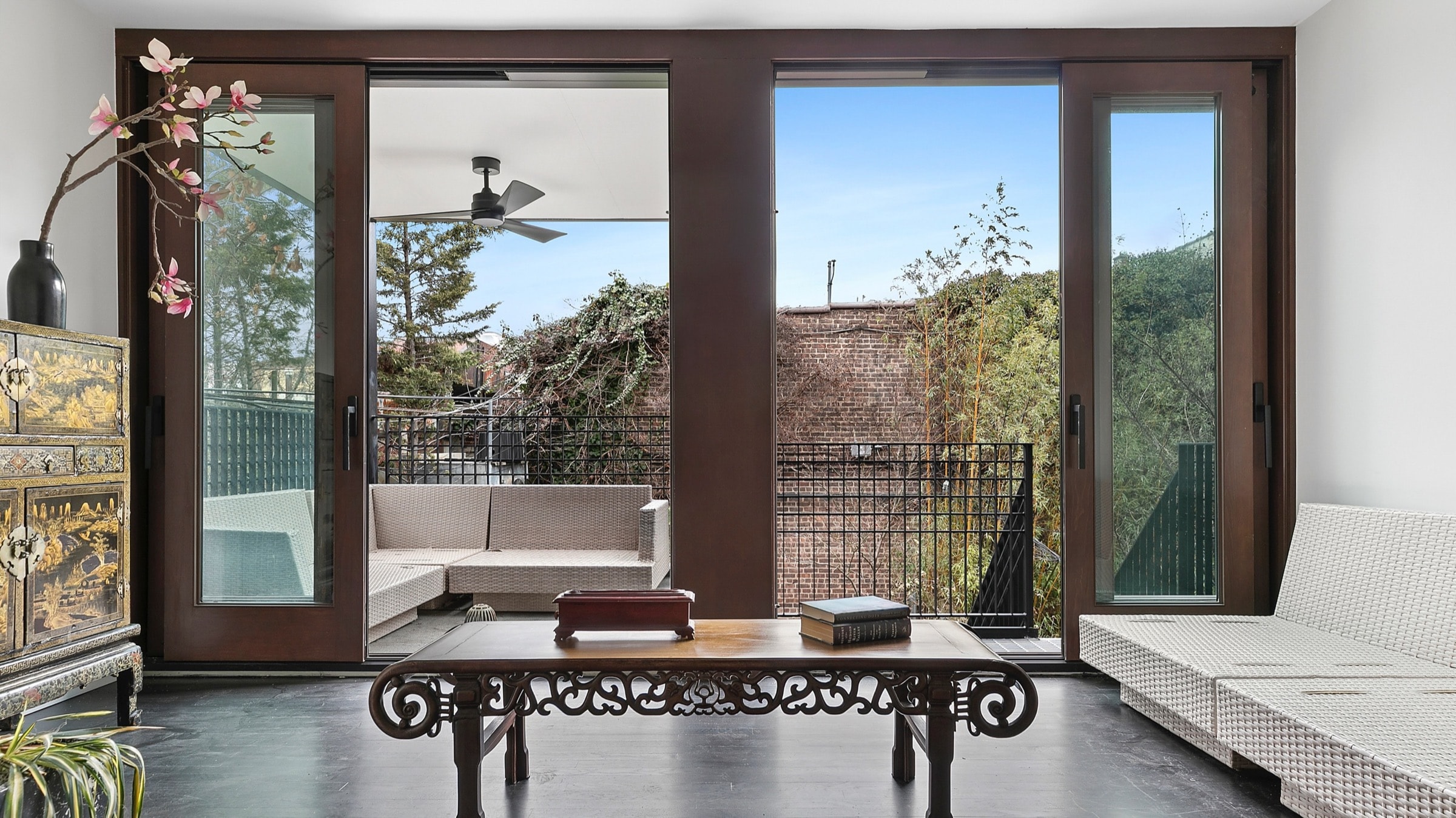
the project is rear yard additions to the owner’s duplex apartment allowing them to enjoy more years in their home and community. the owners are a mature couple that have owned and lived in the 3-family rental building for many decade
bernard doyle, Bayside Builders
park slope historic district
https://aiabrooklyn.org/wp-content/uploads/bknow/details/Sterling%20Place-Exhibit%20Board.jpg
 064
064
CO Adaptive
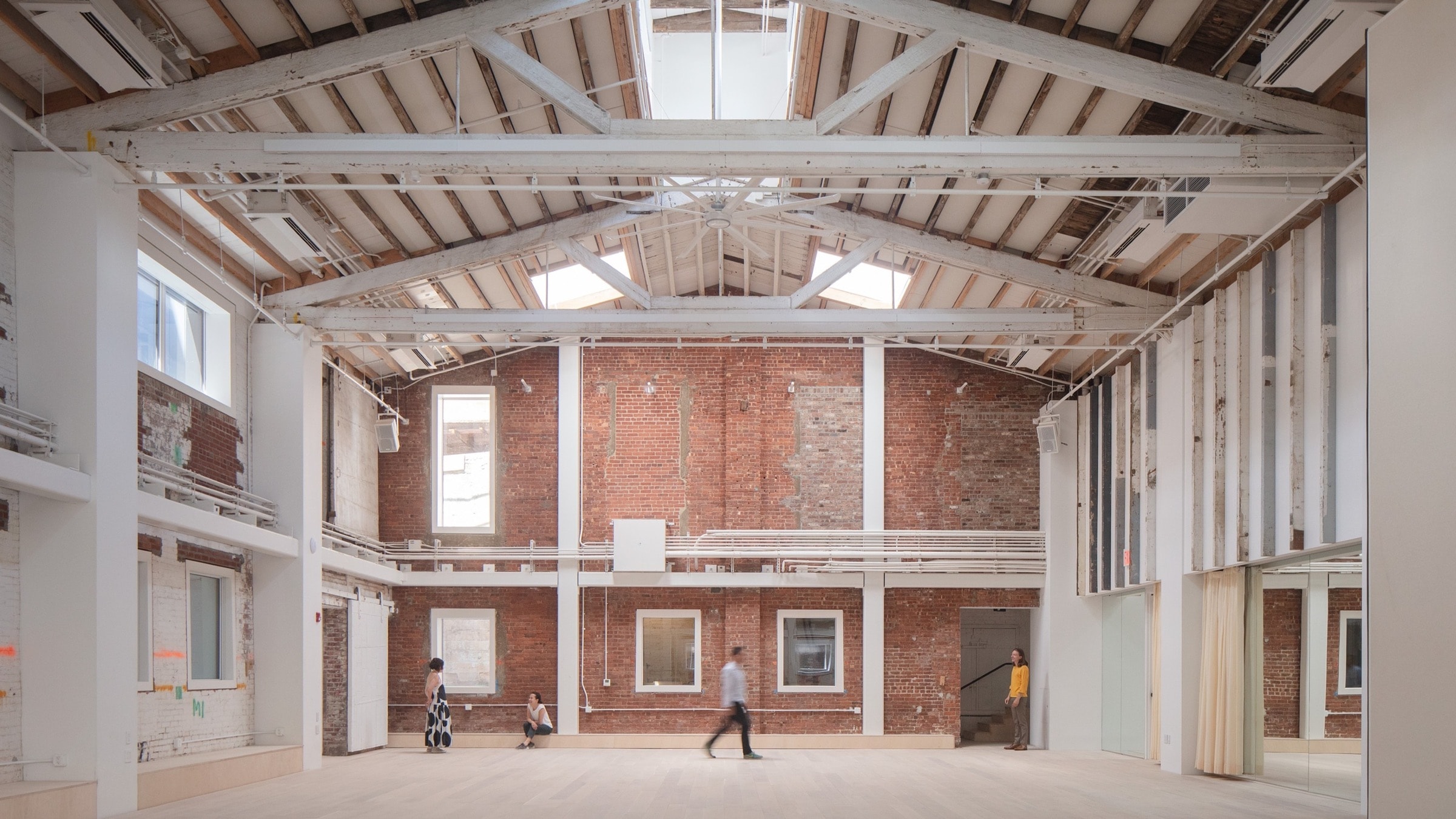
Timber Adaptive Reuse Theater
#Community #Materials #Resilience
Low-carbon thinking drives the design of the transformation of a 1902 heavy-timber and brick former metal foundry into an experimental rehearsal space for theater artists in Gowanus. We reduced demolition waste and engaged with the site’s history by adapting an existing building; we employed low-carbon structural insertions like CLT—among the first NYC commercial adaptive reuse projects to do so; and we repurposed removed materials, primarily longleaf pine, into new architectural features while minimizing virgin material use.
Architecture: CO Adaptive, General Contractor: Yorke Construction, Photography: Naho Kubota
Gowanus
https://aiabrooklyn.org/wp-content/uploads/bknow/details/Timber%20Adaptive%20Reuse%20Theater.jpg
 065
065
james baer
st marks avenue
#Equity #Family #Live
the project is the rear yard extensions to the owners triplex. the 2-family dwelling is owned by a same sex, Indian couple that live in the triplex and rent the basement apartment. though new to the block they have bonded with and been accepted by the older residents. brooklyn has a long history of being a place where immigrants and outsiders can find a community
bernard doyle, RADB construction
prospect heights
https://aiabrooklyn.org/wp-content/uploads/bknow/details/St%20Marks-Exhibit%20Board.jpg
 066
066
CO Adaptive
Boerum Hill High-Performance Retrofit
#Craft #Live #Resilience
This transformation of a two-family, three-story landmarked townhouse from 1860 was a surgical act of creating an energy-efficient, climate-resilient home with a sensitive approach to the 160-year-old structure. We preserved original plaster and woodwork details while ensuring electrification and better energy efficiency through updated systems and new, high performance openings. We retained and refinished the original old growth pine flooring throughout as well as repaired the intricate original front doors.
Architecture: CO Adaptive, Construction Management: PLANE Remodeling, Photography: Naho Kubota
Boerum Hill
https://aiabrooklyn.org/wp-content/uploads/bknow/details/Boerum%20Hill%20High-Performance%20Retrofit.jpg
 067
067
Fernando Villa (MAP), Brian Loughlin (MAP), Matt Scheer (MAP), Andrea Kretchmer (Xenolith), Chris Lebron (Xenolith), Terri Belkas-Mitchell (Xenolith)
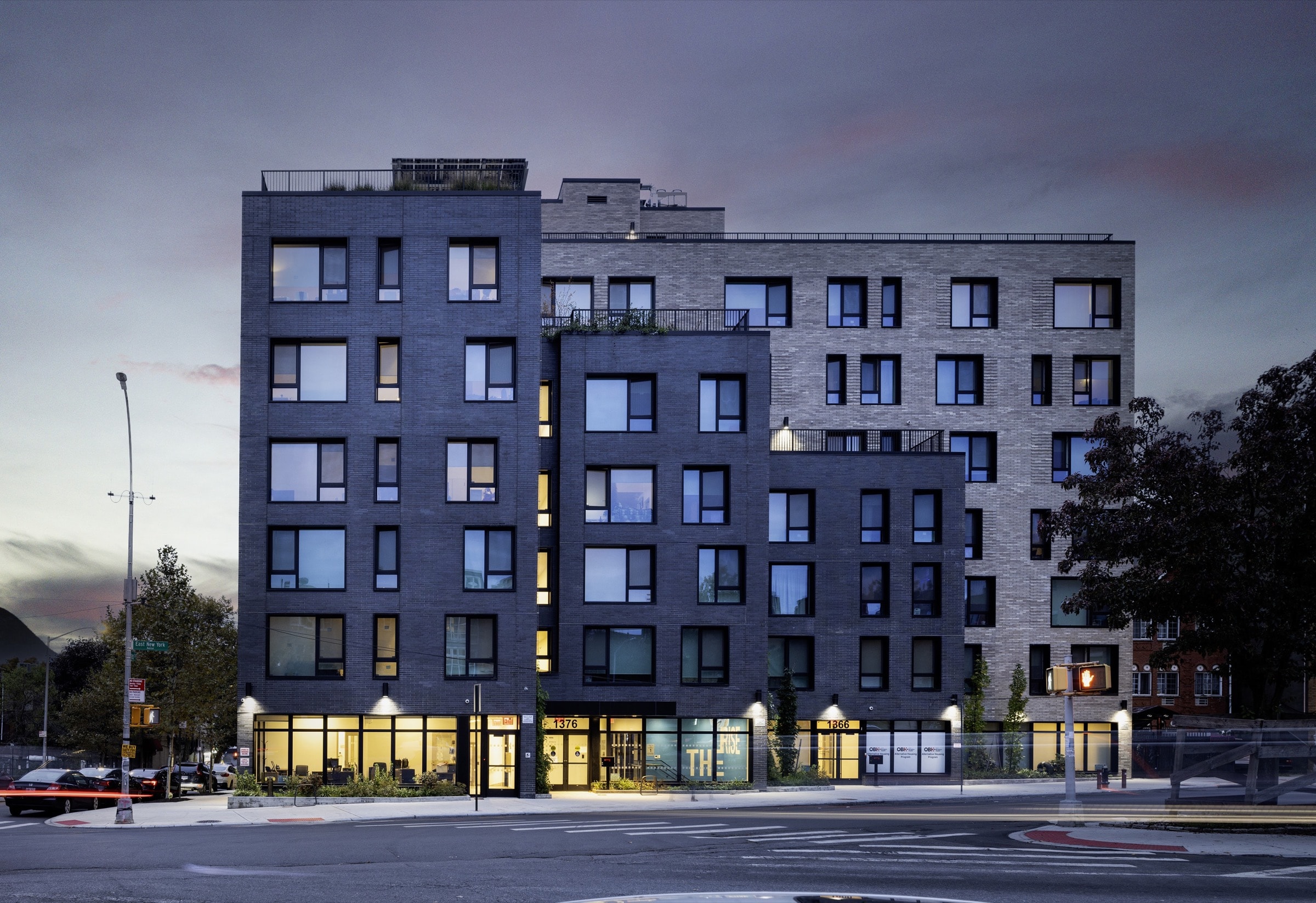
The Rise
#Community #Equity #Resilience
The Rise is a mixed-use, Passive House-certified Brooklyn development that offers 72 units of supportive and affordable housing for justice-involved families and low-income households, and over 13,000 square feet of community facility space. The development includes social service offices, community programming space, two fitness studios, and a rooftop community garden that will provide healthy food access for the neighborhood. A computer room, laundry room, and community room, with adjacent landscaped terraces make up the residential amenities. Urban design considerations like large glass storefronts, recessed, well-lit, pedestrian and bike-friendly entrances and deep sidewalks, give The Rise a welcoming street front. Brick relief patterns add texture and variation to the exterior, and three main volumes clad in a dark gray brick and capped with residential amenity terraces “step up” along the front façade. As a physical representation of the social impact within the building, those bays inspired the name – The Rise.
Architect: Magnusson Architecture and Planning (MAP), Client/Developer: Xenolith Partners, LLC, Co-developers/Project Partners: The Community Preservation Corporation (CPC), United for Brownsville (Formerly Brownsville Partnership), Women's Prison Association (WPA), General Contractor: Bruno Frustaci Contracting Inc., Landscape Architect: terrain-nyc, landscape architecture p.c.
Brownsville
https://aiabrooklyn.org/wp-content/uploads/bknow/details/The%20Rise%20Board.jpg
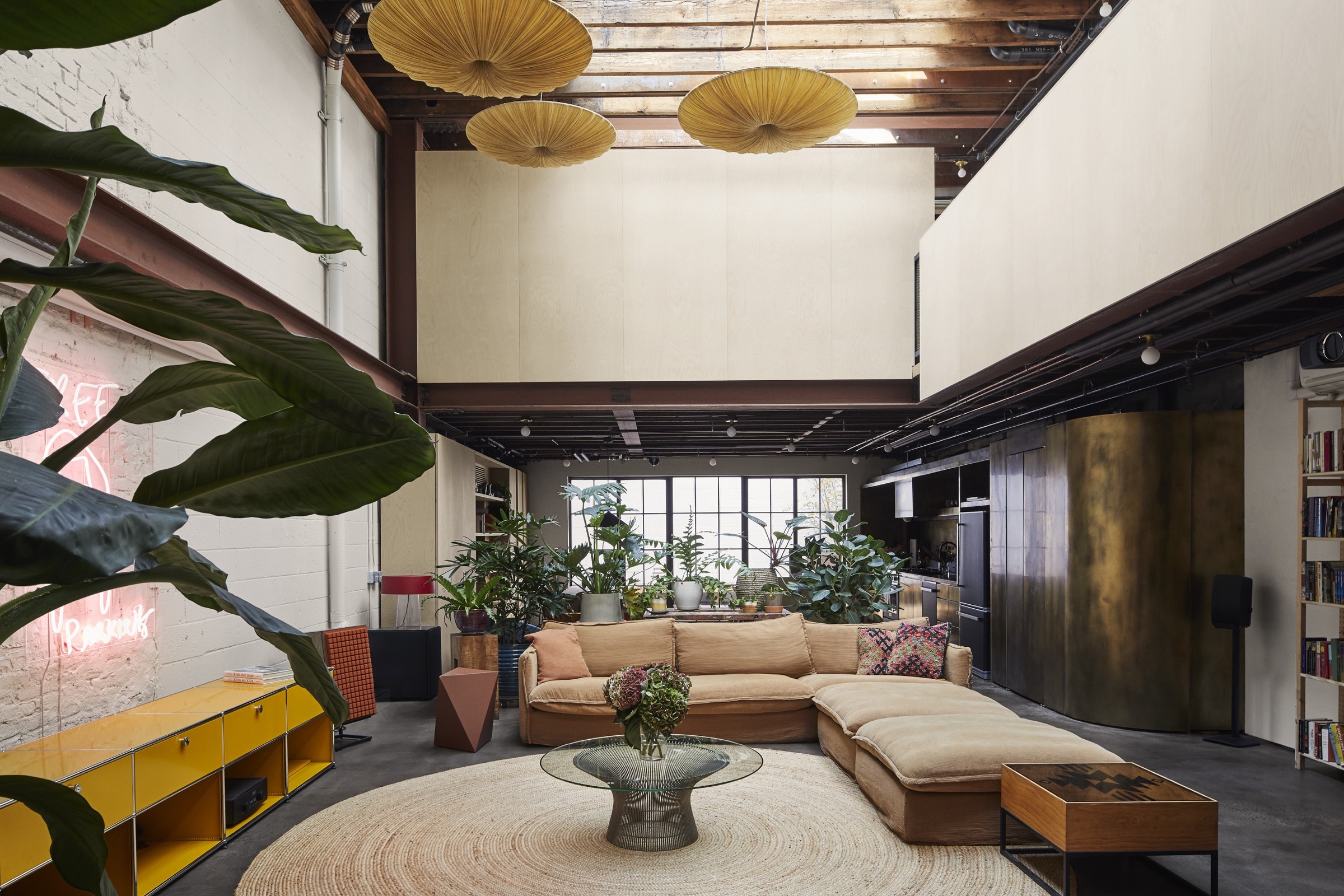 068
068
S4A|Space for Architecture
House as a Garden
#Live #Materials #Play
House as a Garden draws light deep into the core while fostering a sense of mental balance and well-being for its occupants. What began as a raw, industrial storage space: vast, uninsulated, and undefined, became an opportunity to reimagine domestic life within an expansive volume.Beyond responding to the clients’ programmatic needs, the project is guided by an atmospheric approach: natural materials, a grounding palette, abundant daylight, and layers of greenery create a calm, restorative environment.Framed views and planted elements blur the boundary between interior and city, transforming the home into a retreat from the intensity of urban life.
General Contractor: Michilli, Inc.
Red Hook
https://aiabrooklyn.org/wp-content/uploads/bknow/details/House%20as%20a%20Garden_Exhibition%20Board.jpg
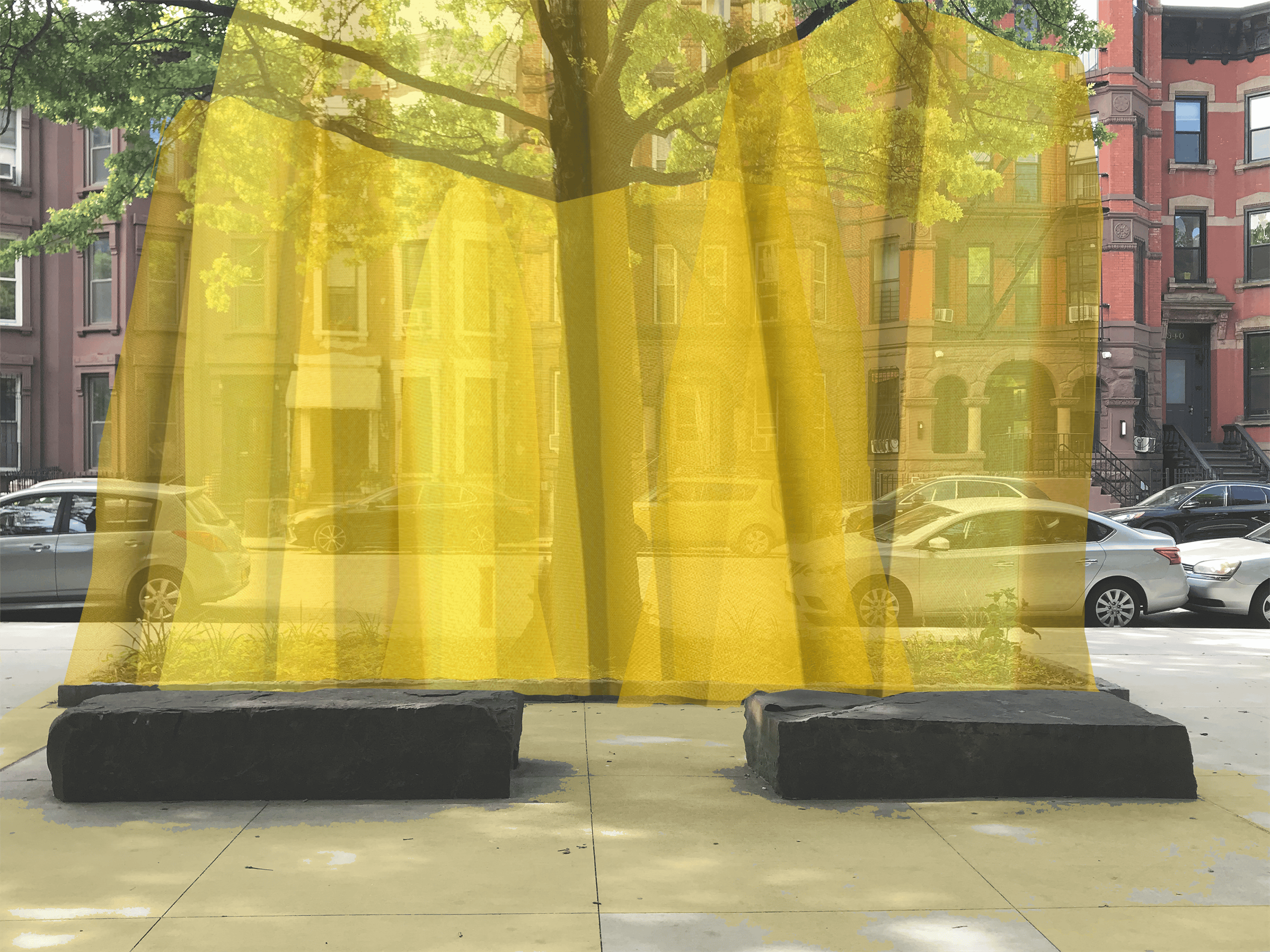 069
069
Mathanki Kalapathy (Mathanki Kalapathy Architect PLLC)
Urban Tent–Architecture of Play
#Community #Materials #Play
The project is an imagined proposal for Brooklyn that transforms the sidewalks into any area of imagination and play for people of all ages. It refers back to times in childhood when ‘pretending’ was a way of life and everyday objects would turn into fantastical elements–– such as when we would hang fabric off of chairs to make tents that became hideaways and whatever else we imagined them to be. This architectural intervention wraps the sidewalk trees in colorful, sheer fabric to create zones of spaces intended to activate people’s imagination in everyday life and to engage them with the cityscape, much like we did with the world around us when we were younger. The intervention would be integrated with a sound installation that includes musical compositions created from field recordings collected from different spaces in Brooklyn to create both a spatial and sonic experience.
N/A
Clinton Hill, Brooklyn
https://aiabrooklyn.org/wp-content/uploads/bknow/details/Urban%20TentArchitecture%20of%20Play_Exhibition%20Board.jpg
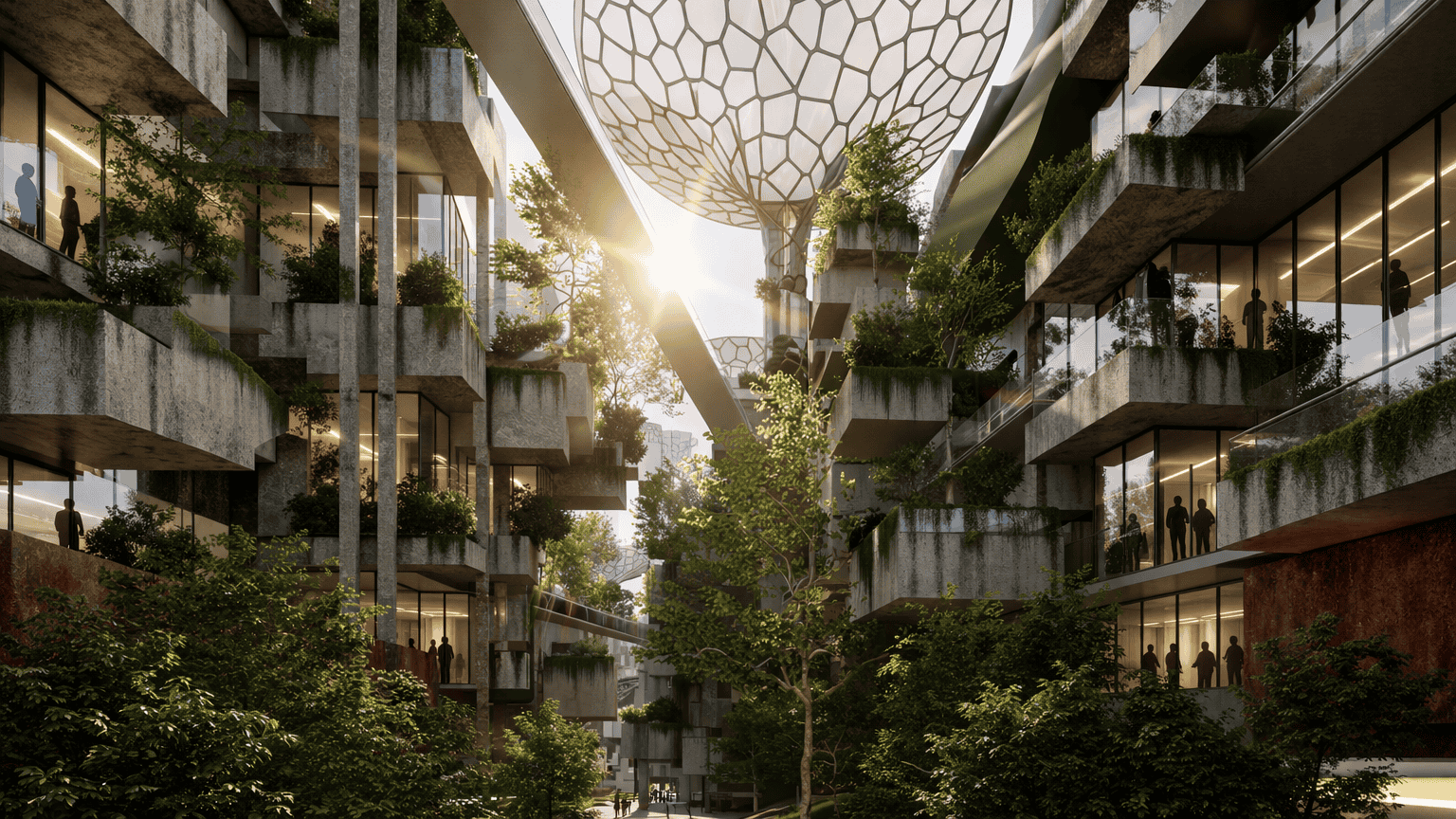 070
070
Afreen Anjum Khan, Safeerul Haque Syed
Elevated (Bio)Philia
#Community #Live #Resilience
“Elevated (Bio)Philia” embodies the essence of Brooklyn NOW! by framing Red Hook as a model for climate-responsive, community-centered design. The project responds to local challenges such as sea level rise and flooding through an integrated system of flood-resistant housing, aquaculture, oyster farming, and renewable energy.Its unique quality lies in treating ecological infrastructure as part of everyday urban life. By incorporating biophilic principles, the design demonstrates how natural systems can enhance resilience, support biodiversity, and contribute to local economies.The project also highlights the importance of equity by linking environmental strategies with accessible economic opportunities. Grounded in both historical knowledge and contemporary innovation, “Elevated (Bio)Philia” offers an educational framework for how Brooklyn can adapt to climate change while promoting sustainability, resilience, and inclusive urban growth.
School - Pratt Institute School of Architecture; Teacher - Prof. Oliver Schaper, Prof. Valeria Cedillos
Red Hook, Brooklyn, NY 11231
https://aiabrooklyn.org/wp-content/uploads/bknow/details/Elevated%20BioPhilia.jpg
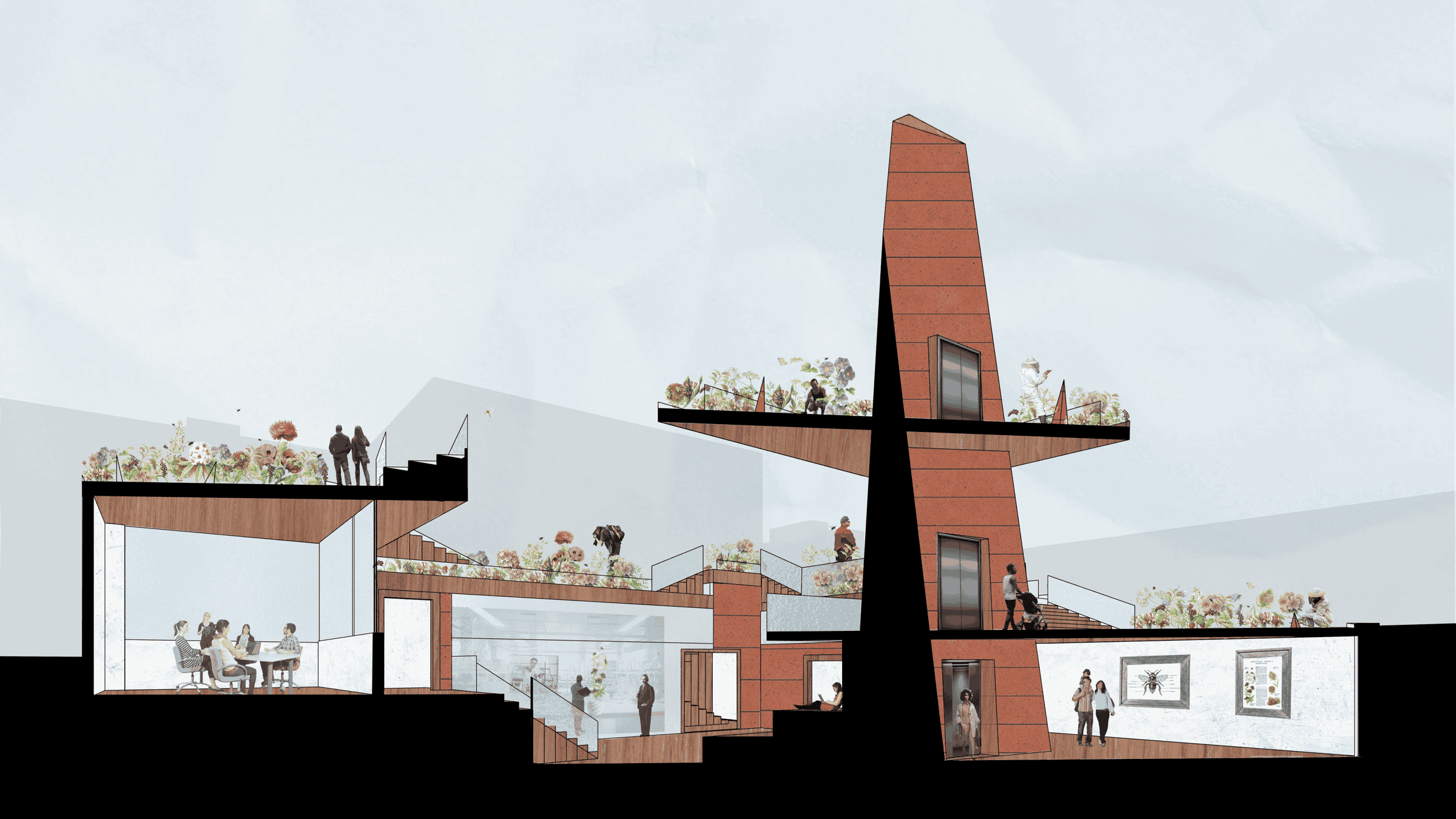 071
071
Sonya Weinstock
Red Hook Apiary
#Craft #Learn #Resilience
Despite their critical role as pollinators, bumble bees areincreasingly endangered due to climate instability and habitat loss.This project proposes a sanctuary for the Golden Northern BumbleBee in Red Hook, pairing the species with preferred flora throughgreen roofs, gardens, and permeable landscapes that also mitigateflood risk. Informed by iNaturalist data, the design maps dependentspecies and supports nearby community farms. The apiary functionsas both habitat and public space, with terra cotta hives, a sunkencourtyard, and below-grade research and education spacesconnected by an underground passage. Visitors participate in nestbuilding,extending the ecology beyond the site. The renders useflora species illustrated in The Naturalist’s Garden by John Feltwell.
CUNY- New York City College of Technology Professor Eugene Seungho Park
Red Hook
https://aiabrooklyn.org/wp-content/uploads/bknow/details/Red%20Hook%20Apiary.jpg
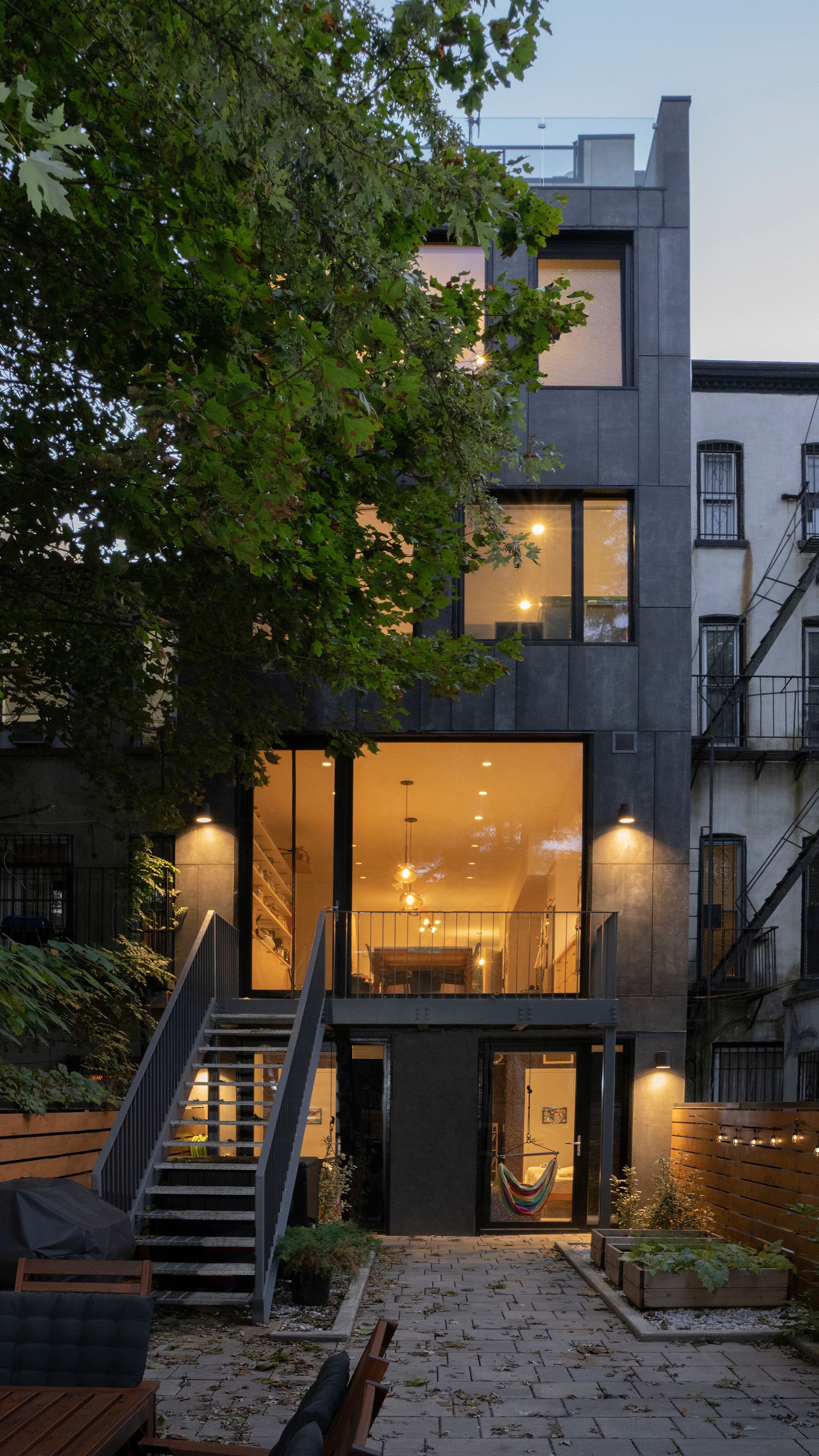 072
072
pH design - Hilary Padget and Anthony Harrington
Prospect Heights Siblings
#Family #Live #Play
A young family purchased this narrow Williamsburg rowhouse knowing it needed everything — floors sagging six inches out of level, a facade hidden behind aluminum siding, and an interior in full gut condition. What it had was good bones and enough potential to make the work worthwhile.The houses in the row had each been altered over the years with coatings and cladding that quietly made things worse. We stripped ours back — repointing, selectively replacing brick, and applying a consolidating coating that stabilizes the masonry without concealing it.Inside, leveled floors, a heat pump system, and high-performance tilt-turn windows with larger unobstructed openings updated the envelope and brought more natural light throughout. A rebuilt central stair with a large skylight above and slatted walls draws daylight through the full height of the house. At the rear, a glass door opens the kitchen directly to the yard.
Honest & Quality Corp. - Jason Cho; Barry Structural Engineering, LLC - Michael Barry; P.A Collins - Paul A. Collins
Prospect Heights
https://aiabrooklyn.org/wp-content/uploads/bknow/details/PROSPECT%20HEIGHTS%20SIBLINGS.jpg
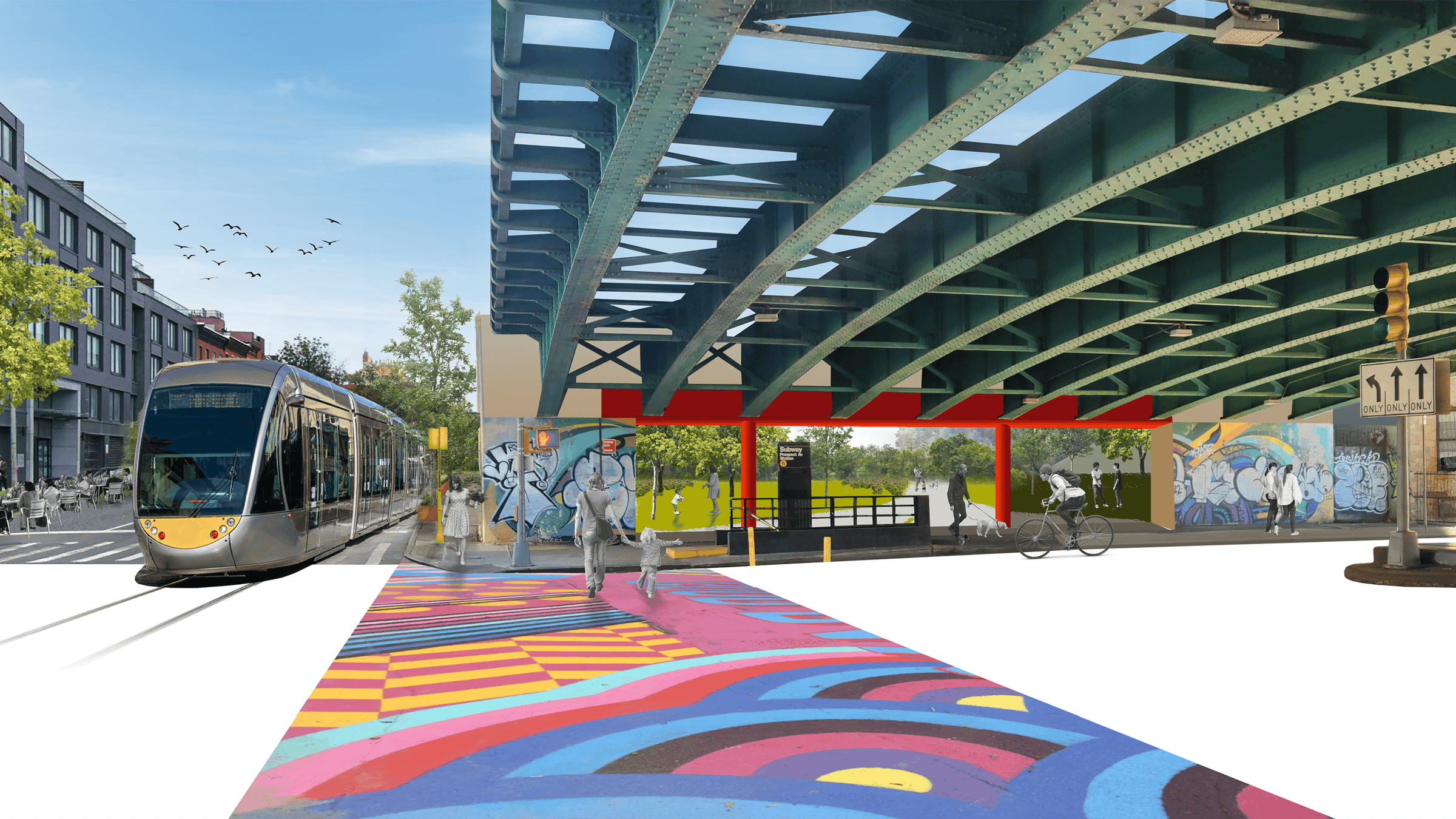 073
073
Severn Clay-Youman
Prospect Trace
#Live #Play #Work
PROSPECT TRACE questions the paradigm “highest and best use” with a proposal to create a new mixed-use neighborhood in the right-of-way of the Prospect Expressway, a spur of the BQE that was originally intended to continue to Coney Island. By sacrificing the minutes saved by the motorists headed East on to Vaux and Olmsted’s historic Ocean Parkway, the City would create as many as a thousand units of housing, new affordable apartments with excellent transportation and access to two of the pre-eminent green spaces in Brooklyn.
David Cunningham, Caroline Werth, Daniel Herzog
Sunset Park, Greenwood Heights, Windsor Terrace
https://aiabrooklyn.org/wp-content/uploads/bknow/details/ProspectTrace.jpg
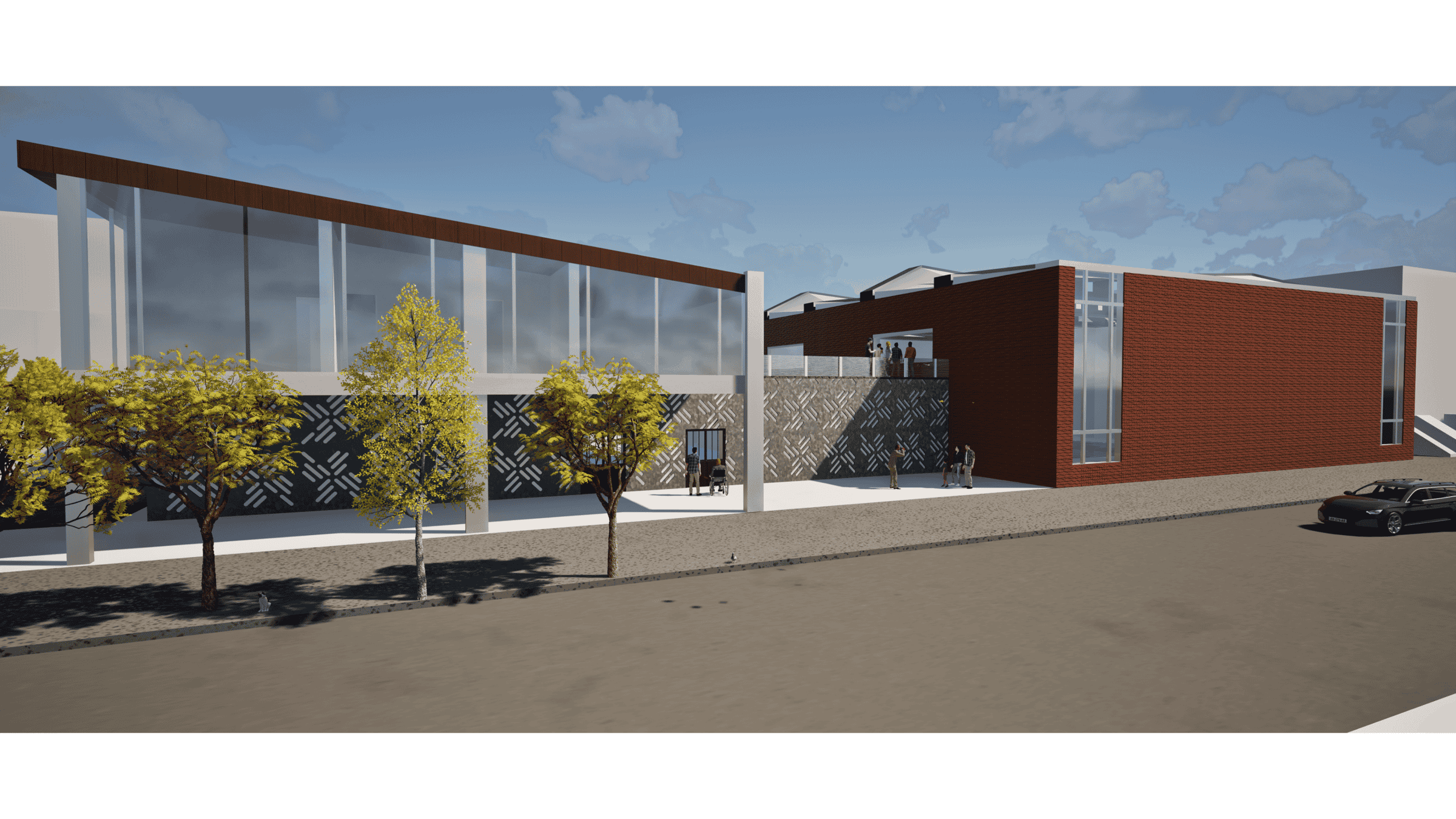 074
074
T'khia Amera Dixon
Enhalo Natatorium
#Community #Materials #Play
This project works to re-imagine the current Bed-Stuy YMCA, through the use of community space and courtyards. Creating a welcoming environment for both residents and visitors to the area. A central courtyard, community garden, and rooftop cafe work to enhance the journey through my natatorium as nature creates moments of pause and views. The pool, although open to all visitors, aims to cater more to the younger demographic, primarily school students.
New York Institute of Technology; Professor: Robert Cody
Bedford Stuyvesant Brooklyn
https://aiabrooklyn.org/wp-content/uploads/bknow/details/EnHalo%20Natatorium.jpg
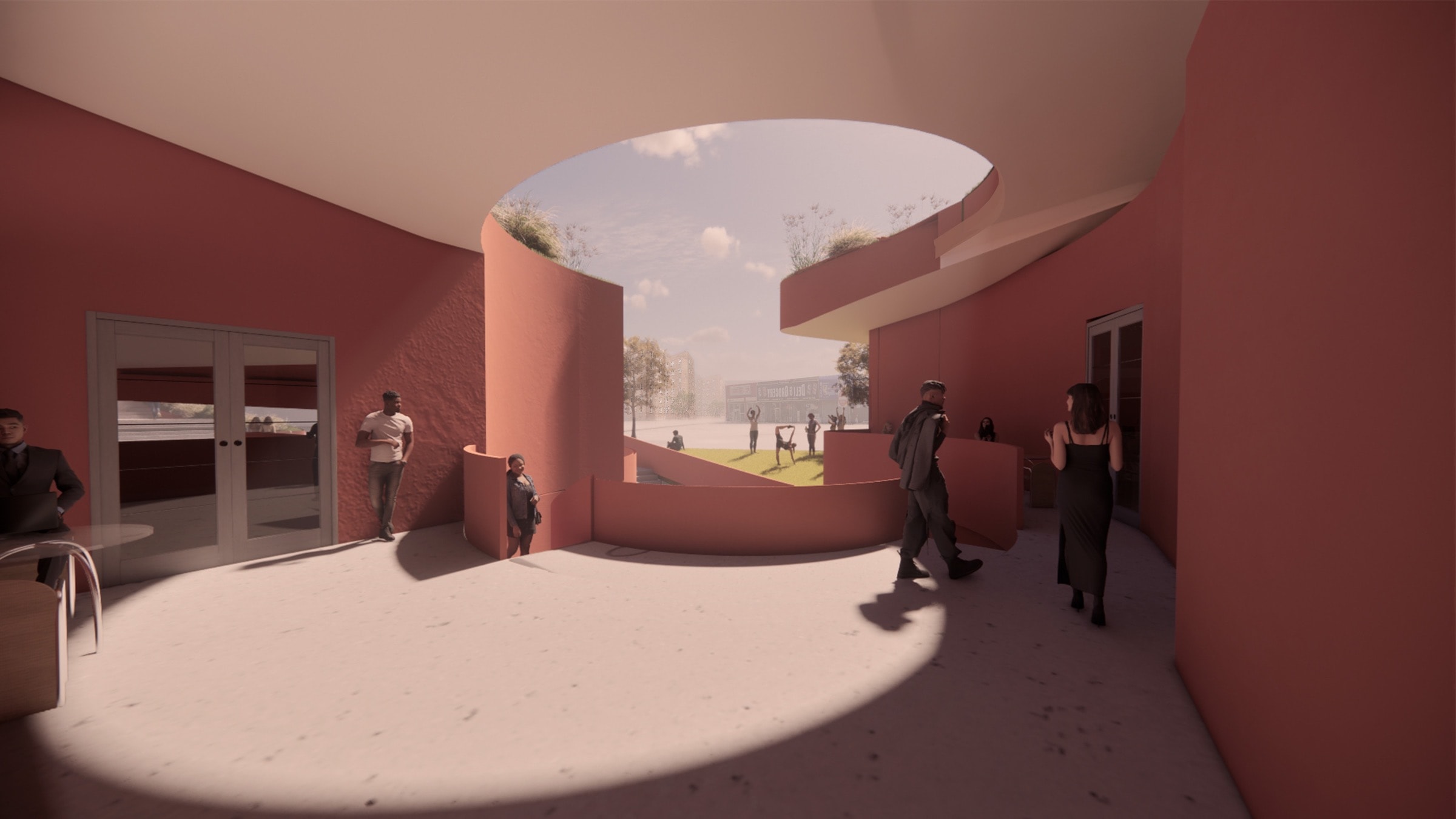 075
075
Leah Jerome
HookWorks
#Community #Craft #Resilience
HookWorks is a culinary incubator organized as enclaves of public space, supporting emerging local businesses in Red Hook. Stormwater retention strategies mitigate sewer overflow, especially during flood events, transforming environmental risk into social infrastructure. Landscaped public space and four rental spaces sit above storage tanks able to hold over 100,000 gallons of water. Terracotta rainscreen panels reinterpret the neighborhood’s brickmaking history through a contemporary, high-performance system.
NYC College of Technology (City Tech); Professor Eugene Suengho-Park
Red Hook
https://aiabrooklyn.org/wp-content/uploads/bknow/details/HookWorks%20Exhibition%20Board.jpg
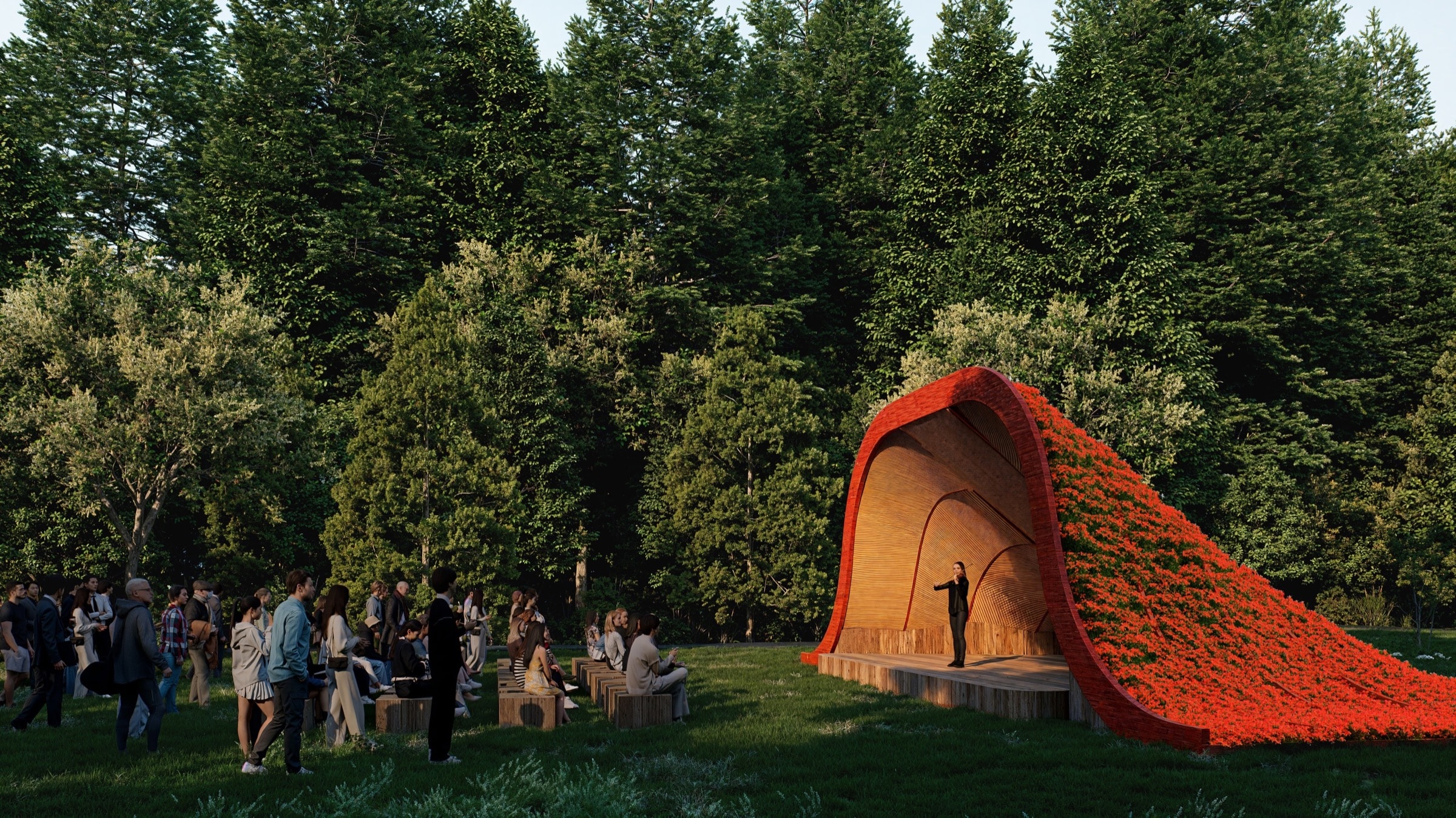 076
076
Selim Vural, Kerry Robertson, Efecan Zeybek
MENNYEZET
#Community #Materials #Play #Resilience
Mennyezet is a modular biophilic structure that can be placed in any park or plaza at ease due to its lightweight modular units.It rigorously nurtures community, public storytelling, and creative place-making, as well as gives voice to community artists and activists.
In Progress
Prospect Heights
https://aiabrooklyn.org/wp-content/uploads/bknow/details/studiovural_mennyezet.jpg
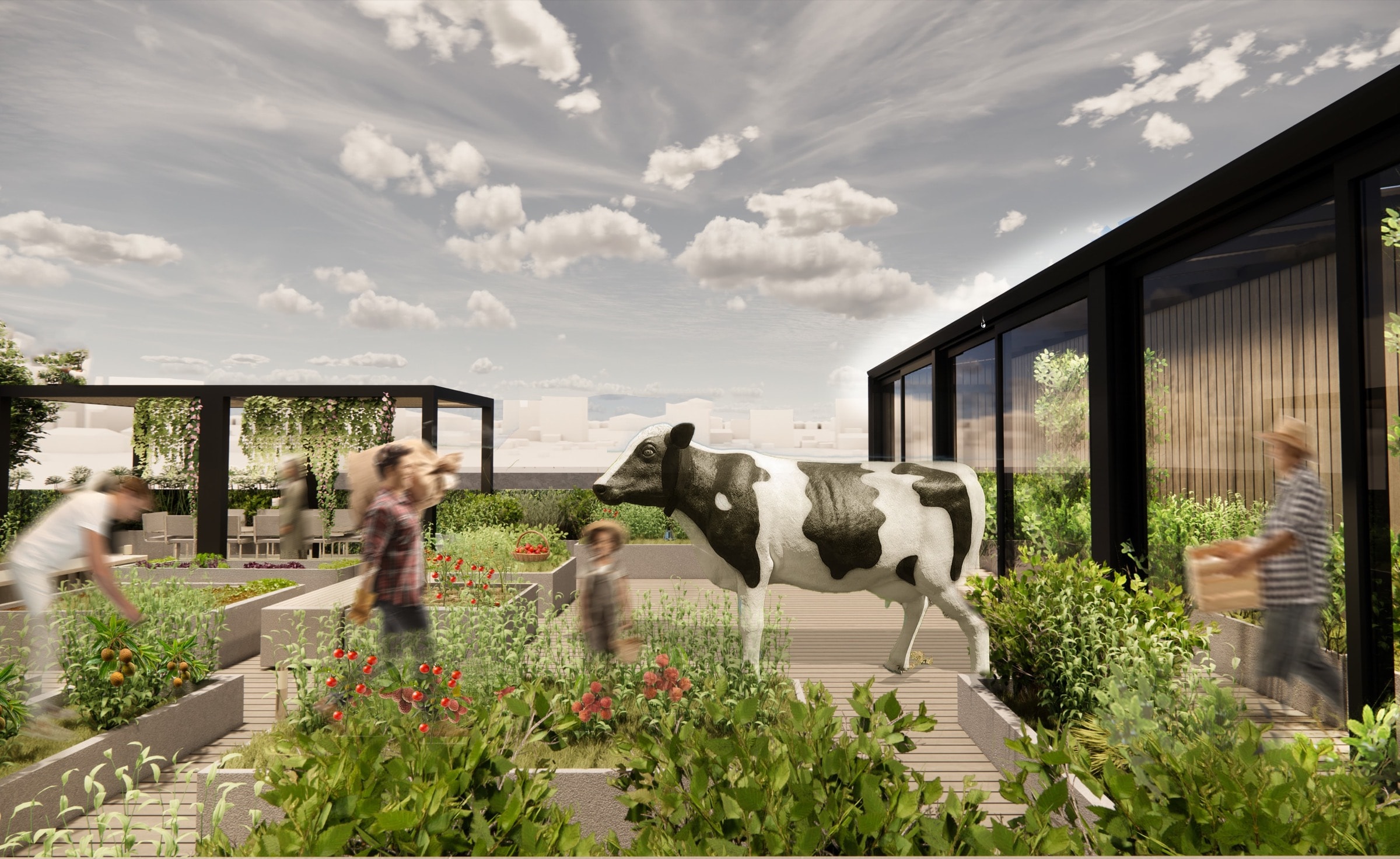 077
077
Studio Vural: Selim Vural, Kerry Robertson, Efecan Zeybek, Ceren Kalayci
Urban Farm Condos
#Community #Live #Resilience #Work
As a biophilic development with an urban roof farm, our project builds a sustainable community around dwellers and self-grown food. Thus, in our project, architecture meets post-humanist advocacy and pushes the boundaries of residential development.
Kaito Management and Development
Sunset Park
https://aiabrooklyn.org/wp-content/uploads/bknow/details/studiovural_urbanfarm.jpg
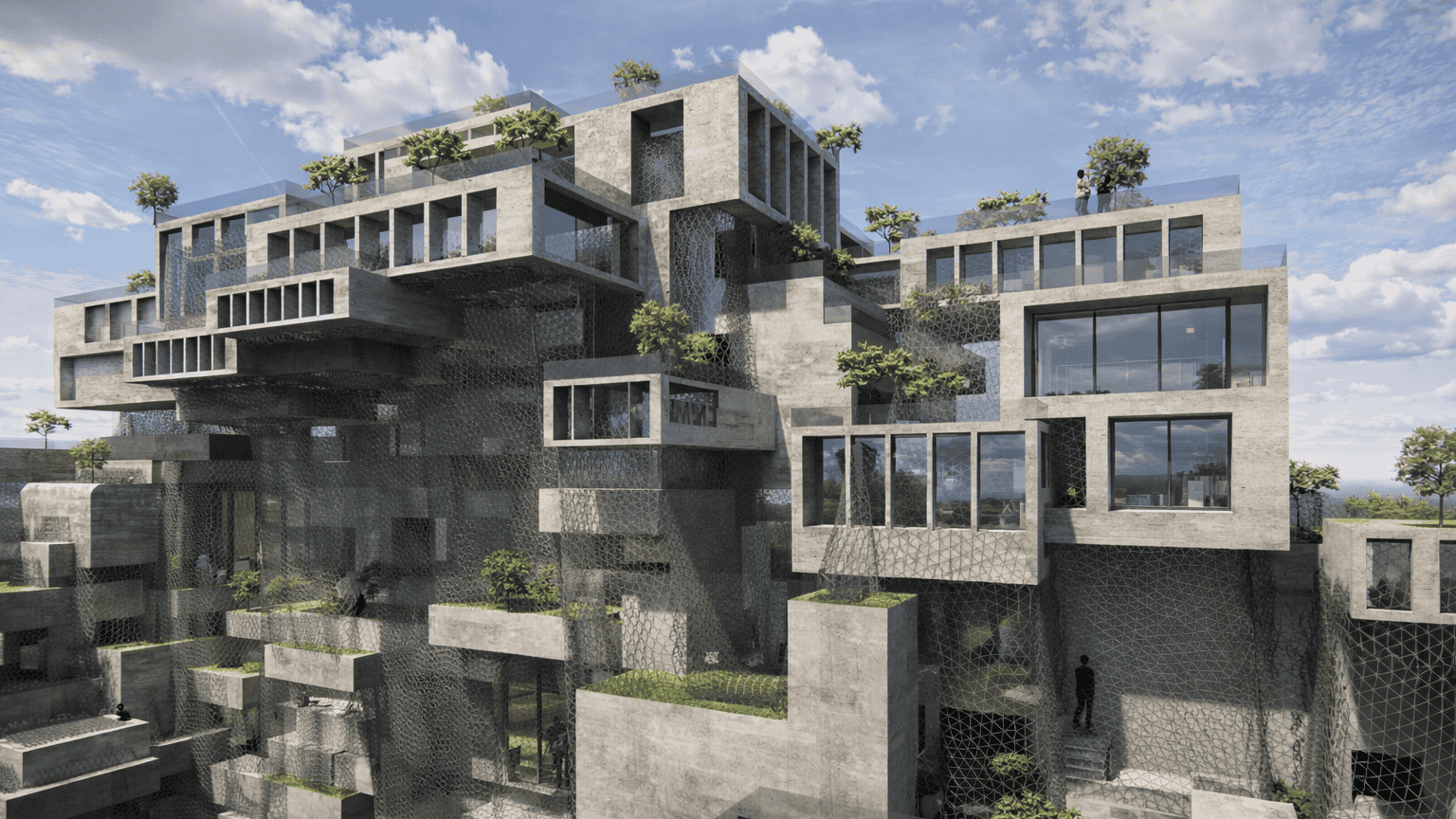 078
078
Afreen Anjum Khan, Safeerul Haque Syed
Microcosmic Urban Dwellings
#Community #Live #Resilience
Microcosmic Urban Dwellings (MUDs) embody Brooklyn NOW! by rethinking how housing can respond to climate risk, density, and affordability in Red Hook. Designed for a low-lying, flood-prone waterfront, these compact and adaptive units transform underutilized spaces into resilient living environments that reflect Brooklyn’s culture of innovation and resourcefulness.Each dwelling operates as a self-sufficient micro-ecosystem, integrating green roofs, water retention systems, and elevated construction to address flooding while improving environmental performance. These strategies manage stormwater, reduce urban heat, and support biodiversity.Beyond environmental function, MUDs respond to urgent social needs by offering flexible and affordable housing solutions that can adapt over time. They activate overlooked urban spaces and foster community through shared ecological infrastructure. By merging resilience with everyday living, the project represents a forward-looking and inclusive vision of Brooklyn that is dynamic, inventive, and prepared for a changing climate.
School - Pratt Institute School of Architecture; Teacher - Prof. Erich Schoenenberger
Red Hook, Brooklyn, NY 11231
https://aiabrooklyn.org/wp-content/uploads/bknow/details/Microscosmic%20Urban%20Dwellings.jpg
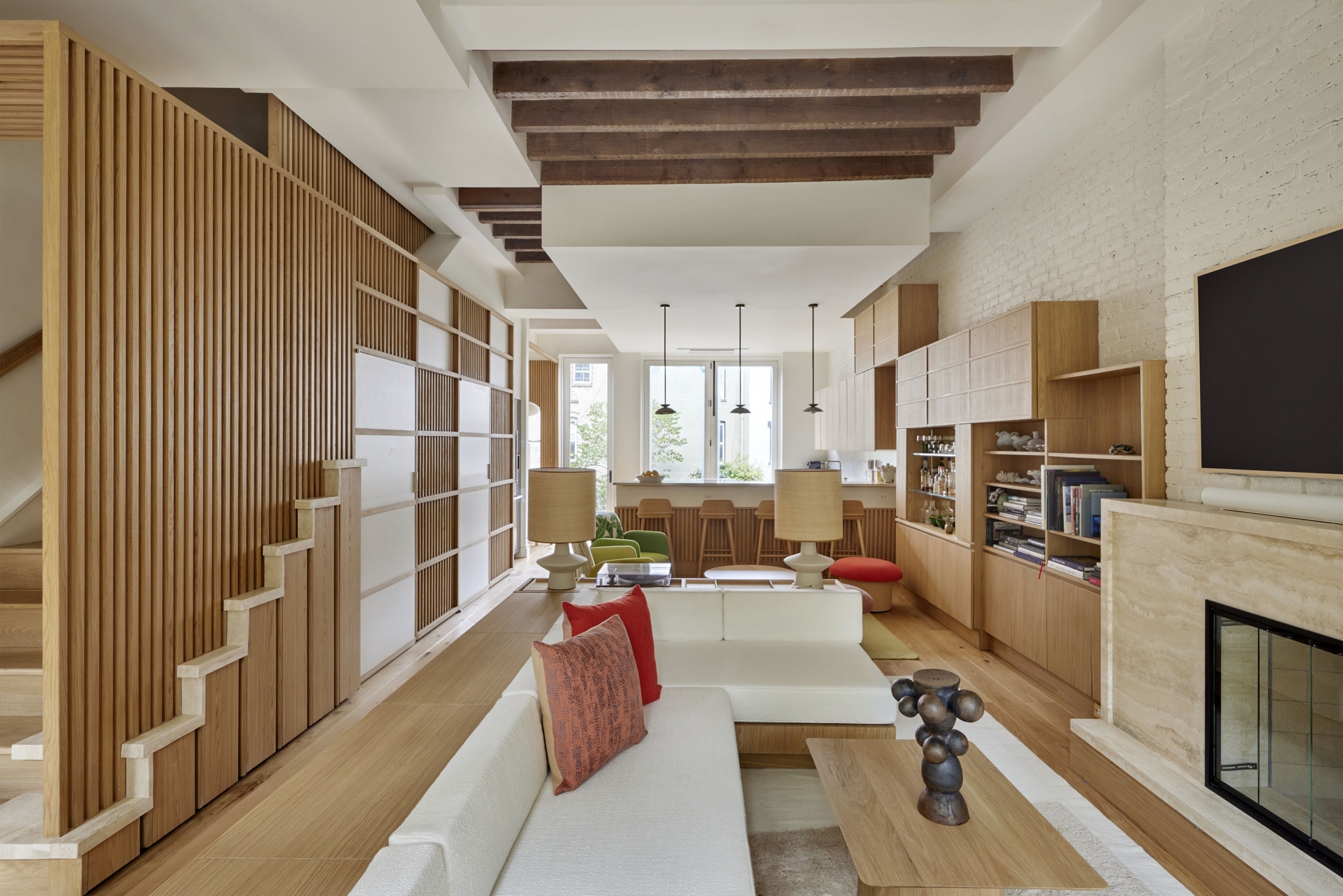 079
079
Studio Vural: Selim Vural, Kerry Robertson, Rima Askin, Andrea Tsaveska
Warren Street Townhouse
#Community #Craft #Live
As a revitalization of a deteriorated townhouse into a Japanese-inspired loft, our project reflects the cosmopolitan and multi-cultural fabric of Brooklyn in our post-modern world. Our design gives life to the next chapter of a timeless typology, the Brooklyn Townhouse with the birth of a new family.
Orion Construction, Quarter Sawn Group
Cobble Hill
https://aiabrooklyn.org/wp-content/uploads/bknow/details/studiovural_warren.jpg
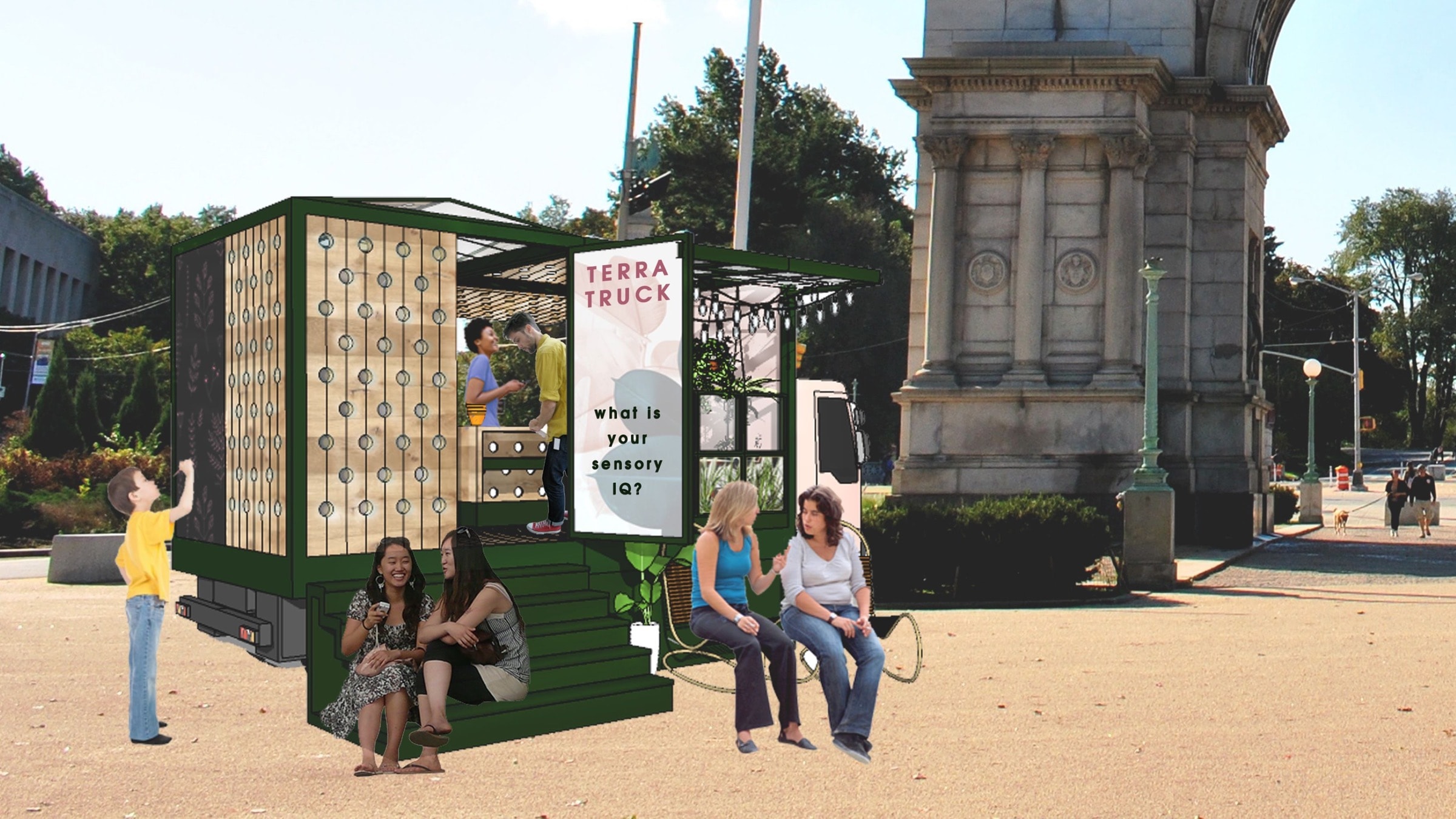 080
080
Spatial Medium (Valerie Farber w/ Jade Esplin)
Terra Truck
#Community #Learn #Resilience
TERRA TRUCK: a vehicle for changing mental health conversations from stigma to social support. Terra Truck is a modular design concept that leverages Cultural, Partnership, and Design strategies to deliver stigma-busting, program-flexible support on the ground when and where it is needed most. Because it is a truck, it can be present in a public crisis (ex: hurricane relief efforts) or stationed at a partnering organization for accessible treatment sessions. Mental health professionals have capacity to scale and deliver targeted education, partnering with local entities such as law enforcement, churches, schools, and LGBTQ centers. Lastly, the guerilla pop-up reduces stigma with self-care experiences and education creating social buzz at public gatherings.
DESIGNERS:Valerie Farber, Principal at Spatial Medium; Jade Esplin, Director of Strategy at Margartet Sullivan Studio; Original Spatial Medium team for Van Alen Institute’s “Emergency Contact” competition also included Sarah Vitti (Cultural Strategist) and Tori Sparks (Horticulturist).
Grand Army Plaza + general NYC area
https://aiabrooklyn.org/wp-content/uploads/bknow/details/TERRA%20TRUCK.jpg
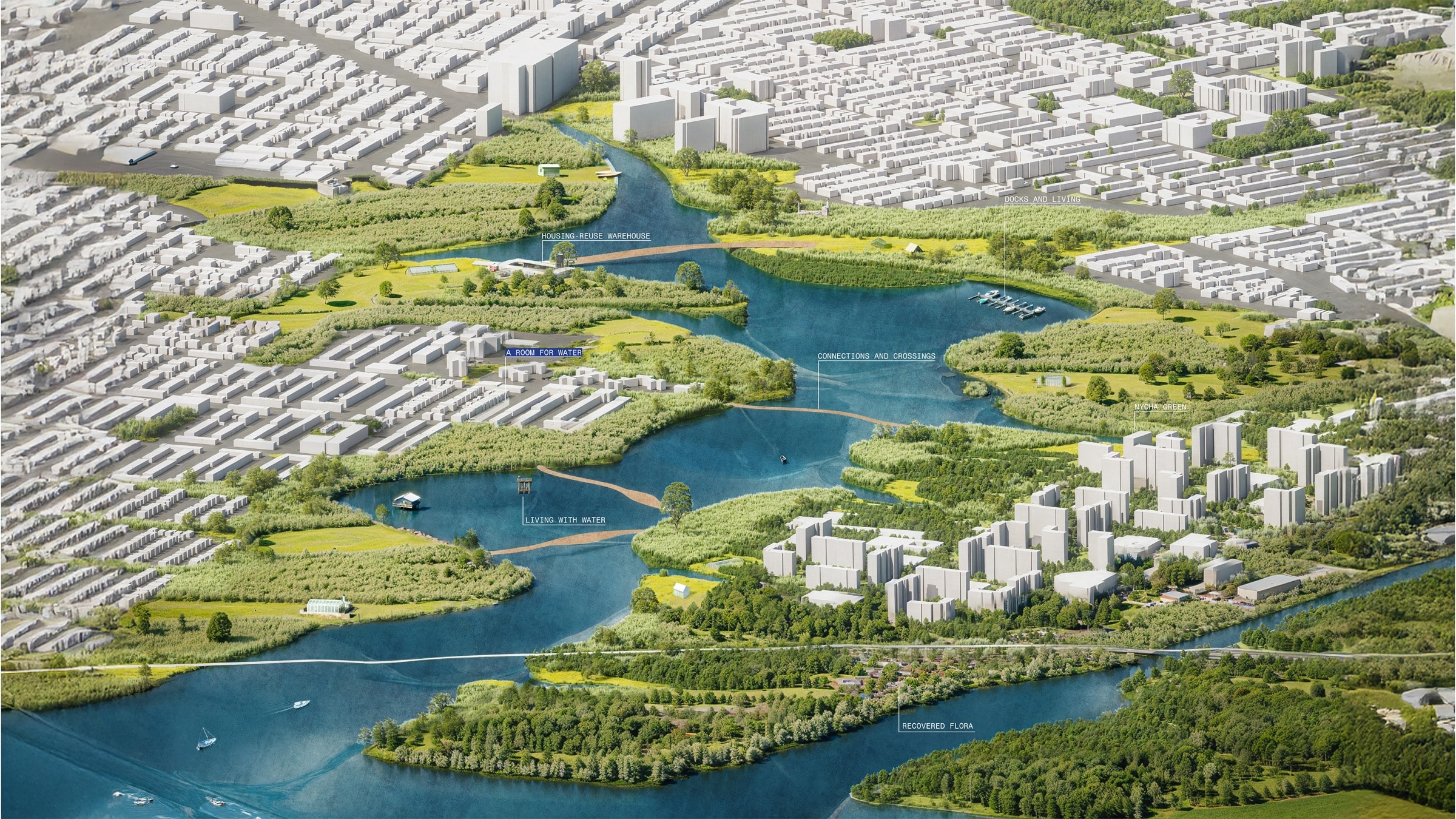 081
081
Manuela Hurtado
A ROOM FOR WATER
#Community #Equity #Resilience
This project reimagines basement housing in Brownsville, Brooklyn, transforming one of the city’s most vulnerable residential conditions into an active tool for climate resilience. Through a research-driven methodology combining mapping, streetscape analysis, policy critique, and community engagement, the project exposes the gap between basement housing policies and lived realities. A Room for Water, envisions a new relationship between residents and water using basements as part of an integrated hydrological system that delays, retains, and releases stormwater. With adaptive reuse of industrial structures, community relocation support, and ecological restoration at Fresh Creek, the project builds a just resilient water landscape.
TEAM: MENGTIAN CHEN – XIRE SANGPEI – GEETHIKA LAKSHMI; GSAPP COLUMBIA PROFESSORS: NANS VORON – SAGI GOLAN
BROWNSVILLE, BROOKLYN
https://aiabrooklyn.org/wp-content/uploads/bknow/details/MANUELAHURTADO-AROOMFORWATER.jpg
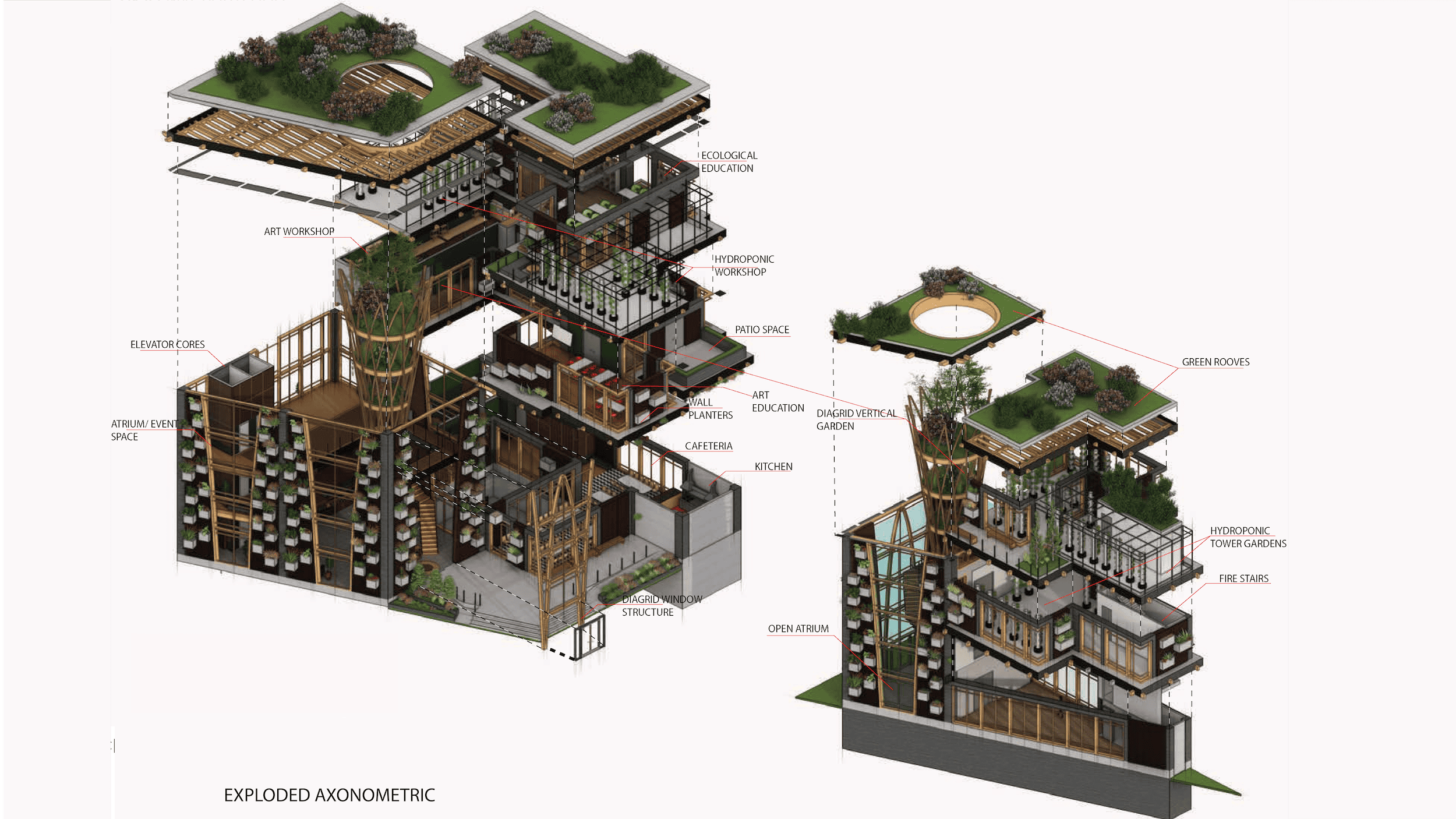 082
082
Anthony Jagmohan
Concrete Jungle
#Community #Craft #Resilience
The new Red Hook Art Project community center “Concrete Jungle” is the next evolution of the organization; what started as a strong community organization that centered their focus on artistic expression in young children and teenagers has since shifted to become a beacon for the community, partnering with many other local programs to provide aid to those affected by real life issues such as food insecurity caused by the recent struggles of COVID-19 or financial struggles due to recent political climate. This building is meant to be a beacon to those of Red Hook by providing not only a safe space, but a place to learn, grow, and cultivate new motivations in members who may be disadvantaged. The Members will be able to participate in all previous RHAP activities as well as cultivate vegetables and be educated on the benefits of hydroponics.
New York City College of Technology
Red Hook, Brooklyn Ny
https://aiabrooklyn.org/wp-content/uploads/bknow/details/Concrete%20Jungle%20Exhibition%20Board.jpg
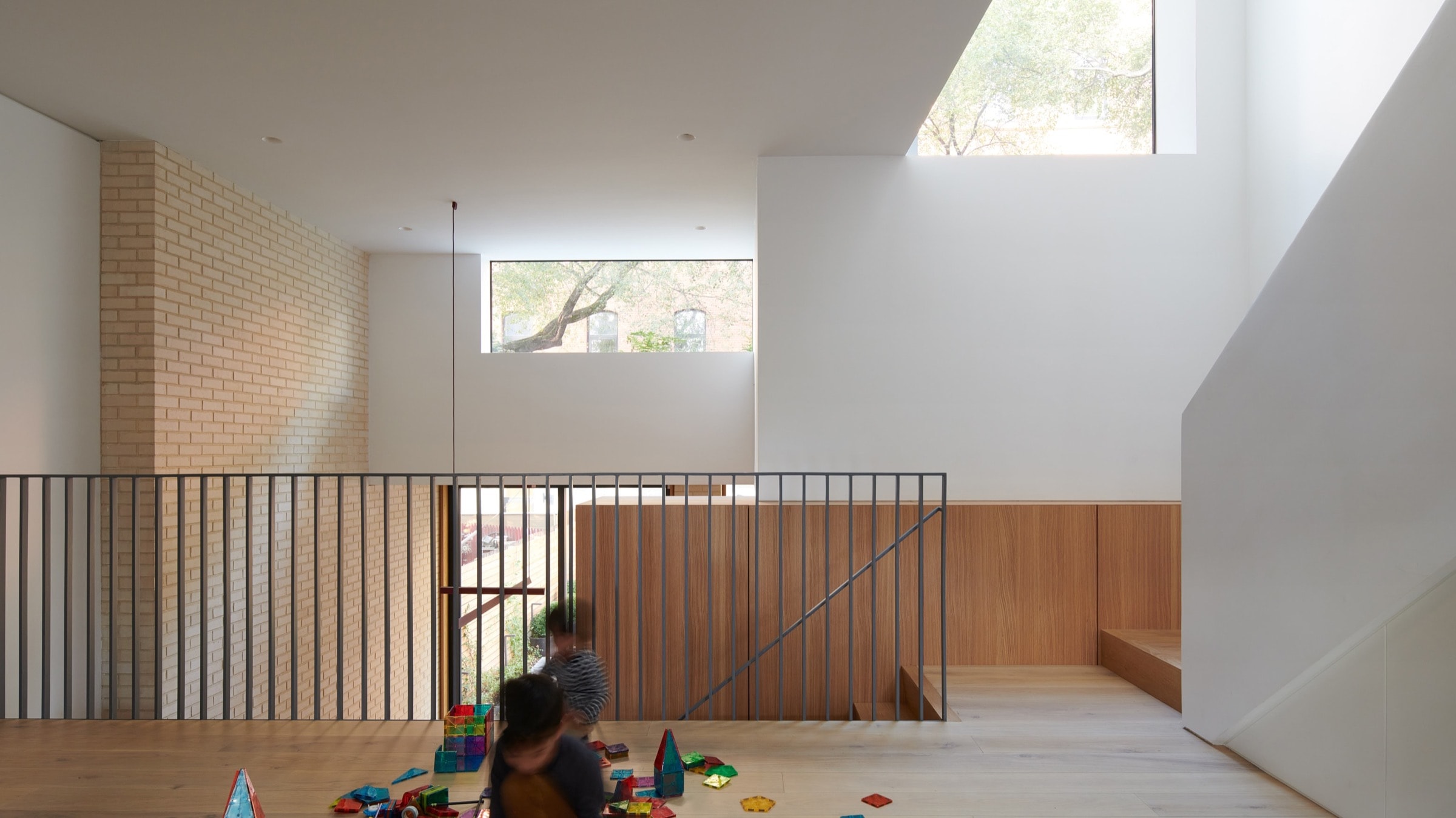 083
083
Shane Neufeld
Z House
#Craft #Family #Live
The Z House is a transformative renovation that reimagines urban domestic life. At its core, a new switchback stair organizes the house both vertically and horizontally, carving through the existing structure to create a network of dynamic sightlines and spatial connections. Large windows punctuating the rear façade amplify the stair’s drama, opening the vertical space to the outdoors and directing views through the house toward the garden beyond. From the parlor floor, a secondary stair—woven between a steel guardrail and oak millwork—extends downward to the new rear addition. This new volume contains the kitchen and dining area within a double-height space that visually and physically connects the garden level to the parlor above. A green roof over the addition softens outward views, merging greenery and architecture to create an unexpected sense of seclusion in the heart of the city.
Black Square Builders
Clinton Hill
https://aiabrooklyn.org/wp-content/uploads/bknow/details/Z%20House.jpg
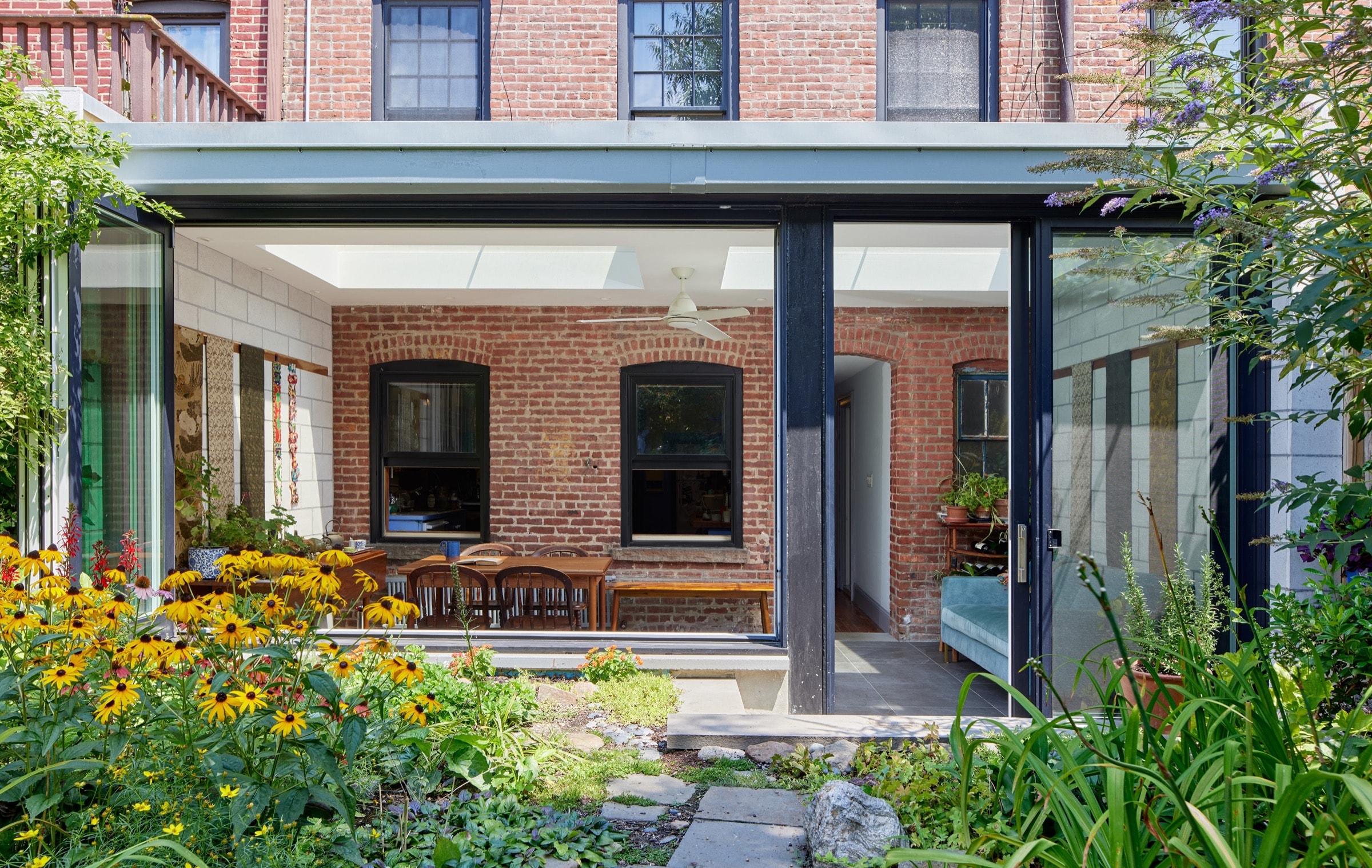 084
084
Deborah Gans, Isobel Herbold, Gillian Sollenberger, Micah Stroup ,Cristina Zubillaga
Backyard Brooklyn
#Craft #Family #Live
Every building typology has associated open spaces. We find the Brooklyn brownstone rear yard to be a particular enchantment, especially as it merges with neighbors to create a collective secret garden. We approach commissions as opportunities to create thresholds between house and garden that benefit both. At Bergen Street , a bedroom balcony hangs above the garden from a two-story steel frame. The balcony is also the roof of an enclosed porch that extends the interior kitchen to garden. At 16th Street, the addition is a grounded horizontal box, crafted in response to the homeowners’ love of gardening and Japanese art . The house location at the site‘s low point allowed us to align the window sill with exterior grade and the dining table simultaneously, immersing diners in the garden. Operable skylights, fans, masonry walls, and stone floor keep the room cool in summer without require air-conditioning.
Bright Construction/ CS Scott
Boerem Hill/ Windsor Terrace
https://aiabrooklyn.org/wp-content/uploads/bknow/details/GansCo_Brooklyn%20Backyard-compressed.jpg
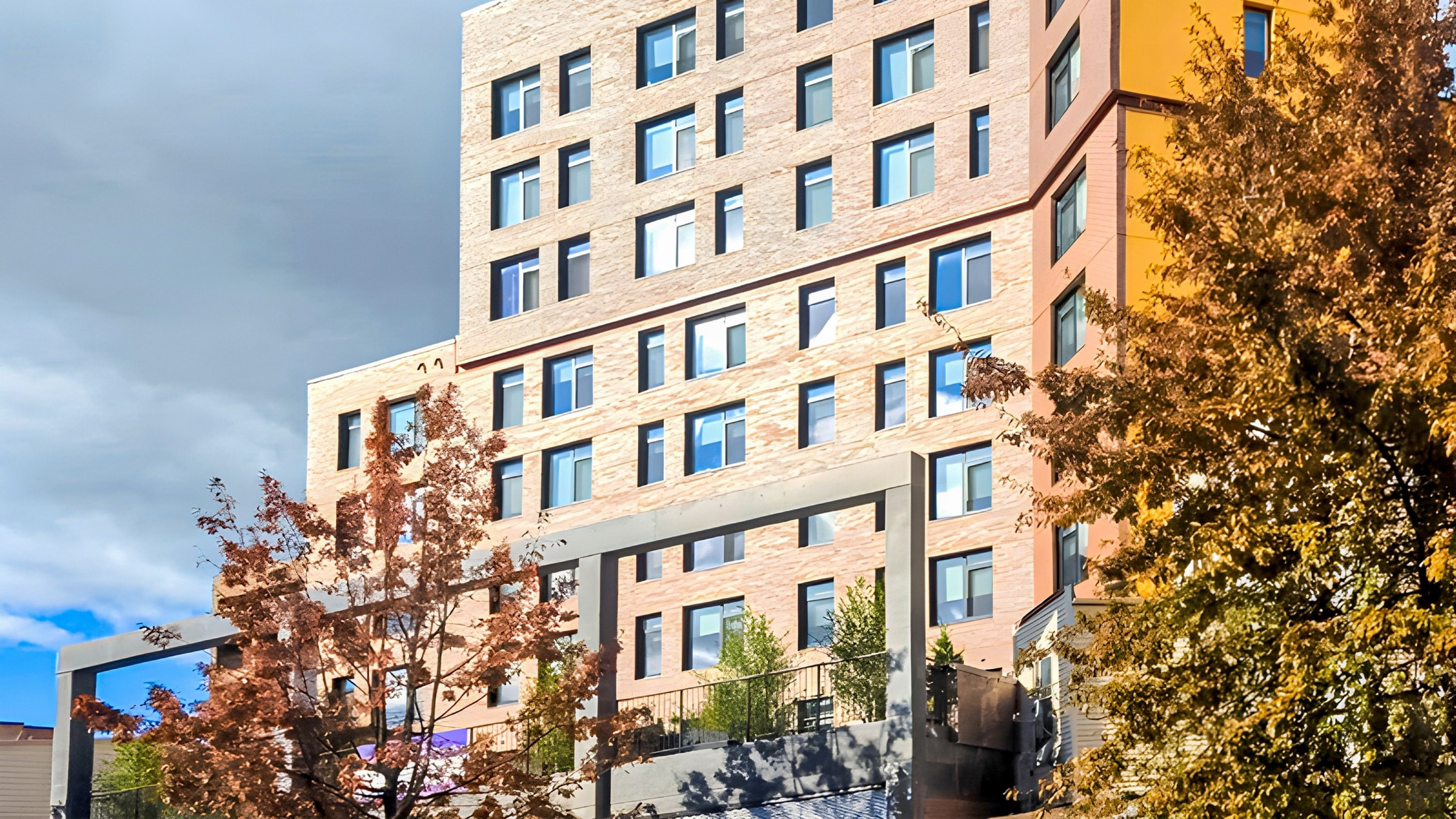 085
085
CAMBA Housing Ventures, Inc.
The Hart
#Community #Equity #Live
The Hart, developed by CAMBA Housing Ventures, transforms an underutilized site into 57 units of sustainable, permanently affordable and supportive housing serving formerly unhoused seniors, families, and low-income individuals, representing $51M in public-private investment. Awarded through the Vital Brooklyn Initiative, the project will be co-located with a ground floor mental healthcare center. The Hart features on-site security, a community room, computer room, laundry room, landscaped terraces, bicycle storage, curated local art and access to CAMBA, Inc.’s on-site social services, which are individually tailored to each tenant’s needs. The Hart deploys Active Design principles and is pursuing LEED Gold and Energy Star Certification. A 33 kW solar array is currently being installed to lower operating expenses. The Hart fulfills the goals of Vital Brooklyn, elevating the standard of affordable and supportive housing in New York City and creating an innovative model of holistic health and housing that can be replicated nationwide.
Non-profit Developer: CAMBA Housing Ventures, Inc. Architect: Marvel Architects, Landscape Architects, Urban Designers, PLLCContractor: Galaxy G.C. Group LLCSupportive Services: CAMBA, Inc.
Bedford-Stuyvesant, Brooklyn
https://aiabrooklyn.org/wp-content/uploads/bknow/details/The%20Hart%20Exhibition%20Board.jpg
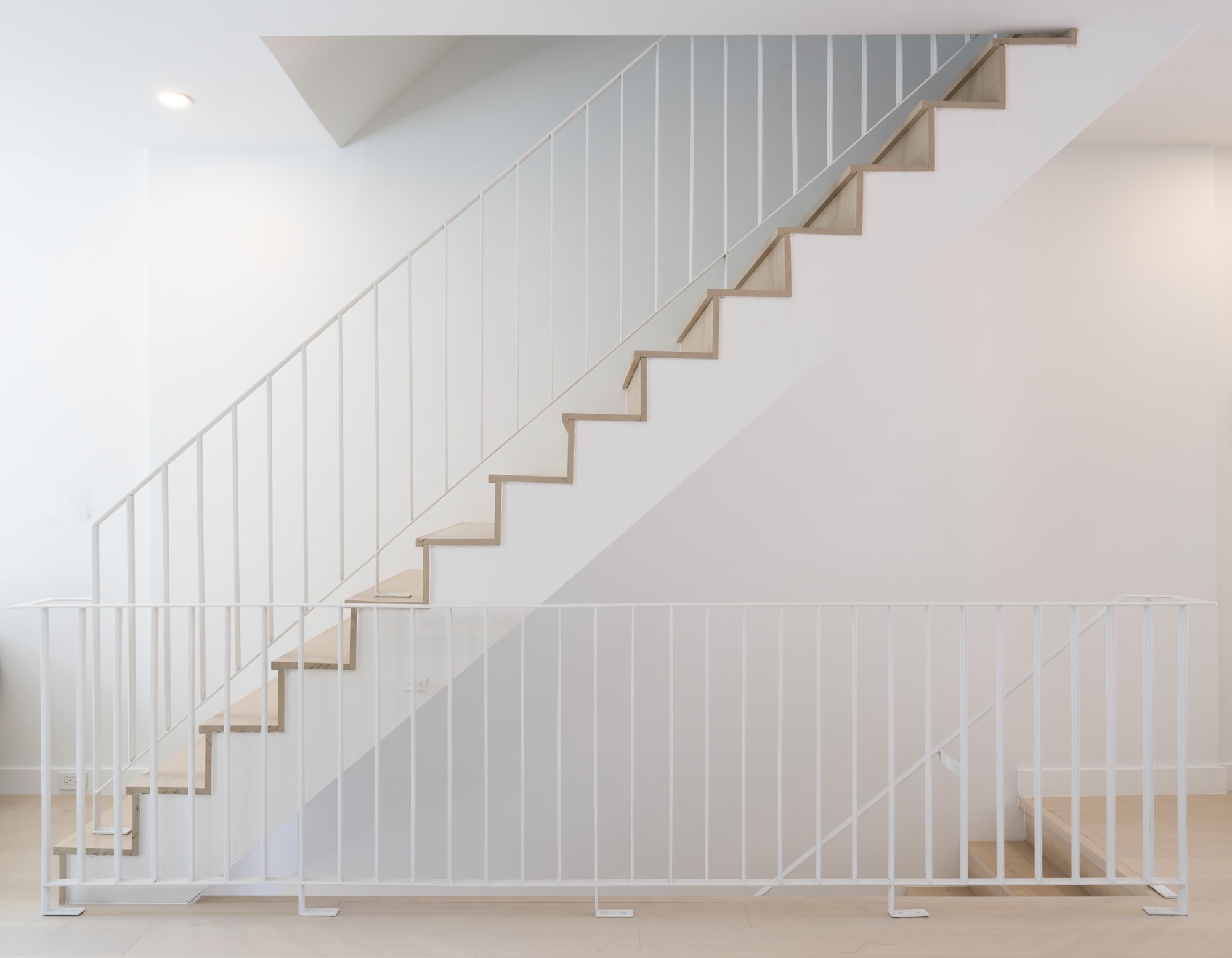 086
086
Galen Pardee, Manuel Cordero
Narrow Townhouse
#Craft #Live #Work
Narrow Townhouse transforms an abandoned rowhousein Gowanus, Brooklyn into a two-family home for a localcouple choosing to downsize. Working within the tightconfines of an 180-year old structure, we shaped roomsthat are quiet, efficient, and generous where it counts.What began as a straightforward renovation became astudy in doing more with less. Tight width, constraineddaylight, and an aging shell set the brief: werenewed the envelope and re-organized the interiorsaround light, storage, and the daily rituals of the clients.The narrowness of the resulting interior once thestructural remediations were complete required custommillwork to turn constraints into assets for living.The house is calm and practical: allowing the narrowness todisappear within the daily life within the millwork elements.The result is understated and balanced—an old shell givennew life through careful detailing, and a small footprint madegenerous through disciplined space planning.
JKO Construction
Gowanus
https://aiabrooklyn.org/wp-content/uploads/bknow/details/Narrow%20Townhouse%20Exhibition%20Board.jpg
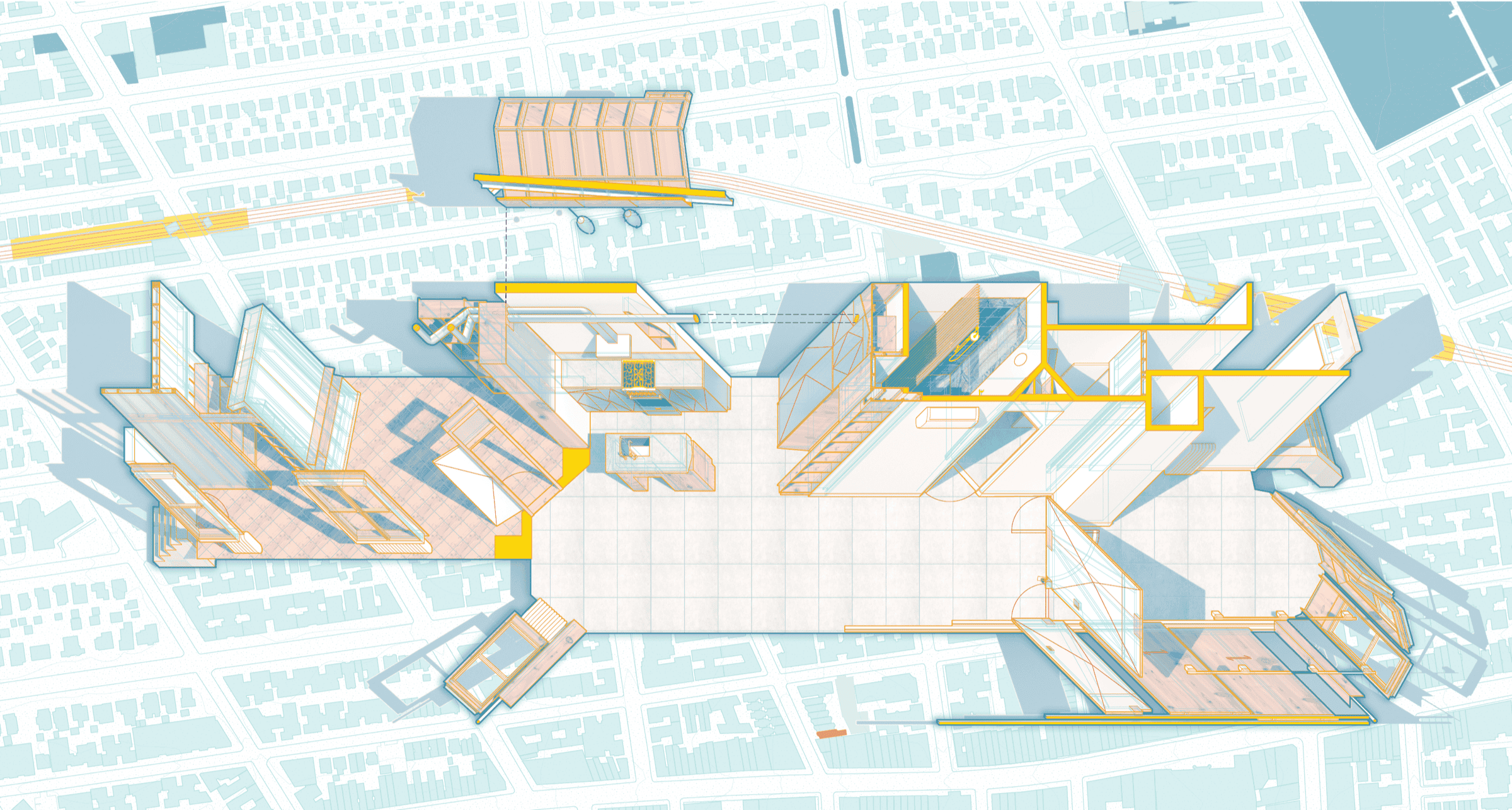 087
087
Galen Pardee, Manuel Cordero
Parlor Studio
#Craft #Live #Work
Parlor Studio is a small, surgical renovation of arowhouse in Flatbush, Brooklyn. An artist and theirpartner purchased the space, but the partner passedaway before renovation work on the parlor level couldbe completed. The space sat as a raw shell for severalyears, until the artist approached us to complete the fitoutand transform the space into a home and studio.The project creates three distinct volumes: a largebedroom in an existing addition, a new preimarybathroom in the shell of a relocated stairwell, and a large,oval room holding a kitchen, living room, and an artiststudio behind a pair of oversize center-pivot doors.Throughout, the only new partitions added were the partialheight closet in the bedroom and the center-pivot doors atthe studio. Even though the changes were minimal, each oneprovides multiple opportunities for different programs toemerge and cross-pollinate.
Unigrow
Flatbush
https://aiabrooklyn.org/wp-content/uploads/bknow/details/Parlor%20Studio%20Exhibition%20Board.jpg
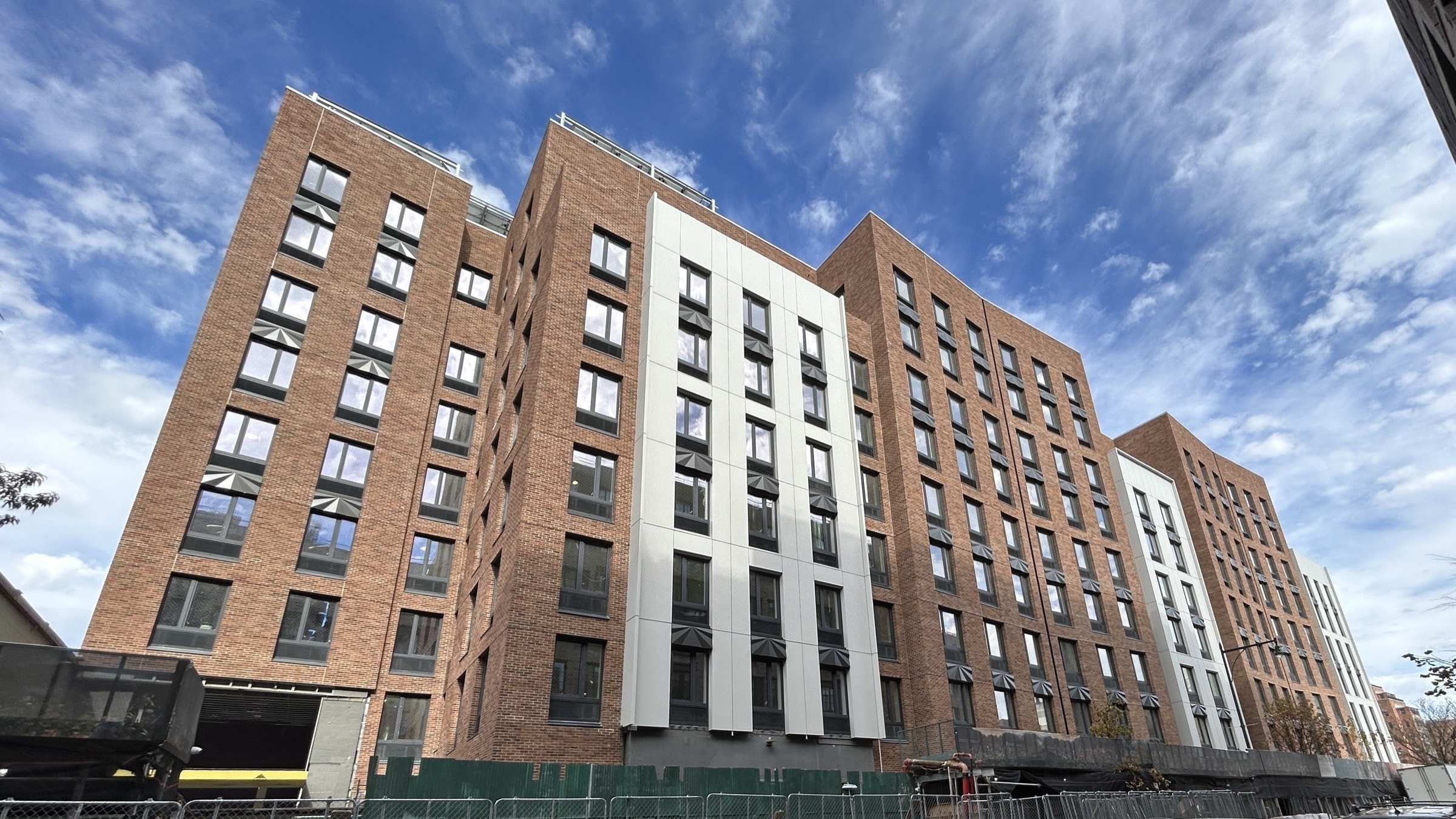 088
088
CAMBA Housing Ventures, Inc.
Clarkson Estates
#Community #Equity #Live
CAMBA Housing Ventures, Inc. is nearing completion of Clarkson Estates, awarded through the Vital Brooklyn initiative, which will create 328 sustainable, permanently affordable and supportive homes for youth aging out of foster care, formerly incarcerated, and formerly unhoused and low-income and individuals and families, representing $238M in public-private investment. Clarkson Estates will include 24/7 security, on-site supportive services provided by CAMBA, Inc., a teaching kitchen, computer room, fitness center, children’s playroom, community room, bicycle parking, laundry on every floor, local art throughout common areas, and landscaped terraces and rooftop gardening beds.The Dr. Roy A. Hastick, Sr. Community Hub will offer over 30,000 sf of community facility resources for residents and the community, centered around economic development, healthcare, and day care services, including a full-court basketball gym.Designed as a Passive House and transit-oriented development, Clarkson Estates will have a lasting positive impact on Flatbush and the surrounding community.
Non-profit Developer:CAMBA Housing Ventures, Inc.; Architect:CetraRuddy Architecture; Contractor:Bruno Frustaci Contracting, Inc.; Supportive Services Provider:CAMBA, Inc.
Flatbush, Brooklyn
https://aiabrooklyn.org/wp-content/uploads/bknow/details/Clarkson%20Estates%20Exhibition%20Board.jpg
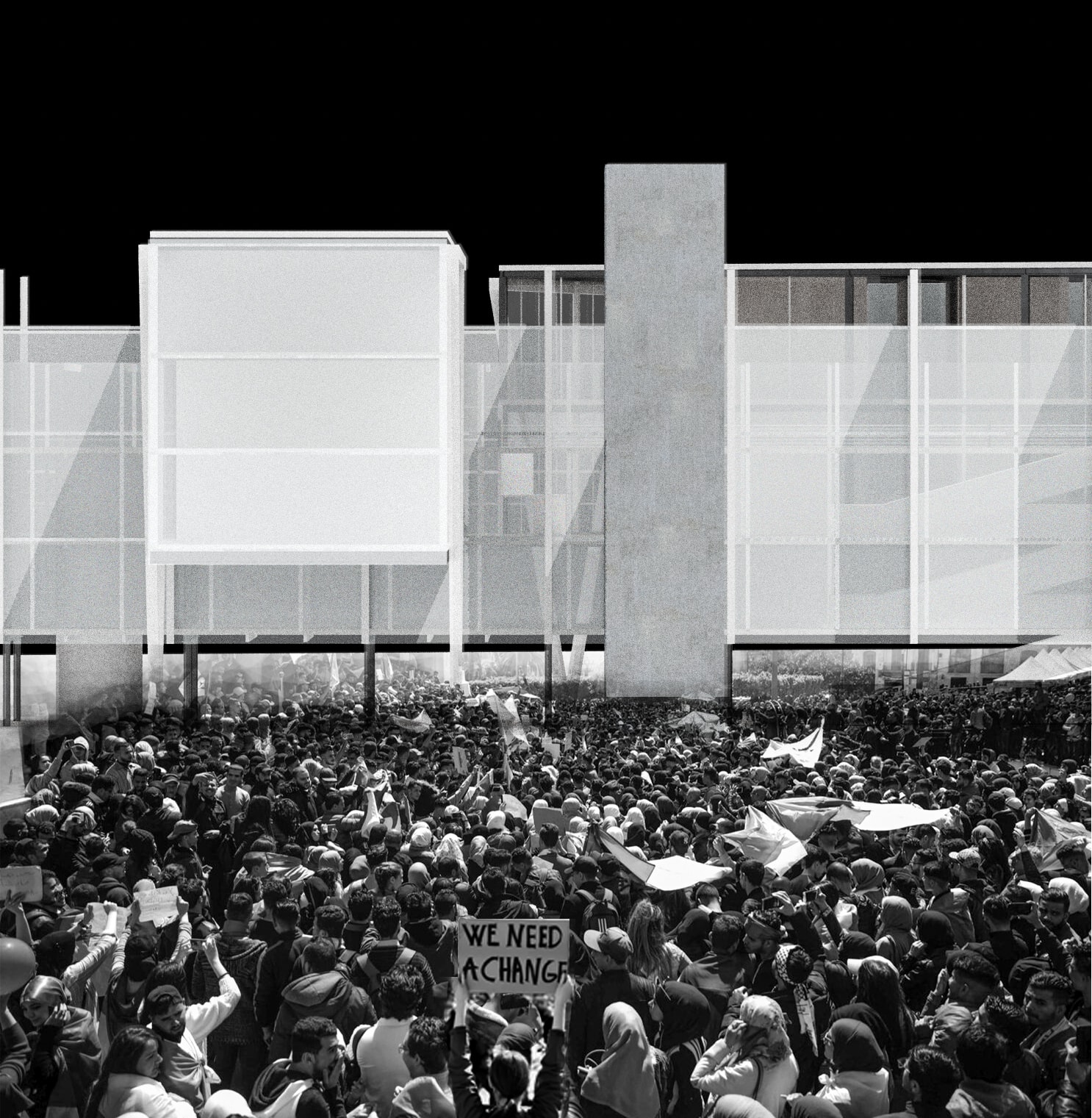 089
089
Fei Xiong
A Diagram of Power
#Community #Equity
Brooklyn today embodies a condition of multiplicity—of publics, voices, and forms of participation. It is a site where global narratives intersect with everyday life, where institutional authority meets civic experience. This project draws on that condition by translating an abstract system of governance into a spatial and perceptual experience accessible to the public.Using the logic of the panopticon, the design operates as a constructed diagram rather than a conventional building. It makes visible the relationships between observation, control, and participation, transforming power from a distant structure into a shared visual field. In doing so, the project reflects the essence of Brooklyn — a place where visibility, collectivity, and critical engagement redefine how architecture can operate within contemporary society.
Syracuse University School of ArchitectureInstructor: Elizabeth Kamell
213 West St, Brooklyn, NY 11222
https://aiabrooklyn.org/wp-content/uploads/bknow/details/A%20Diagram%20of%20Power.jpg
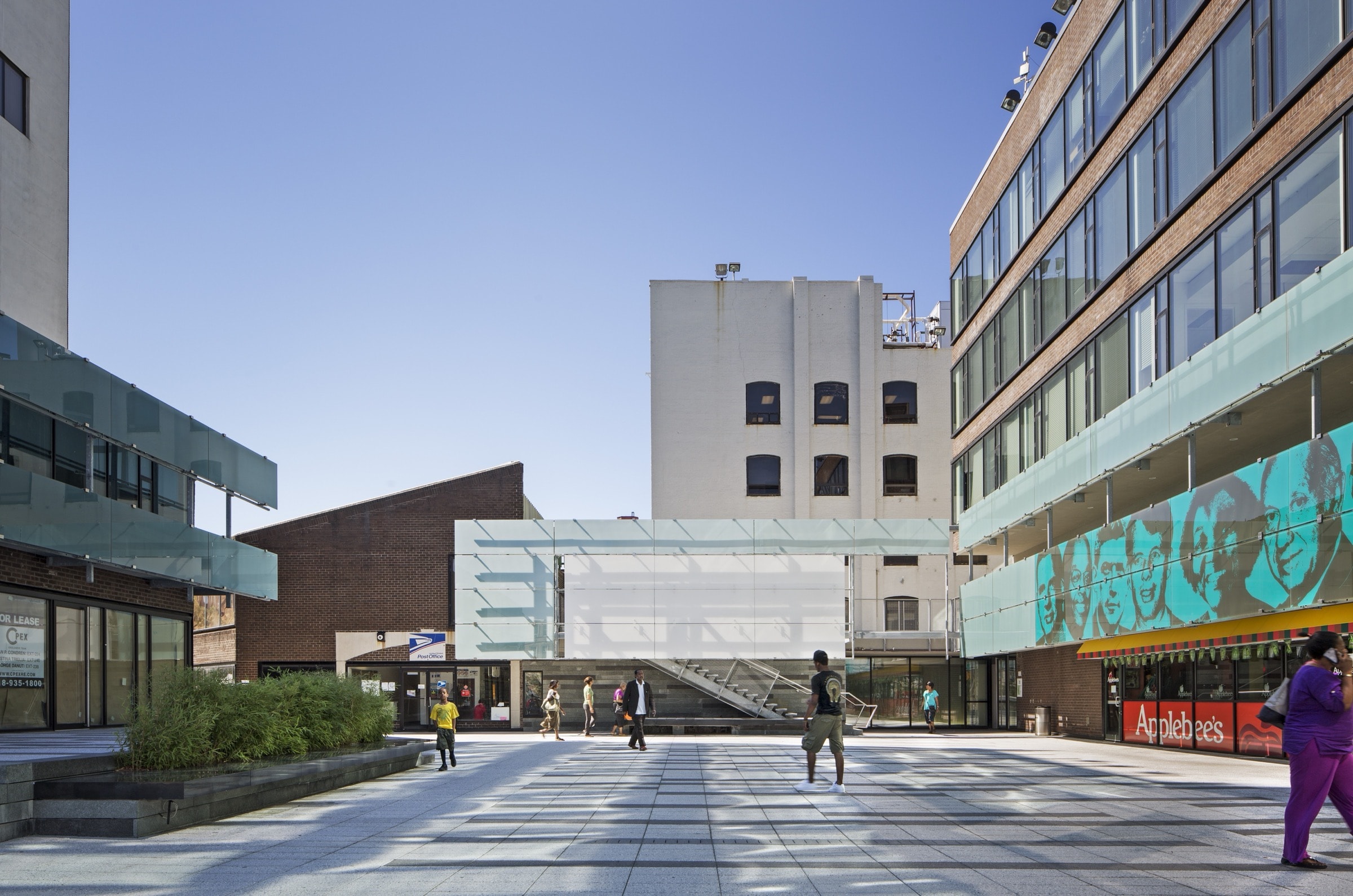 090
090
Garrison Architects
Restoration Plaza
#Community #Live #Play
Restoration Plaza, located in Brooklyn, is a 300,000-square-foot cultural and commercial hub originally established by the Bedford Stuyvesant Restoration Corporation on the site of a former industrial facility.Garrison Architects re-envisioned the plaza as a more open, accessible, and vibrant community center by strengthening its connection to Fulton Street and improving visibility between public spaces, shops, and galleries.A key feature of the redesign is the illuminated “Wall of Fame,” integrating media and lighting to activate the space for events and gatherings. Expanded green areas, enhanced circulation, and flexible programming transformed the plaza into a dynamic destination for commerce, culture, and community life.
Procida Construction Corp
Bedford–Stuyvesant
https://aiabrooklyn.org/wp-content/uploads/bknow/details/Brooklyn-NOW-Restoration%20export.jpg
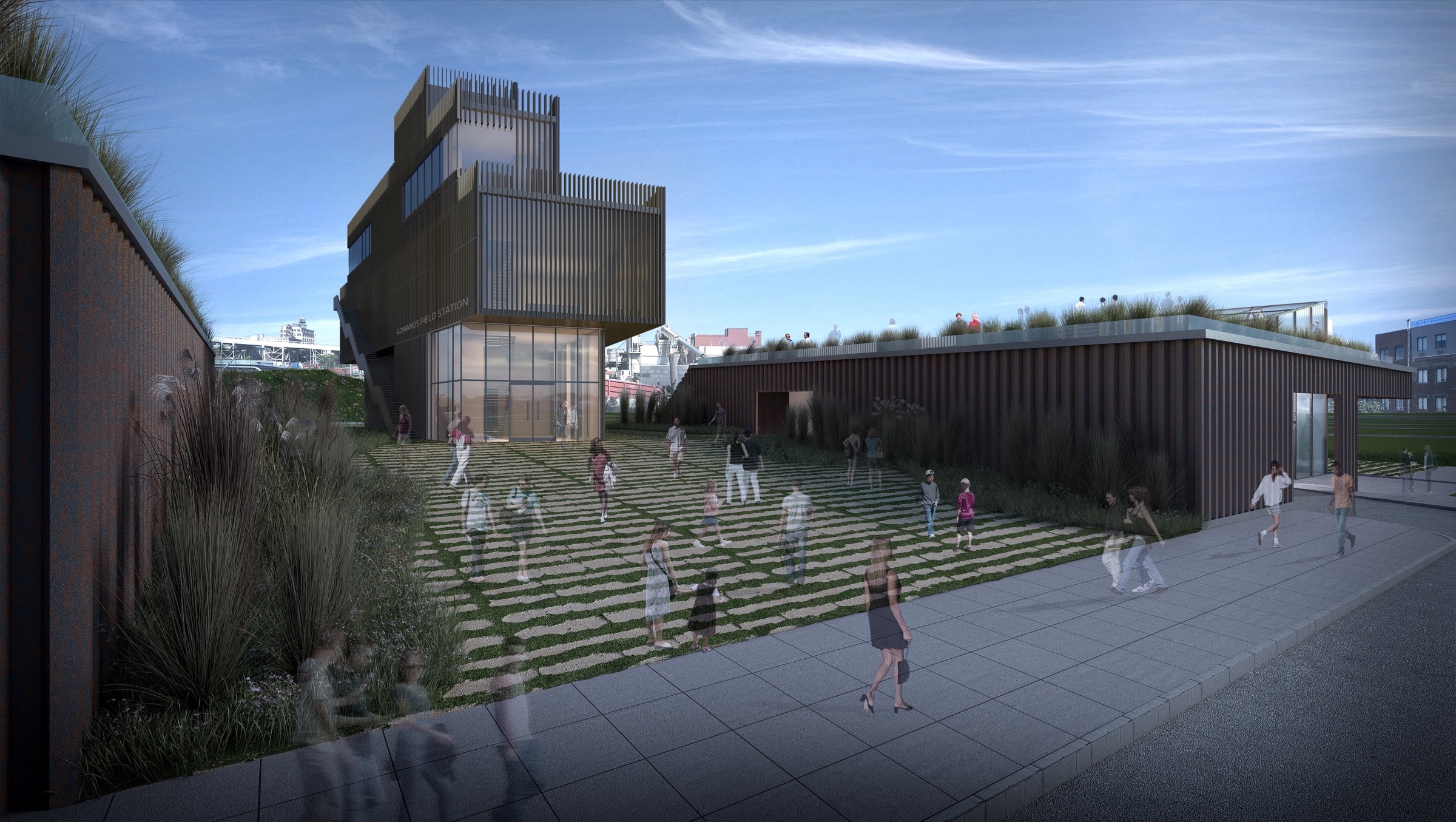 091
091
David Briggs, Paul Coughlin, Jennifer Leone, Kenneth Miraski, Deborah Rojas
Gowanus Salt Lot Public Park
#Community #Materials #Play
Gowanus by Design advocates for sustainable urban strategies around the canal Superfund site. In 2018, we proposed a new park on the existing Salt Lot site at the north end of Second Avenue. Three buildings are wrapped in materials referencing the industrial history of the area. The retention tank/headhouse and composting facility/greenhouse are clad in the same corrugated sheet steel that borders the edge of the waterway. The Gowanus Field Station is a community center finished with deep timber boards. The design of the upper section of the headhouse proposes alternating vertical bands of curved translucent glass and terra cotta louvers. The entire west side of the lot is proposed as a public park. The conceptual proposal was intended to spark a conversation on how the canal’s new infrastructure can support much needed public urban space.
N/A
Salt Lot on Second Avenue
https://aiabrooklyn.org/wp-content/uploads/bknow/details/Gowanus%20Salt%20Lot%20Public%20Park.jpg
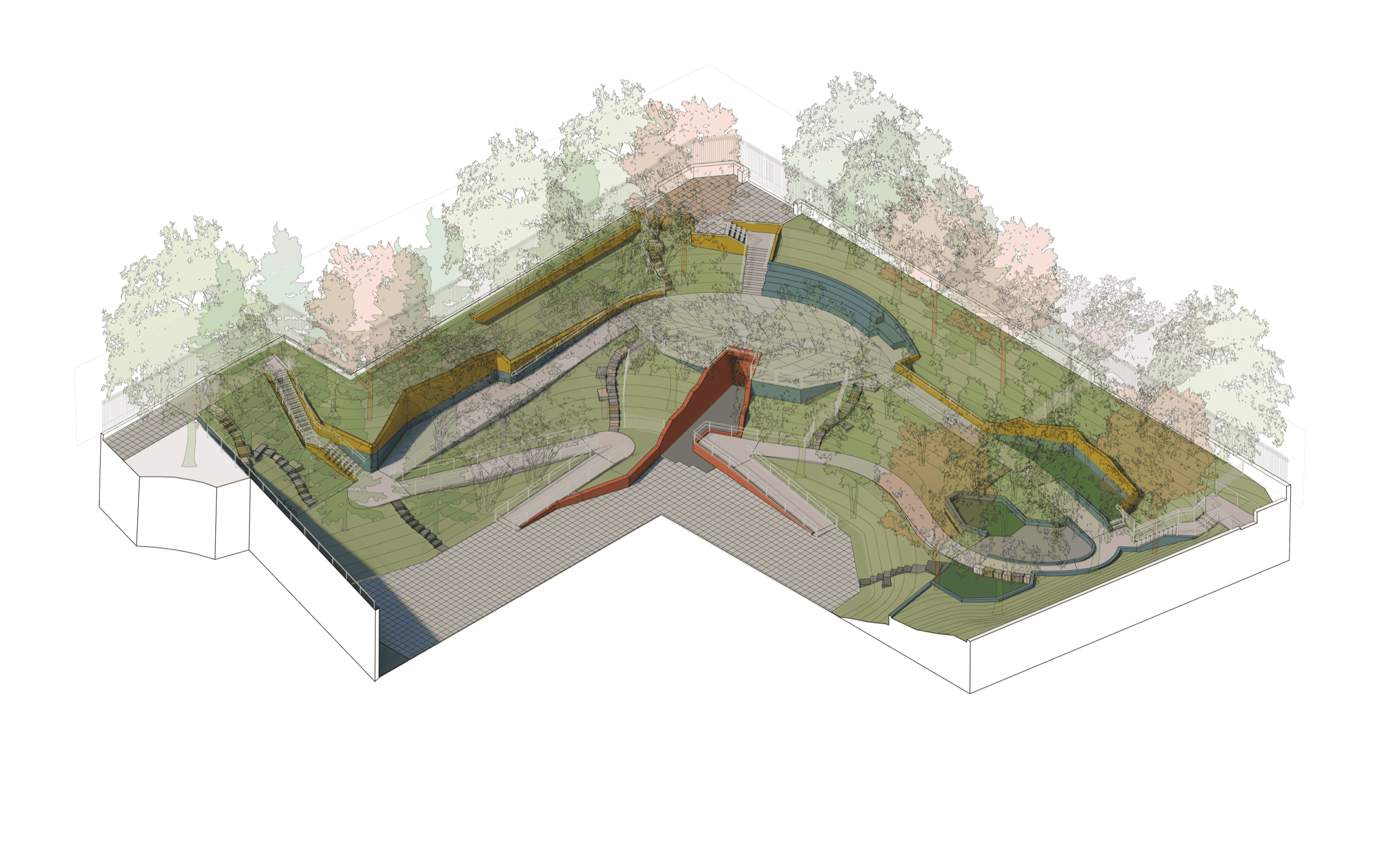 092
092
Deborah Gans, Jared Rice, Corey Arena, Caleb Crawford Fabrizio Ungaro, Adam Achrati, Ashley Katz, Cristina Zubillaga
Earth Science Courtyard Brooklyn Children’s Museum
#Community #Learn #Play
Closed to the public for a decade due to failure of its retaining structures, the reconstruction takes advantage of the courtyard’s location 15 feet below the adjoining grade to make apparent the local glacial moraine, its formations over geological time, related floral and fauna and material, including the boulders found on site during construction. This landscape serves as the primary retaining and water management structure through its planted stabilized slopes with intermittent concrete walls that also create terraces for exhibits and activities. An accessible ramp winding through the garden connects the terraces. Smaller paths branch off it into the landscape with opportunity for exploration.
Nancy Owens Studio, Landscape; Tillett Lighting; TY Lin Structural; Sherwood Civil; MFS Geotechnical Siteworks; Landscape CM; Builder: Neelam Construction with Cole Partners
Crown Heights
https://aiabrooklyn.org/wp-content/uploads/bknow/details/GansCo_Brooklyn%20Childrens%20Museum-compressed.jpg
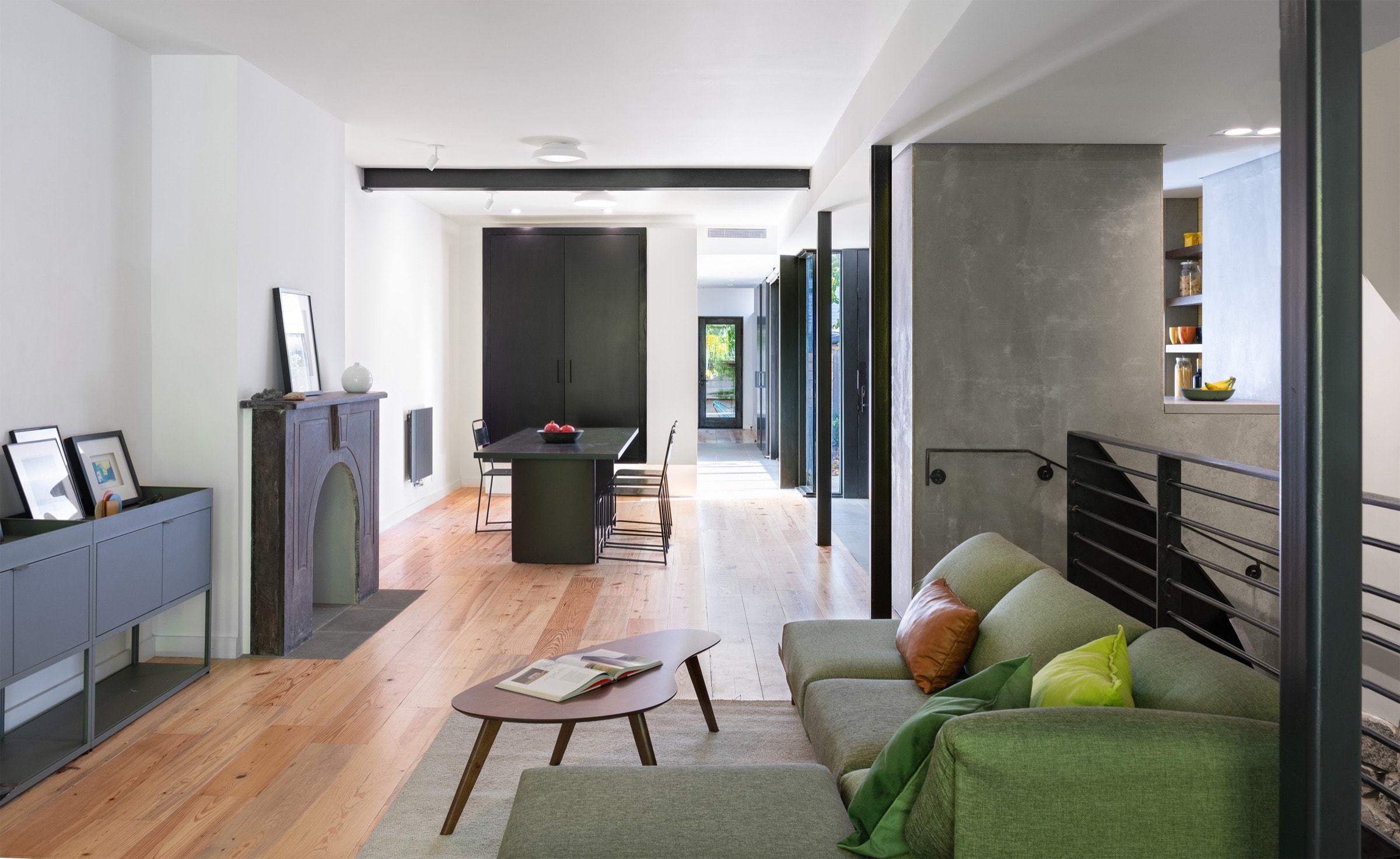 093
093
noroof architects
longHouse
#Craft #Live #Resilience #Work
The longHouse project reimagines the ground floor of an 1880s two-family townhouse in Brooklyn’s Wallaboutdistrict, reshaping the relationship between home and work. The ground-floor “site” has an unusual footprint -one that would not be permitted under present-day zoning.Inspired by long-distance passenger train carriages, the design organizes a sequence of versatile spacesconnected by carefully framed view corridors to the outdoors. The layout includes a living/dining area (the “parlorcar”), a flexible study/guest bedroom/enclosed loggia (the “couchette”), and a primary bedroom (the “presidentialcar”). Translucent sliding panels and solid pivot doors allow for adaptable room divisions, while a central corridorreinforces the railway concept.Southern light enters through an inset corner window, and a secluded sitting area beyond the bedroom borrowsfrom a neighboring bamboo grove, creating an intimate connection to nature. Below, the finished cellar -accessed by a private glass entry – functions as a dedicated remote work studio.
M Square Construction and R. Taylor Construction
Brooklyn NY
https://aiabrooklyn.org/wp-content/uploads/bknow/details/longHouse.jpg
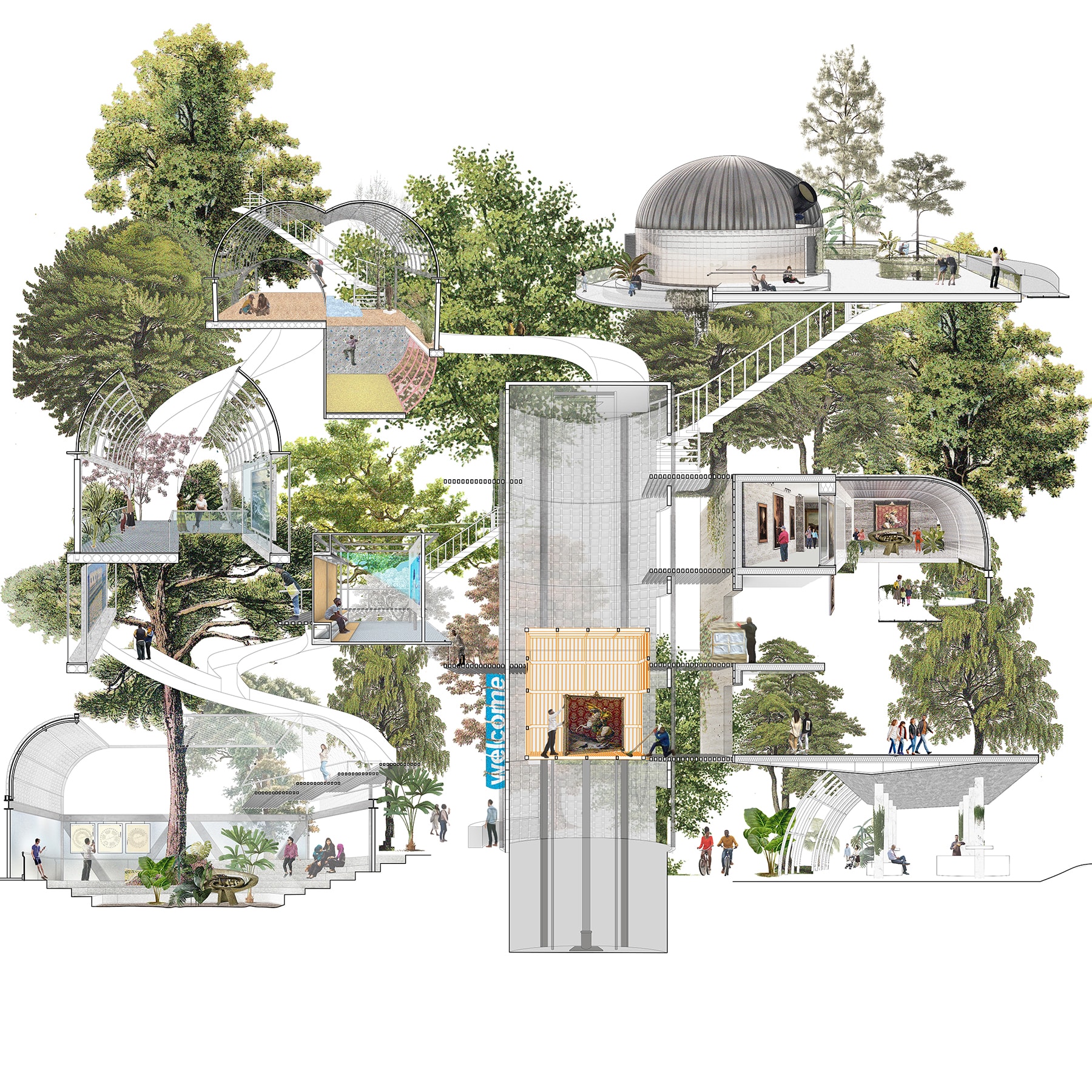 094
094
Eleanor Birle, Victoria Shay, Cemre Tokat
The Echo
#Community #Materials #Play
This project revisits the unrealized ambitions of the original Brooklyn Institute, reimagining what it means to arrive at and move through the Brooklyn Museum today. By completing the historic building’s unfinished form using lightweight, accessible construction, the design resists the fortress-like quality of monumental civic architecture. Rather than asserting itself against its surroundings, the intervention opens the building outward – drawing in the landscape, the neighborhood, and the everyday rhythms of Eastern Parkway. The formerly hard boundary between institution and public dissolves, replacing impermeability with porosity. The museum becomes less an object to visit and more a threshold to pass through and inhabit.
Instructor: Juan Herreros; Columbia GSAPP
Prospect Heights
https://aiabrooklyn.org/wp-content/uploads/bknow/details/The%20EchoBrooklyn%20Now%20Submission.jpg
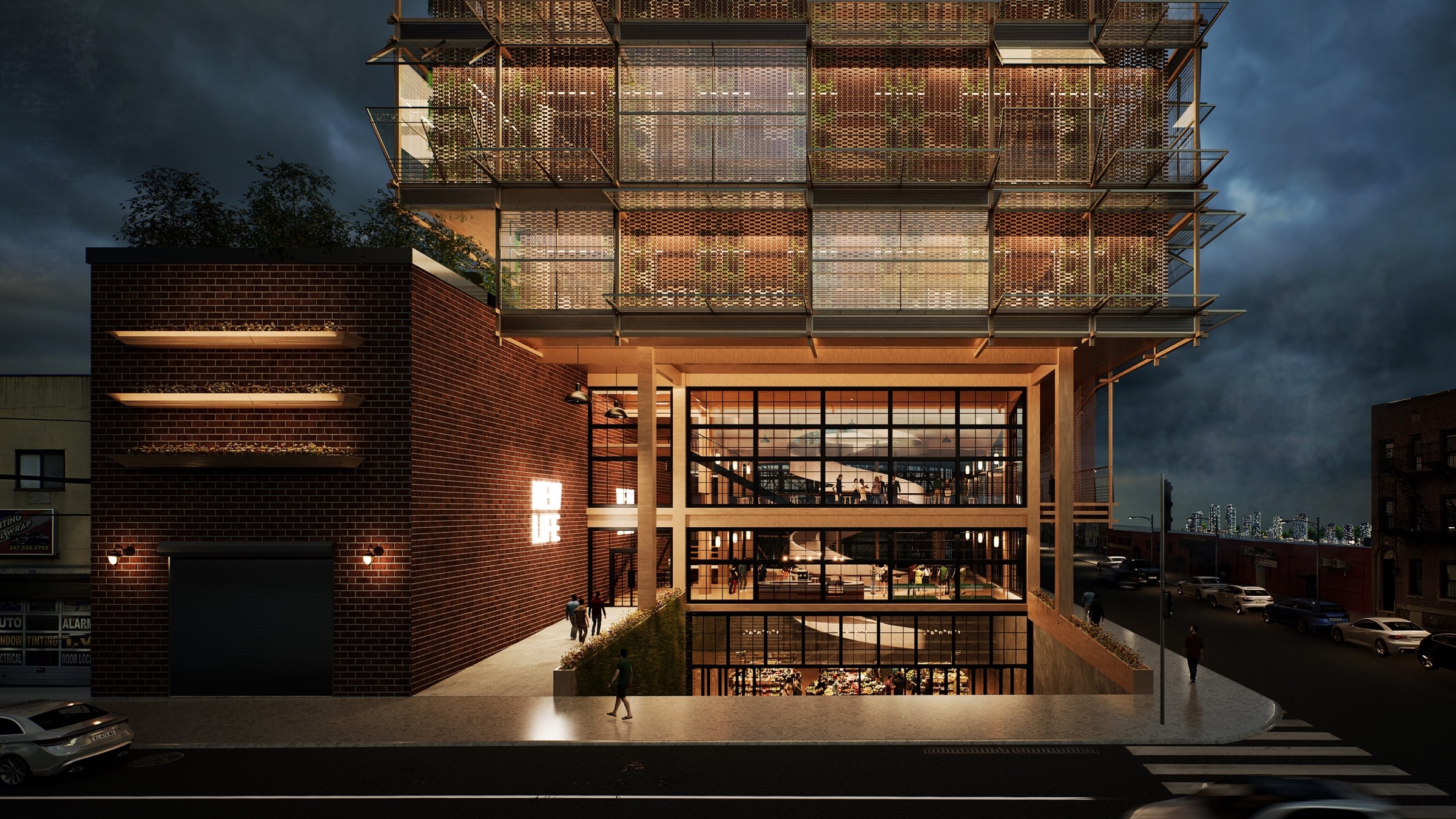 095
095
Nam-Y Nguyen
New Life
#Community #Materials #Play
Sunset Park has a beautiful history that reflects the rich cultural tapestry of New York City. Presently settled by Chinese and Mexican communities, it has unfortunately been overshadowed by the construction of the Brooklyn-Queens Expressway (BQE), dividing its urban fabric. Furthermore, high pollution has proven troubling for the health of the neighborhood.Situated at the junction of the BQE and 31st street, the project revitalizes an old factory building and acts as a buffer between the neighborhood and the Expressway. Nodding to the vibrant food truck culture, the site of New Life hopes to redefine and reconnect the urban spaces of Sunset Park to create a cohesive place through food and accessible, anonymous healthcare.
Parsons School Of Design, Professor Andrew Bernheimer
Sunset Park, Brooklyn
https://aiabrooklyn.org/wp-content/uploads/bknow/details/NEW%20LIFE_BOARD.jpg
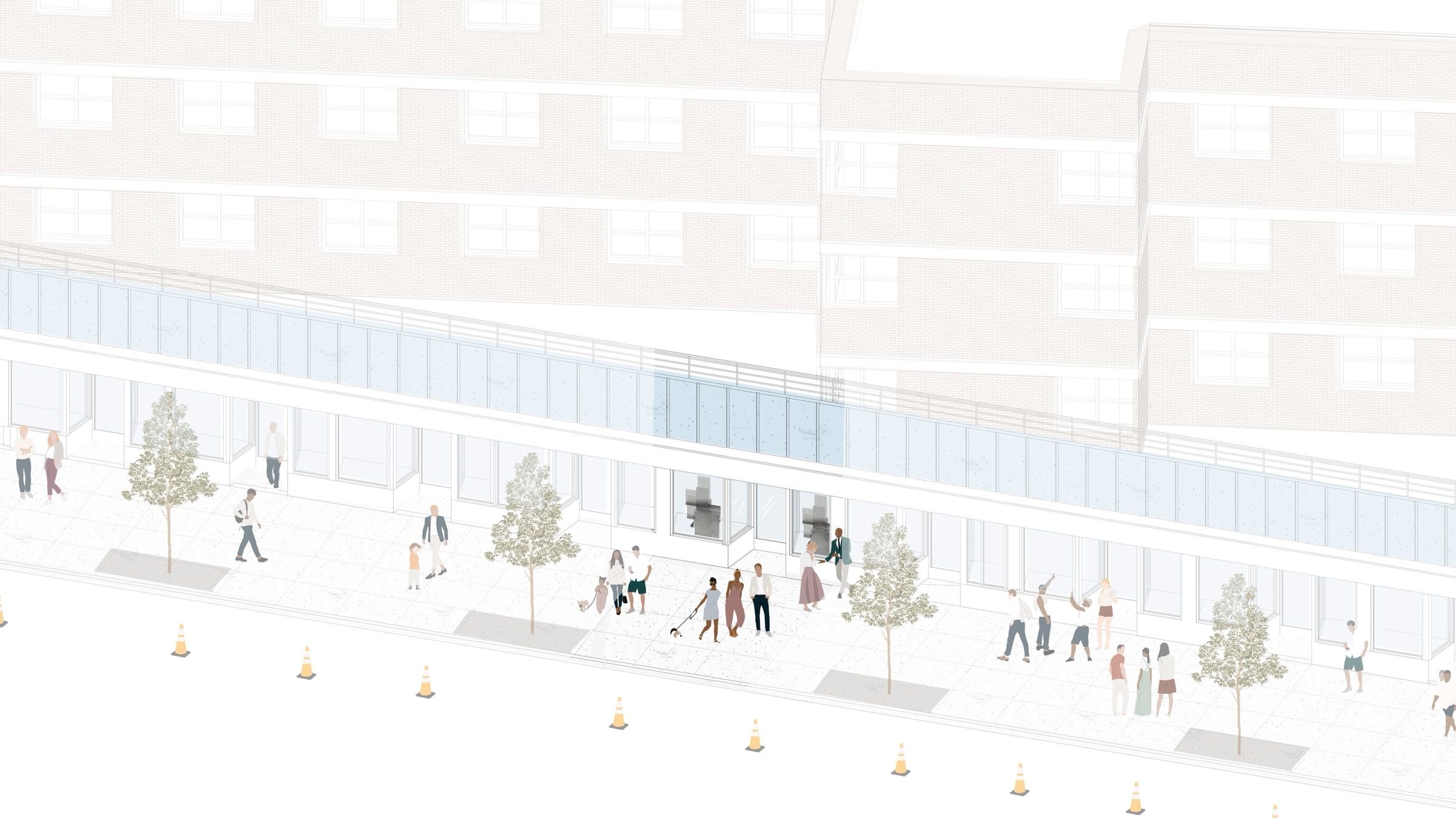 096
096
ReFrame Architecture, Yalda Keramati
Re:Place a part of multi-site installation “The People Make the Place!”
#Community #Equity #Resilience
As part of “The People Make the Place!,” a multi-site installation activating vacant storefronts, ReFrame Architecture designed Re: Place, a series of sculptural elements that emphasize the socio-spatial nature of place through highlighting memory and reflection. The materiality and geometry of the forms reference the built environment and mimic the folds and volumes of the storefront. It is the reflection of the audience on the sculpture’s surface that brings the installation to life, recognizing the vital role of community in sustaining and transforming the place. It is an invitation for everyone to share their stories and be a part of the collective memory of the neighborhood.
Client: Van Alen Institute and New York City’s Department of Small Business Services (SBS); Community Partner: Grand Street BID; Design Team: L&L Studio (Creative Director) and ReFrame Architecture (Architect); Fabrication of the sculpture: Smart Department Fabrication Inc.; Photographers: Sara Konradi (sarakonradi.com), Alisha Kim Levin (Van Alen Institute), Yalda Keramati (ReFrame Architecture)
East Williamsburg, Brooklyn, New York
https://aiabrooklyn.org/wp-content/uploads/bknow/details/Storefront%20Activation%20Board.jpg
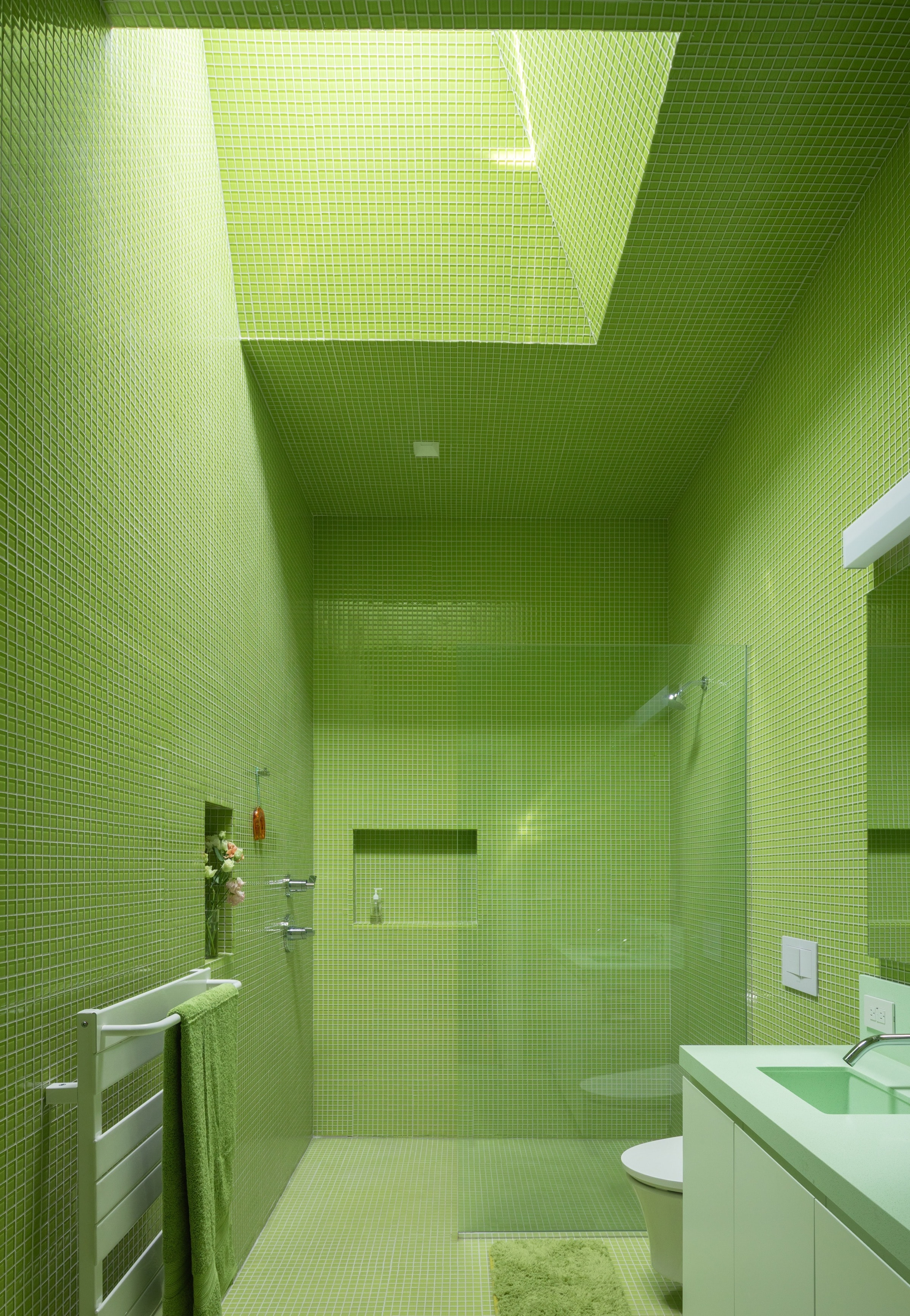 097
097
Francis Aguillard, Davis Owen
My Better Half
#Family #Live #Play
This project embraced marriage: the marriage between a German and an American, and the marriage between a 1910s brownstone and the Bauhaus, which the clients have a tie to. They wanted to bring some of that modernism into their traditional Brooklyn brownstone, so we looked at paintings, furniture, and other visuals from the era, including Hilma af Klint and László Moholy-Nagy. The forms and motifs from this era became the basis for the skylight shapes and colors that we added to the home. The project was a collaboration between Francis Aguillard (One With_Architecture) and O-N, with O-N also serving as the Architect of Record.
O-N, Design Architect and Architect of Record Francis Aguillard (One With_Architecture), Design Studio Solid, Fabrication Felix Chmiel, Fabrication Lambo Construction and Davaro Contracting, GCs Nicholas Venezia, Photography Evan Paul English, Murals
Prospect Lefferts Garden
https://aiabrooklyn.org/wp-content/uploads/bknow/details/My%20Better%20Half.jpg
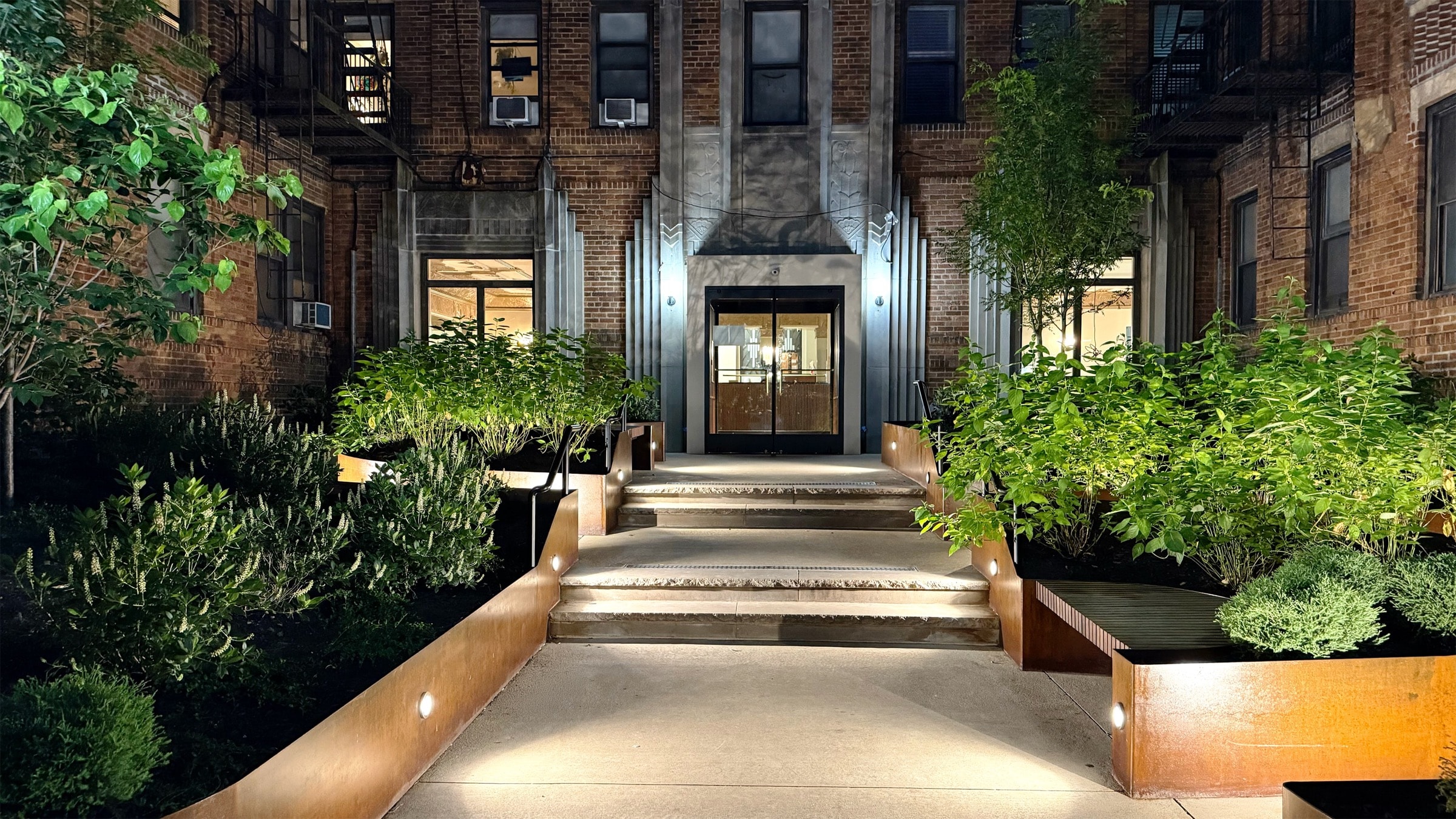 098
098
Lea Architecture
570 Westminster Courtyard
#Community #Equity #Live
The 570 Westminster Courtyard reimagines a dark, inaccessible covered path as a welcoming, barrier-free public threshold. We introduced an open landscaped entrance that integrates a meandering ADA-Compliant path framed by native plants and patina-friendly embedded seating. The path becomes more than circulation: it creates a thoughtful landscape for pause, gathering and everyday interaction. The 570 Westminster Courtyard reflects an approach to adaptive reuse that prioritizes inclusion, environmental sensitivity, and shareable space. By transforming a purely functional entry into a layered public experience, it demonstrates how even modest interventions can expand access while fostering community connection.
Norwood Design & Build Inc.
Flatbush
https://aiabrooklyn.org/wp-content/uploads/bknow/details/570%20WESTMINSTER%20COURTYARD%20BOARD.jpg
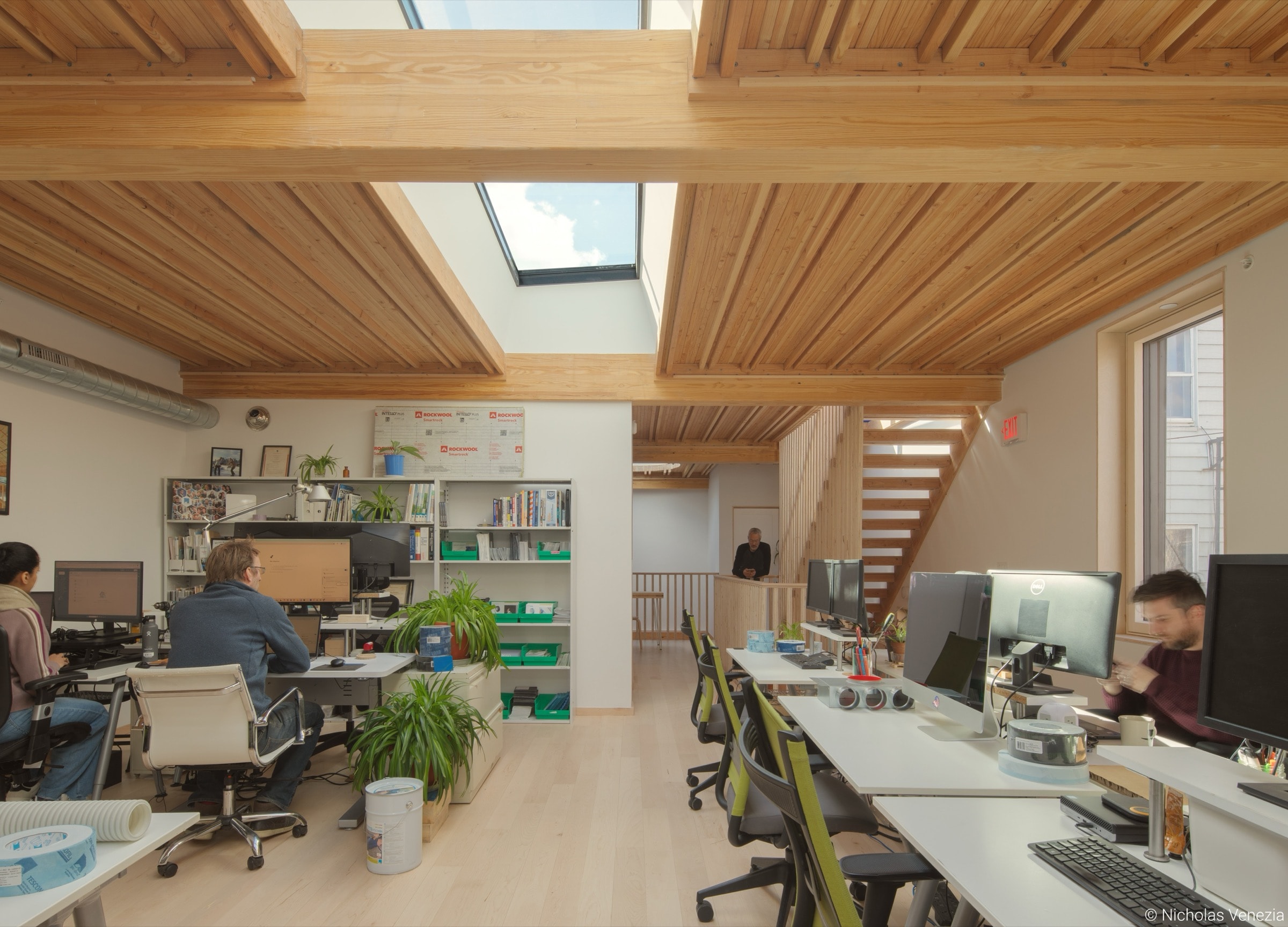 099
099
Edward Fischer
475 High Performance Building Supply Headquarters
#Materials #Resilience #Work
Brooklyn based company, 475 High Performance Building Supply is on a mission to supply essential materials, building components, and knowledge to advance the adoption of high performance, Passive House construction in North America. Last year they built and moved into a new headquarters whose construction embodies that mission, and the sustainable construction practices they advocate. It is an adaptive reuse project that takes advantage of an existing structure, integrates a new high performance envelope, uses Mass Timber construction, provides filtered fresh air through an ERV, and provides quality daylighting through high performance skylights and is PHI Plus and Phius Zero Certified.
Architect: Ryan Enschede Studio; Builder: City Line Interiors, Mario Bissessar; Client: 475 High Performance Building Supply
Boerum Hill
https://aiabrooklyn.org/wp-content/uploads/bknow/details/475%20Brooklyn%20NOW%20Submission.jpg
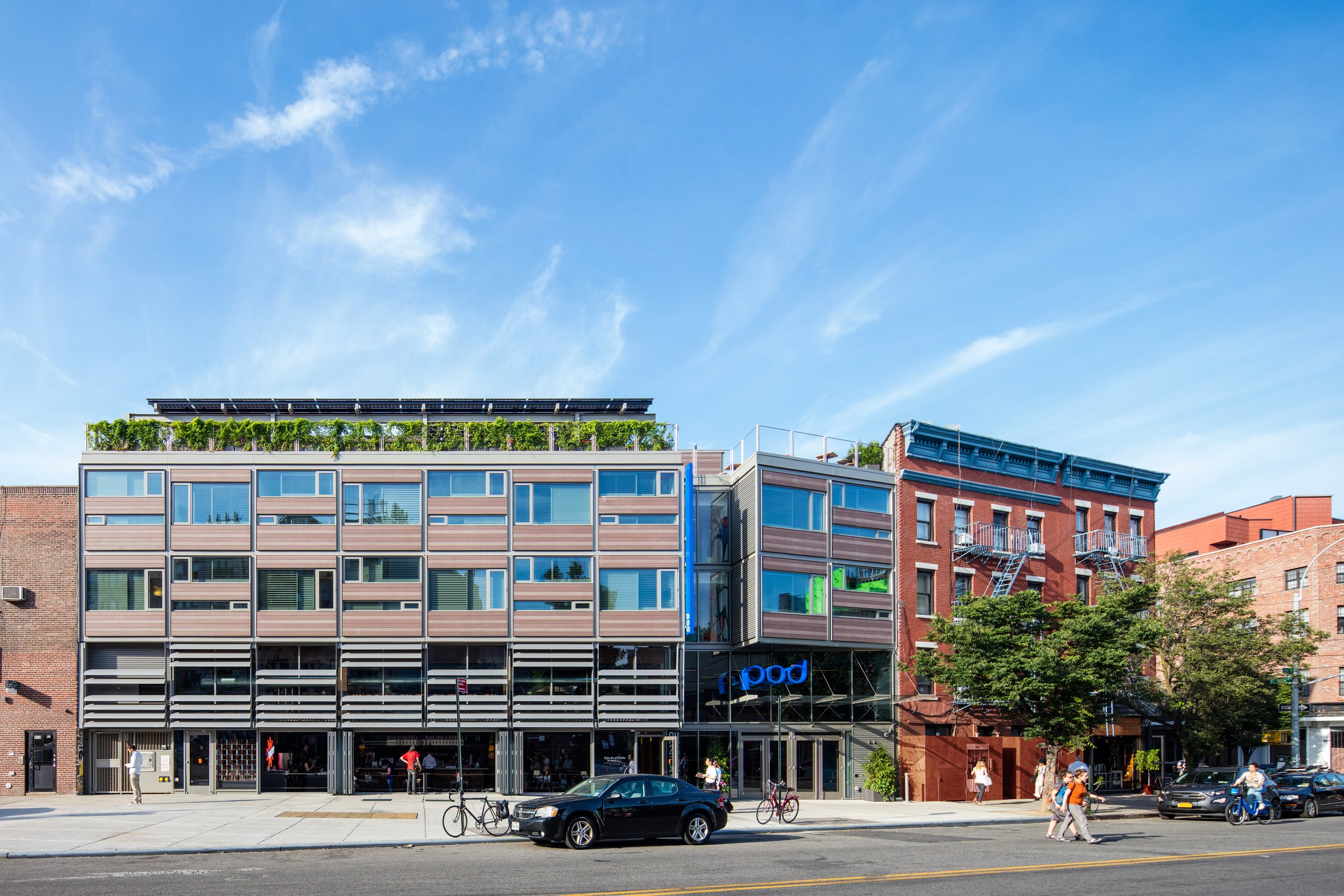 100
100
Garrison Architects
Pod Hotel Brooklyn
#Craft #Materials #Play
The Pod Hotel Brooklyn by Garrison Architects is a 100,000-square-foot mixed-use hospitality development in Williamsburg that reimagines urban lodging through modular design.Built using prefabricated components, the hotel features compact, highly efficient guest rooms of roughly 100 square feet, with glass-enclosed bathrooms and carefully placed windows to enhance spatial perception.The project prioritizes affordability and social interaction, balancing minimal private spaces with generous communal amenities, including courtyards, rooftop gardens, and dining areas. This innovative approach reduces construction time while creating a vibrant, community-oriented environment for travelers.
POLCOMCB Construction
Williamsburg
https://aiabrooklyn.org/wp-content/uploads/bknow/details/BK%20NOW%20POD%20Final%20export.jpg
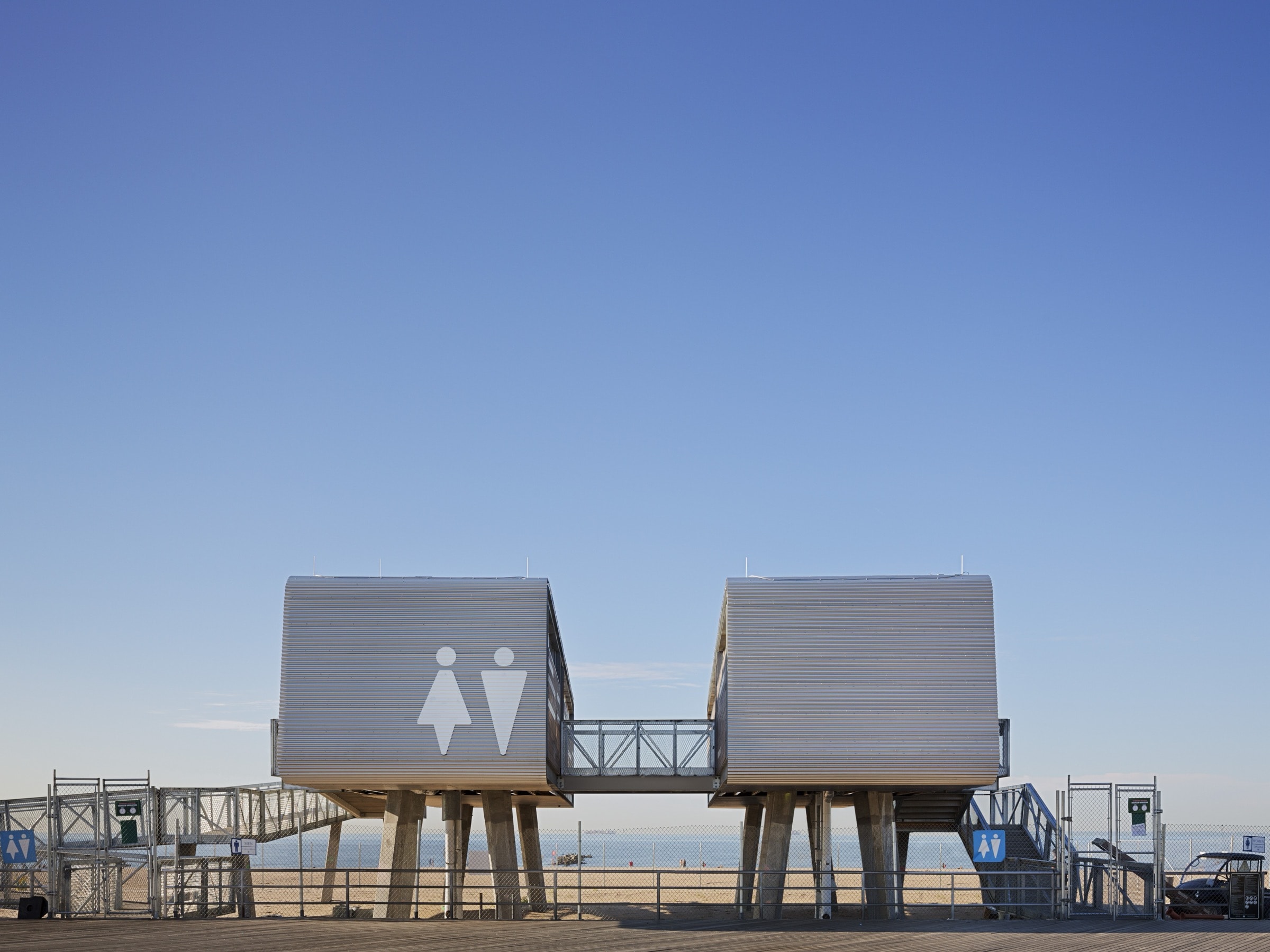 101
101
Garrison Architects
NYC Beaches Restoration Module
#Craft #Materials #Resilience
The NYC Parks Beach Restoration Modules by Garrison Architects were developed in response to the devastation caused by Hurricane Sandy, which destroyed numerous lifeguard and comfort stations along New York City’s coastline. The project consists of 37 flood-resistant, modular structures deployed across multiple beach sites, including Rockaway, Coney Island, and Staten Island. Elevated above flood levels on concrete supports, the buildings are designed to withstand extreme weather while minimizing environmental impact. Factory-built for rapid installation, the modules incorporate sustainable features such as solar energy systems, natural ventilation, and daylighting, creating resilient, efficient, and adaptable public facilities.
Deluxe Industries
Coney Island
https://aiabrooklyn.org/wp-content/uploads/bknow/details/BK%20NOW%20Beaches%20Final%20export.jpg
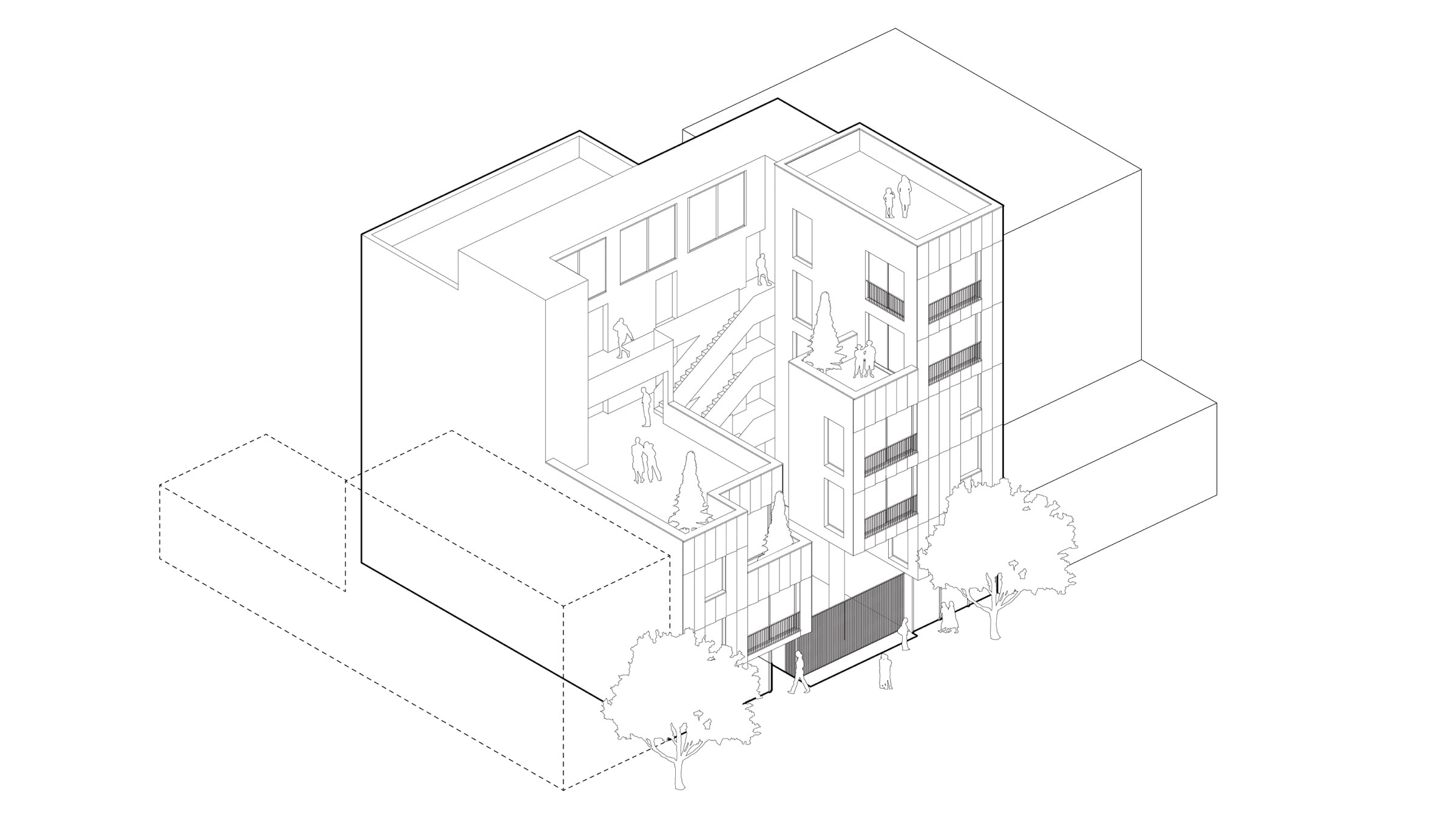 102
102
Shane Neufeld
Herkimer Apartments
#Equity #Family #Live
Herkimer Apartments is a fifteen-unit residential building that reimagines urban living through light, openness, and a strong connection to nature. A central courtyard and open-air circulation introduce daylight, greenery, and opportunities for community within the dense Brooklyn context. Units are oriented in multiple directions, providing a diversity of views. Two-bedroom residences enjoy generous northern exposure, while a range of unit sizes accommodated a diverse group of residents.Departing from the inward-facing layouts common in multifamily housing, the courtyard engages the street rather than hiding from it, visually linking public and private space and drawing sunlight deep into the building’s interior. The southern façade features angled, non-combustible precast concrete panels that create dynamic plays of shadow and texture as daylight shifts. Large-format sliding doors further strengthen the building’s relationship to light and air. Multiple roof terraces offer shared outdoor space and expansive views across the Brooklyn skyline.
None
Bedford Stuyvesant
https://aiabrooklyn.org/wp-content/uploads/bknow/details/Herkimer_Apartments.jpg
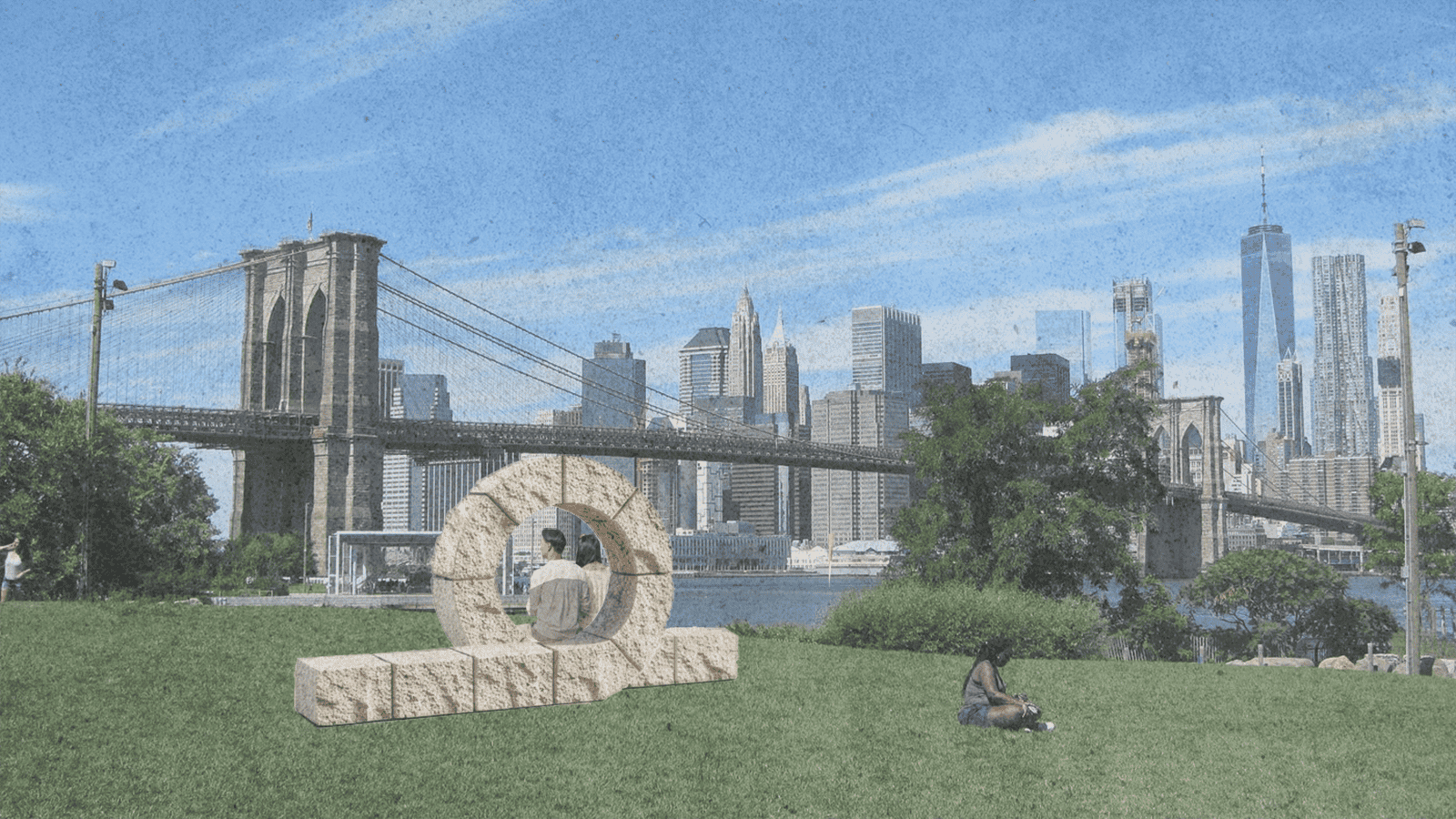 103
103
Adam Wiesehan
Lovers Rock
#Community #Craft #Family #Live #Materials #Play #Resilience
Our modern world can make people feel isolated even in our dense and culture-rich borough of Brooklyn. Lovers Rock is an idea for a sculpted space of interaction developed to bring people together. The design aligns a series of fourteen 600lb. stone blocks to add a sense of permanence and timelessness to the surrounding environment. The corkscrew-shaped stacked blocks bring a touch of playfulness and intrigue, framing a unique view and encouraging in-person face-to-face time. The sculpture serves a variety of purposes–a work of art, a bench, a lounge chair, a children’s play structure, and a landmark. The project is intended as a mobile or permanent installation for a public space.
None
Brooklyn Parks
https://aiabrooklyn.org/wp-content/uploads/bknow/details/LOVERS%20ROCK%20BOARD%20compressed.jpg
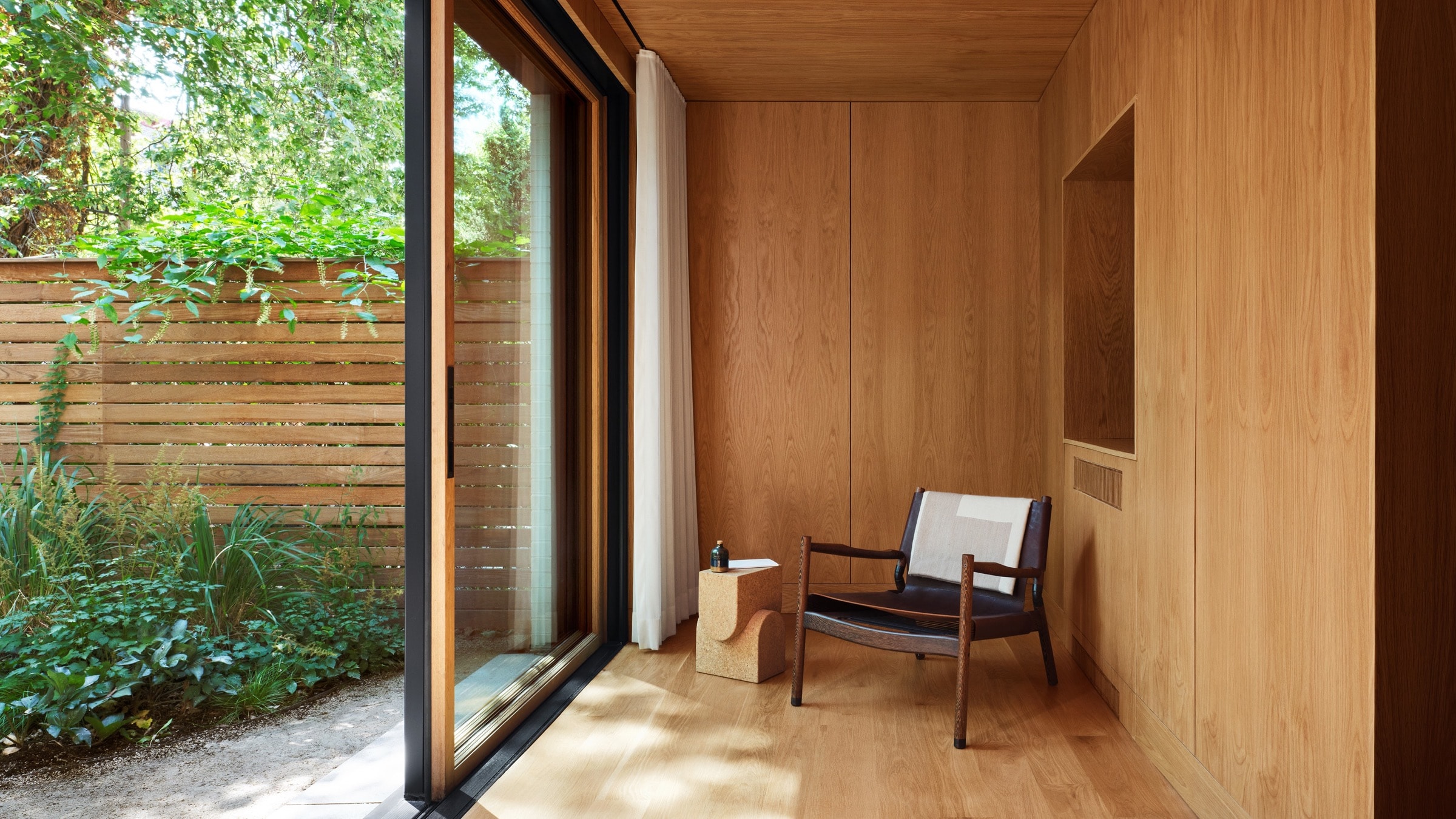 104
104
Evan Erlebacher, Harry Lam
Bed-Stuy Addition & Garden
#Craft #Live #Materials
An 1881 townhouse in Brooklyn’s Bedford-Stuyvesant neighborhood was renovated and expanded through a layered approach that balances preservation with the present. The garden level was completely reconfigured with a contemporary interior and rear addition that opens to a new garden. The parlor floor was carefully restored to maintain its original layout and historic details. The two levels establish a natural dialogue between old and new.
Builder: Black Square Builders
Bedford-Stuyvesant
https://aiabrooklyn.org/wp-content/uploads/bknow/details/Bed-Stuy%20Townhouse%20Garden.jpg
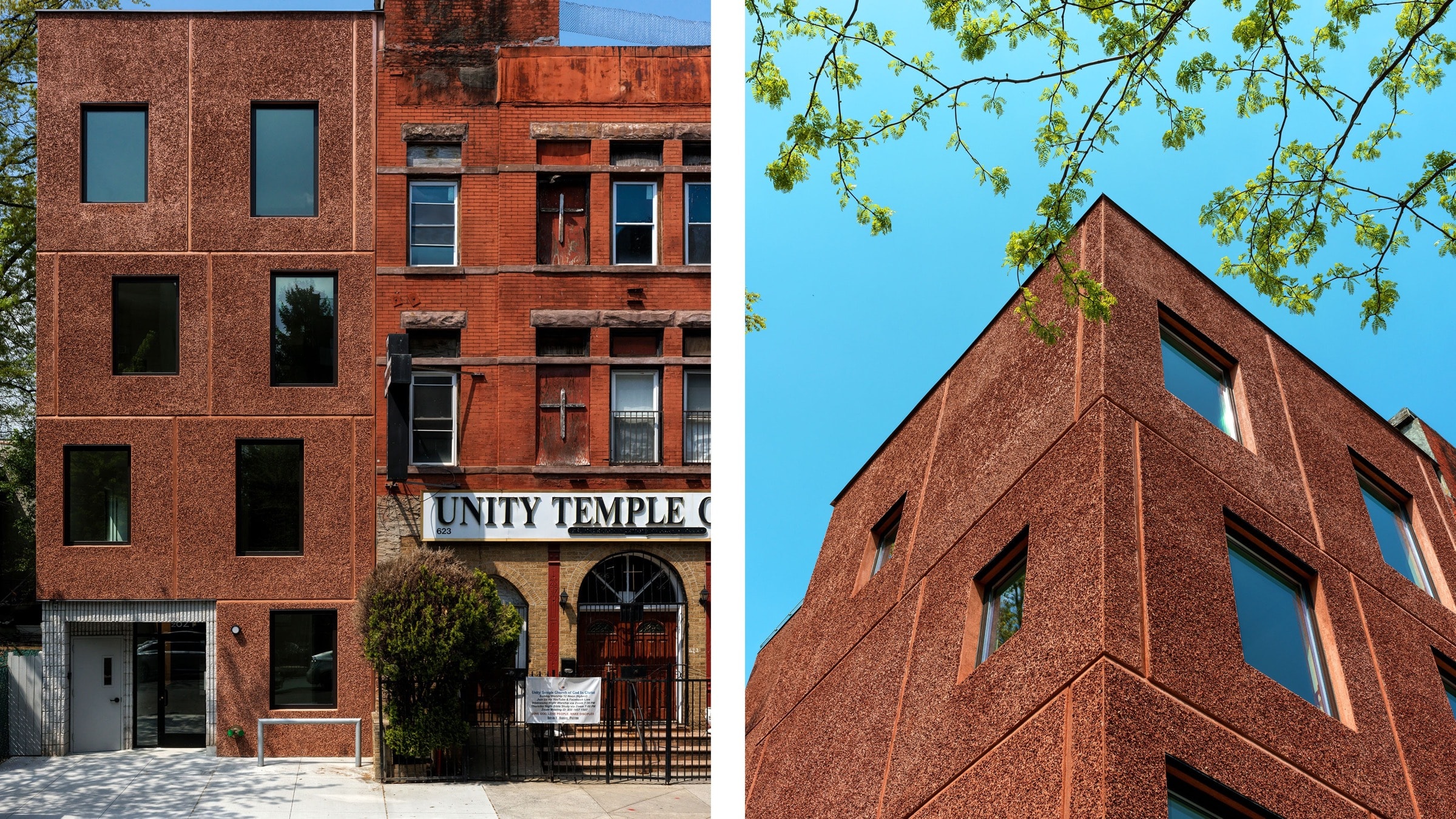 105
105
Resituated Architecture - David Lage'
Brick Chip Housing
#Community #Live #Materials
ReflectThe building is in Bedford Stuyvesant, a neighborhood of brick and stucco faced row houses.The design aim was to reflect its historic surroundings by using these traditional materials. ReuseWe wanted to avoid a conventional brick design of stacked units.Old bricks normally destined for landfill can be recycled into chips for landscaping. The design uses these chips as a texture to wrap the exterior walls. ResonateBy embedding brick chips into a tinted stucco base, a variable texture of warm tones and shadows is created. This texture connects the building to its neighborhood context, and recreates the material quality that gives the area its character.
Facade: Sessa Plastering Corporation; Building: Blue Sky Construction
Bedford Stuyvesant
https://aiabrooklyn.org/wp-content/uploads/bknow/details/BRICK-CHIP-HOUSING.jpg
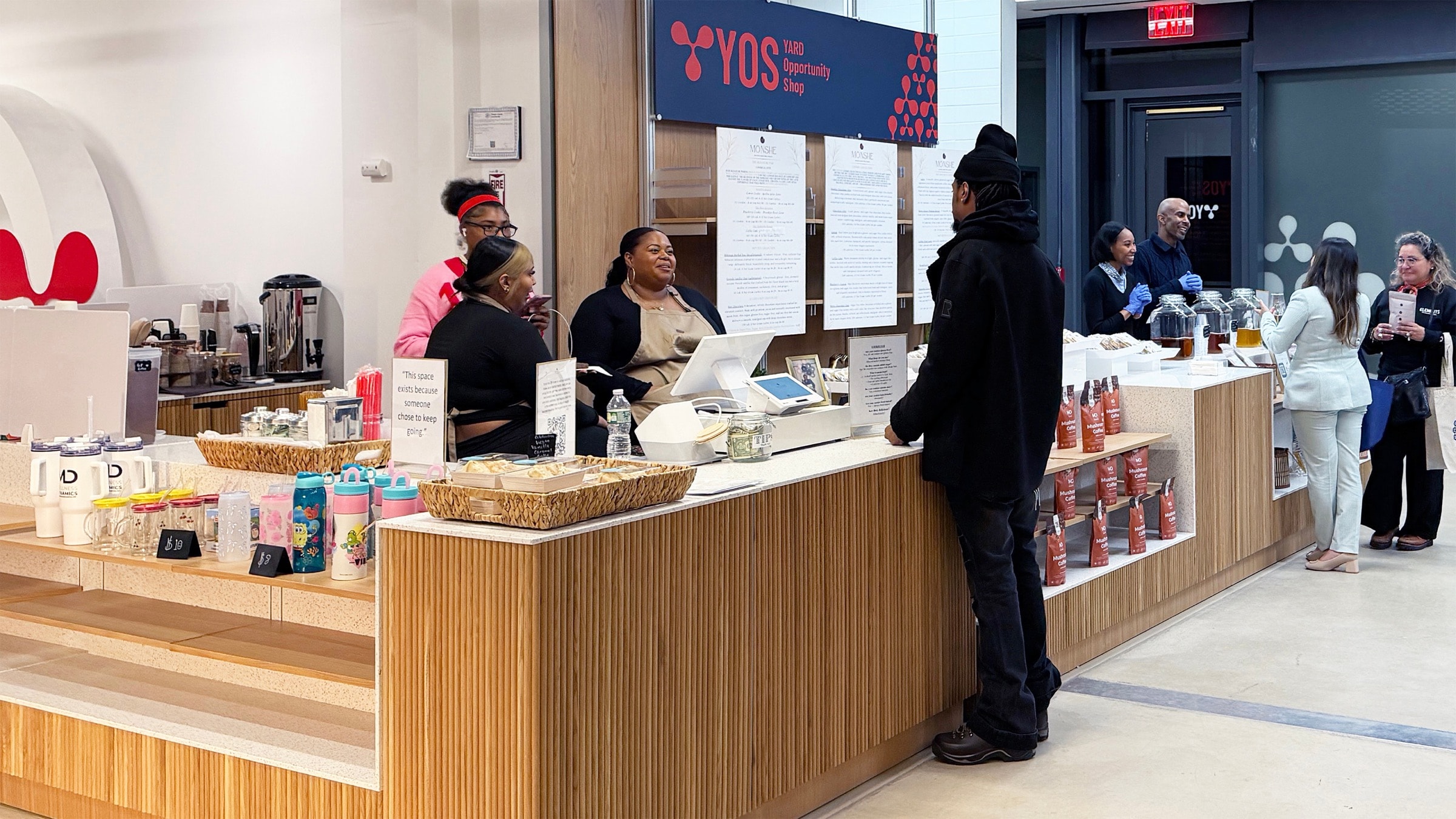 106
106
LUBRANO CIAVARRA ARCHITECTS
BNY BUILDING 92 RETAIL & GALLERY POP-UP
#Community #Equity #Work
The Brooklyn Navy Yard Opportunity Shop at Building 92 is a public exhibition and pop-up retail space designed to support small women and minority-owned business by providing affordable access to retail space, infrastructure and resources. Designed and built by a 100% MWBE team, the project draws inspiration from the Navy Yard’s shipbuilding history through a material palette of metal display shelving and wood millwork. Vendors rotate every few months, allowing a range of businesses to showcase their products. Adjustable shelving and mobile millwork display units create a flexible environment that can accommodate one or multiple vendors at a time, while allowing each business to customize its displays to reflect its products and brand.
ARCHITECT: LUBRANO CIAVARRA ARCHITECTS- Lea Ciavarra, Partner and Partner-In-Charge, Benita Trenk, Project Architect; GENERAL CONTRACTOR: AVID NYC CORP.- Gabriela Salazar Bharatlall
Brooklyn Navy Yard
https://aiabrooklyn.org/wp-content/uploads/bknow/details/BNY%20BUILDING%2092%20RETAIL%20GALLERY%20POP-UP.jpg
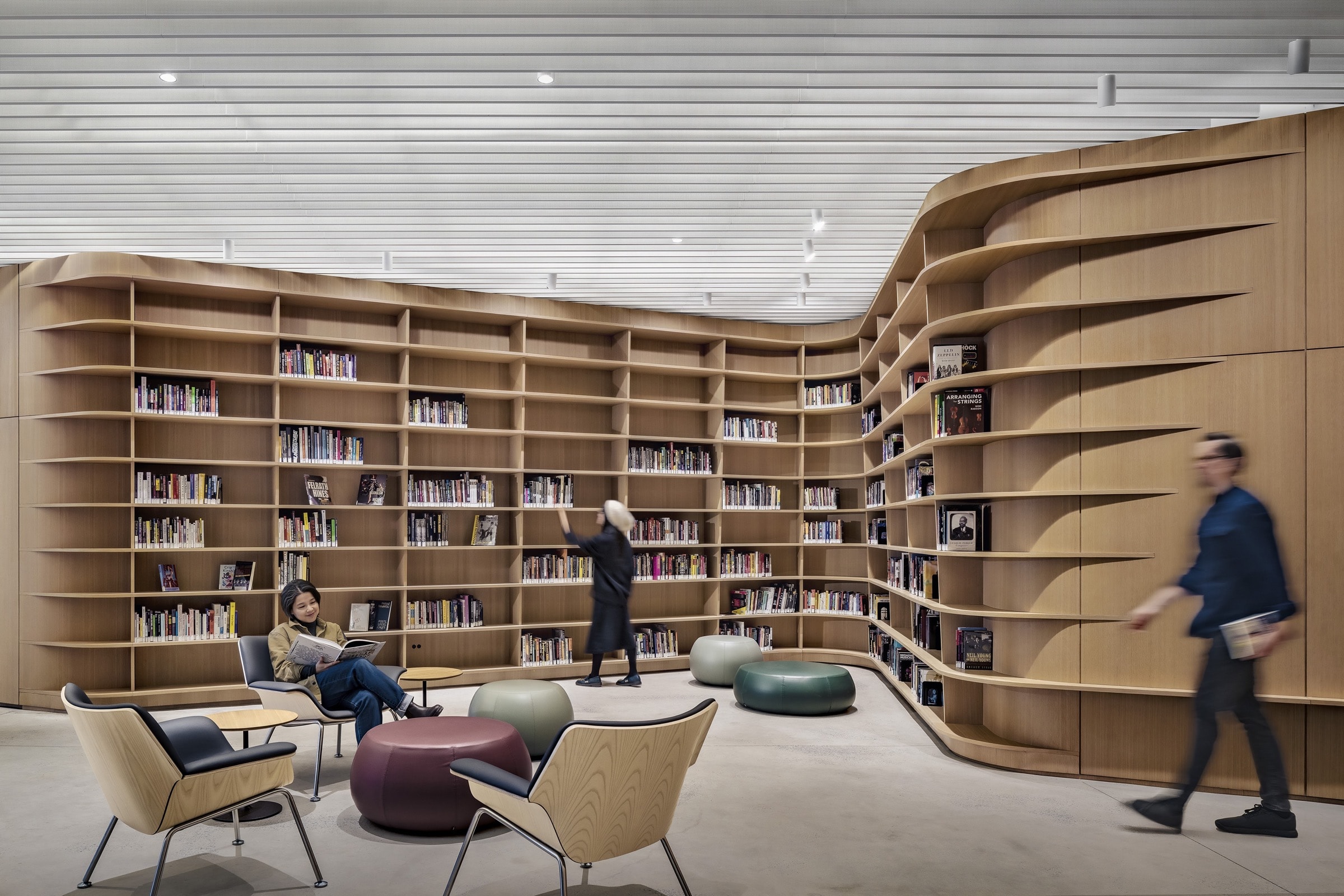 107
107
Andrea Steele, AIA, Principal in Charge; Dichen Ding, AIA, Project Manager; Charles Mattern, AIA, Technical Director; Enrique Norten, Hon. FAIA, Sam Rosen, Nuria Heras Diez, Joe Murray, James Carse, AIA, Vi Ngo, design team.
L10 Arts and Cultural Center
#Community #Equity #Resilience
The L10 Arts and Cultural Center redefines cultural infrastructure in Brooklyn as an open, continuous civic landscape. Uniting the Brooklyn Academy of Music, Brooklyn Public Library, Museum of Contemporary African Diasporan Arts, and 651 ARTS, the project lifts the public realm into the building through a stepped plaza and a flowing interior “ribbon” that organizes programs, space, movement, and encounter. Architecture becomes the connective tissue—dissolving thresholds, amplifying visibility, and enabling overlap between art, learning, screening and performance. The result is a porous, collective platform that positions culture as an everyday, shared experience embedded within the life of the city.
Client: New York City Economic Development Corporation (NYC EDC), New York City Department of Cultural Affairs (NYC DCLA); Engineers:Structural Engineer: RGCE I Rosenwasser / Grossman Consulting Engineers, P.C.; MEP/FP/FA Engineer: Ettinger Engineering Associates; Consultants: Theater Consultant: Fisher Dachs Associates, Theatre Planning & Design (FDA); A/V Consultant: Boyce Nemec Designs; Lighting Designer: Horton Lees Brogden Lighting Design; Acoustic Consultant: Lally Acoustical Consulting; Specialty Millwork Fabricator: SITU Fabrication; Archive Specialist: AVP; Signage Consultant: Two Twelve; IT/Security Consultant: Cerami; Expeditor: W J Professional Expediting Co; General contractor: SKANSKA USA BUILDING
Brooklyn
https://aiabrooklyn.org/wp-content/uploads/bknow/details/L10%20Arts%20and%20Cultural%20Center.jpg
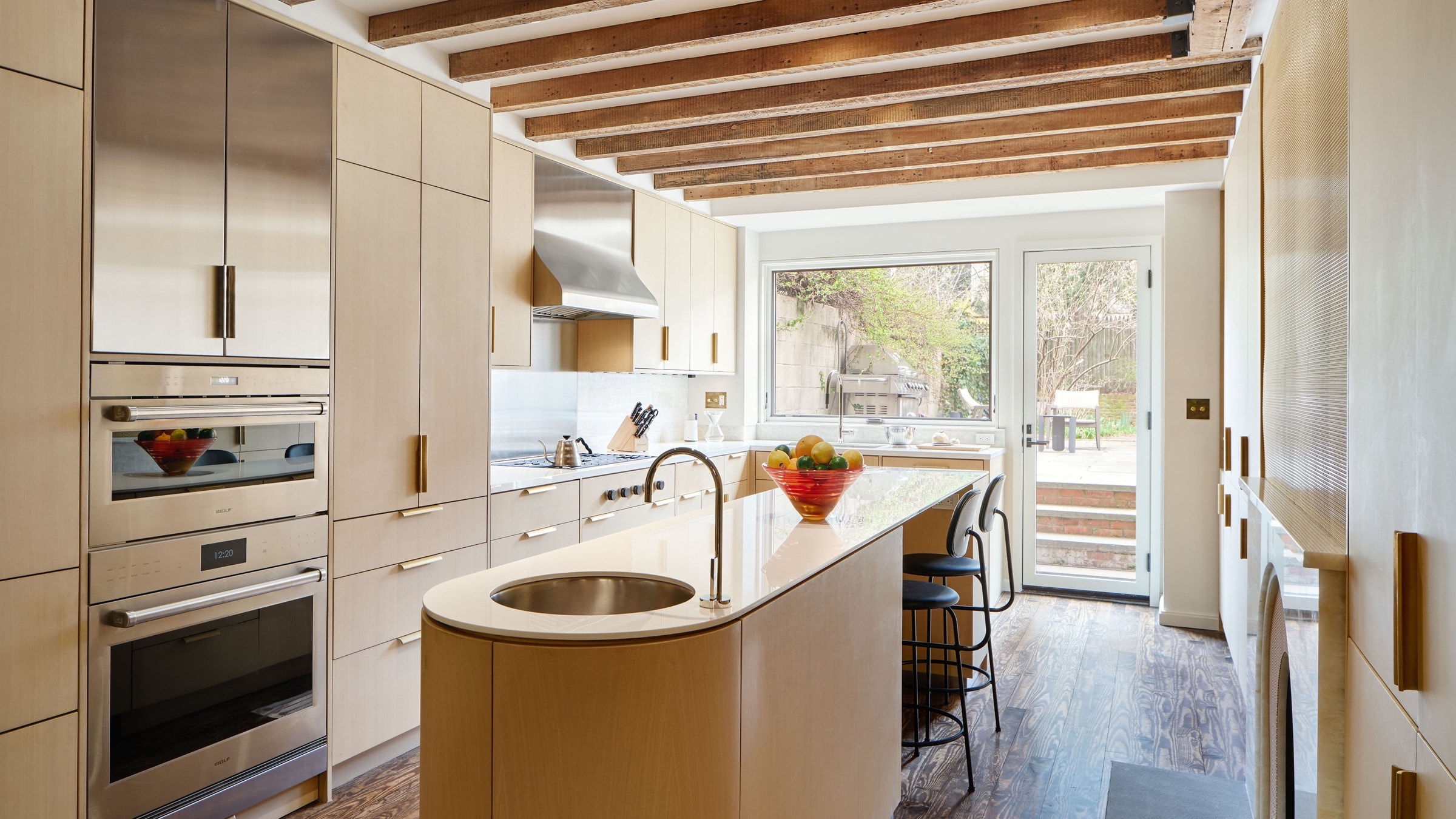 108
108
LUBRANO CIAVARRA ARCHITECTS
COBBLE HILL TOWNHOUSE
#Craft #Live #Materials
This petite thirteen foot wide townhouse is cleverly reconfigured about its narrowness. Finishes of rich woods, warm metals, and earth-tone accents present a contemporary elegance situated within the Late Italianate home. An unusually narrow island paired with floor-to-ceiling cabinetry combines to create a gracious high-performance kitchen. By exposing the original wood ceiling joists, the history of the home is celebrated while ceiling height is maximized. Adjacent to the kitchen-dining area is a bespoke wet bar, wrapped in walnut tambour and brass weave. The emerald quartzite bar sink, glassware, and entertaining accoutrement are smartly hidden beneath the lustered brass top begging to be cracked open. Above the wet bar, floating shelves are suspended by delicate brass rods, used to display treasures from the dwellers’ worldly travels.
Lubrano Ciavarra Architects – Architect and Interior Designer, Anne Marie Lubrano, Partner and Principal-In-Charge, Dale Lunan, Project Architect, Sarah Tsang, Designer; R.A. Somerby – Interior Decorator, Mimi Somerby, Interior Decorator; Consulting Engineering Services – MEP Engineer Rob Dreschler, Associate and Team Leader Barry Structural Engineering – Structural Engineer Michael Barry, Principal; R. Sutton & Co. – General Contractor; Patrick Spitler, Founder Jill Delaney, Project Manager, Gabe Builes, Site Foreman
Cobble Hill
https://aiabrooklyn.org/wp-content/uploads/bknow/details/COBBLE%20HILL%20TOWNHOUSE.jpg
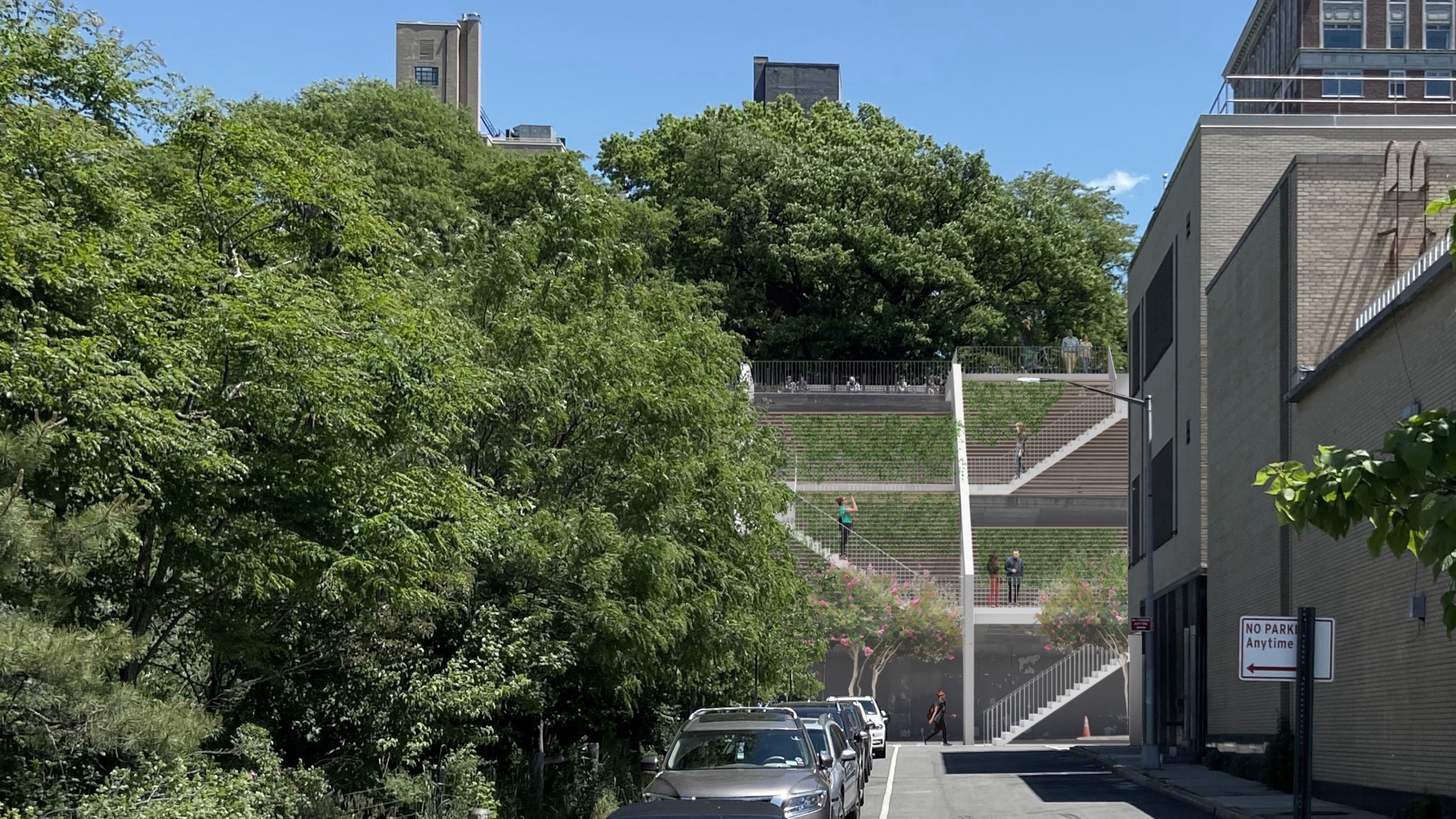 109
109
Shane Neufeld
BQE Facelift
#Community #Resilience
BQE Facelift envisions strengthening the BQE triple cantilever through reinforcement rather than demolition — preserving the structure temporarily in order to avoid catastrophic failure. Rather than building a temporary roadway, as the city suggested, and demolishing the existing structure, we propose a direct and expressive intervention that maintains the existing structure while community groups collaborate, taking the time necessary in order to come up with a long term sustainable design solution.We propose a series of vertical, prefabricated concrete buttresses attached to each of the cantilever’s three projecting edges. These elements act as external supports, pressing upward and reintroducing compression into the existing structure. In doing so, they redirect a substantial portion of the downward load and stabilize the cantilever for decades to come. Additionally, the design introduces a network of pathways and stairs that weave through the buttress, creating a vertical link between Brooklyn Heights and Brooklyn Bridge Park below.
None
Brooklyn Heights
https://aiabrooklyn.org/wp-content/uploads/bknow/details/BQE%20Facelift.jpg
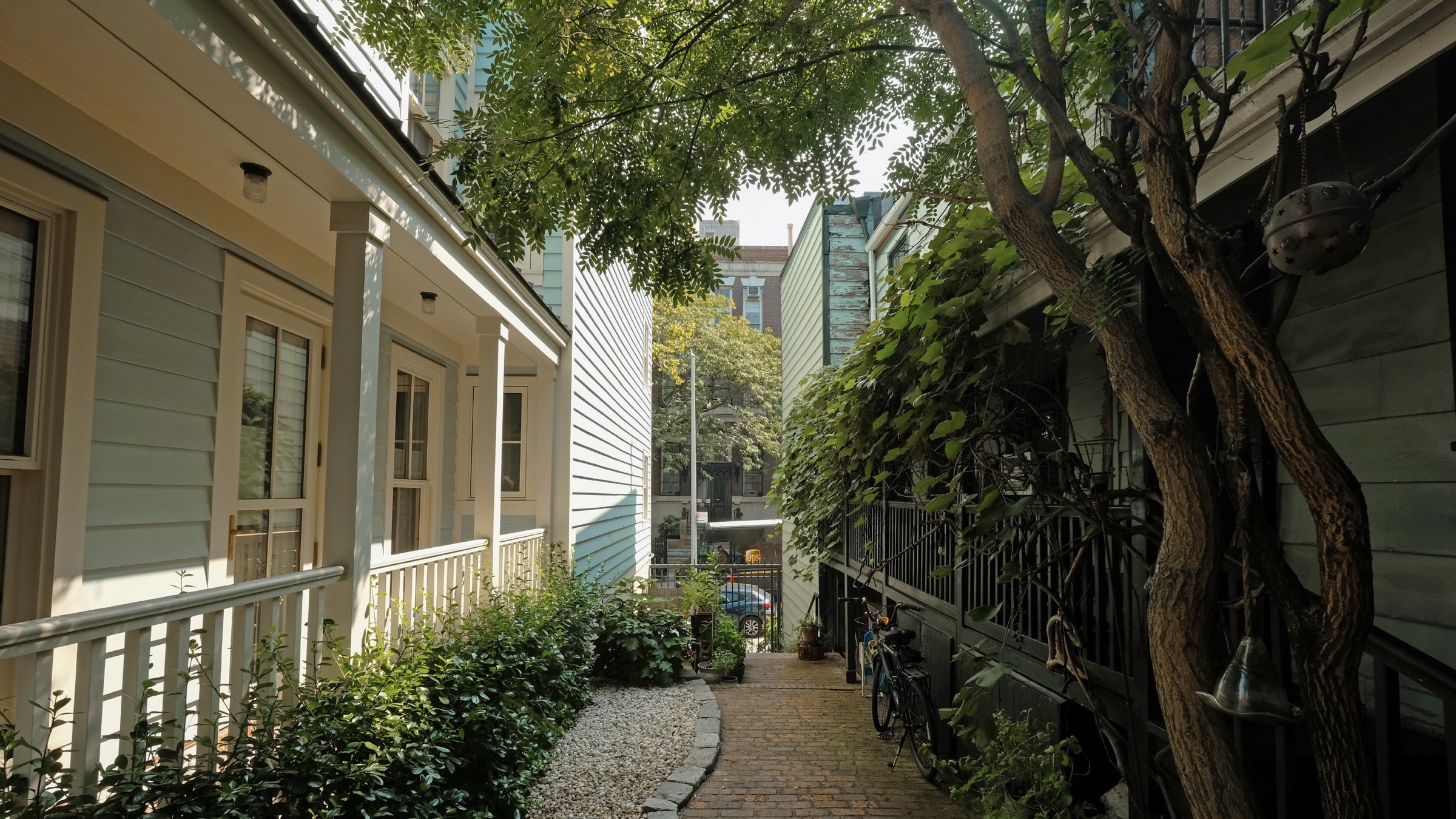 110
110
John H. Hatheway, Jr., Nicole Gangidino
Hicks Street House
#Community #Craft #Family
This house and its neighbor are the two oldest standing houses in Brooklyn Heights. They were constructed in 1810 with a court between them that gives access to a landlocked lot in the middle of the block. Collaboration at all levels was important: the adjacent neighbor on the court, the neighborhood association, the community board and the city landmarks commission. The footprint of the original building measured just 20′ x 25′. A dilapidated single-story extension was removed to allow for a new 2-story addition at the rear. The challenge in designing this addition was to minimize its view from the street and maintain the prominence of the restored historic house. The addition is setback behind a covered porch facing the courtyard, which masks its volume. A winding circulation path through the house connects living spaces at each floor, balancing privacy and unity for this tight-knit family.
General Contractor: Interboro Property Management; Interior Design: Murphy Waldron Interiors; Landscape: Hicks Landscape
Brooklyn Heights
https://aiabrooklyn.org/wp-content/uploads/bknow/details/HICKSSTREETHOUSE.jpg
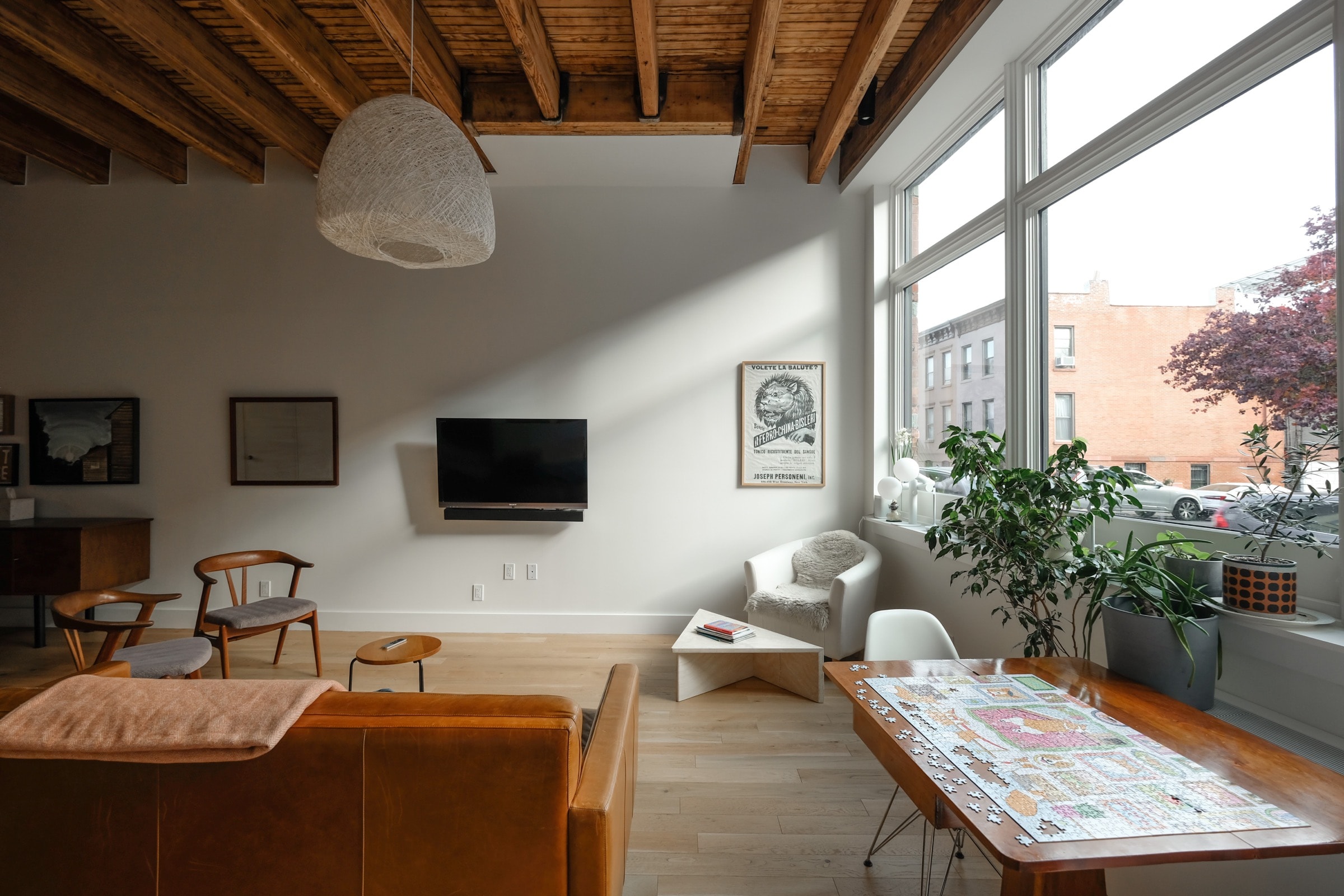 111
111
John H. Hatheway, Jr., Nicole Gangidino. Sejal Reval
Hoyt Street House
#Community #Craft #Family
This house and its neighbor are the two oldest standing houses in Brooklyn Heights. They were constructed in 1810 with a court between them that gives access to a landlocked lot in the middle of the block. Collaboration at all levels was important: the adjacent neighbor on the court, the neighborhood association, the community board and the city landmarks commission. The footprint of the original building measured just 20′ x 25′. A dilapidated single-story extension was removed to allow for a new 2-story addition at the rear. The challenge in designing this addition was to minimize its view from the street and maintain the prominence of the restored historic house. The addition is setback behind a covered porch facing the courtyard, which masks its volume. A winding circulation path through the house connects living spaces at each floor, balancing privacy and unity for this tight-knit family.
General Contractor: V&Roger Construction Corp.
Carroll Gardens
https://aiabrooklyn.org/wp-content/uploads/bknow/details/HOYTSTREETHOUSE.jpg
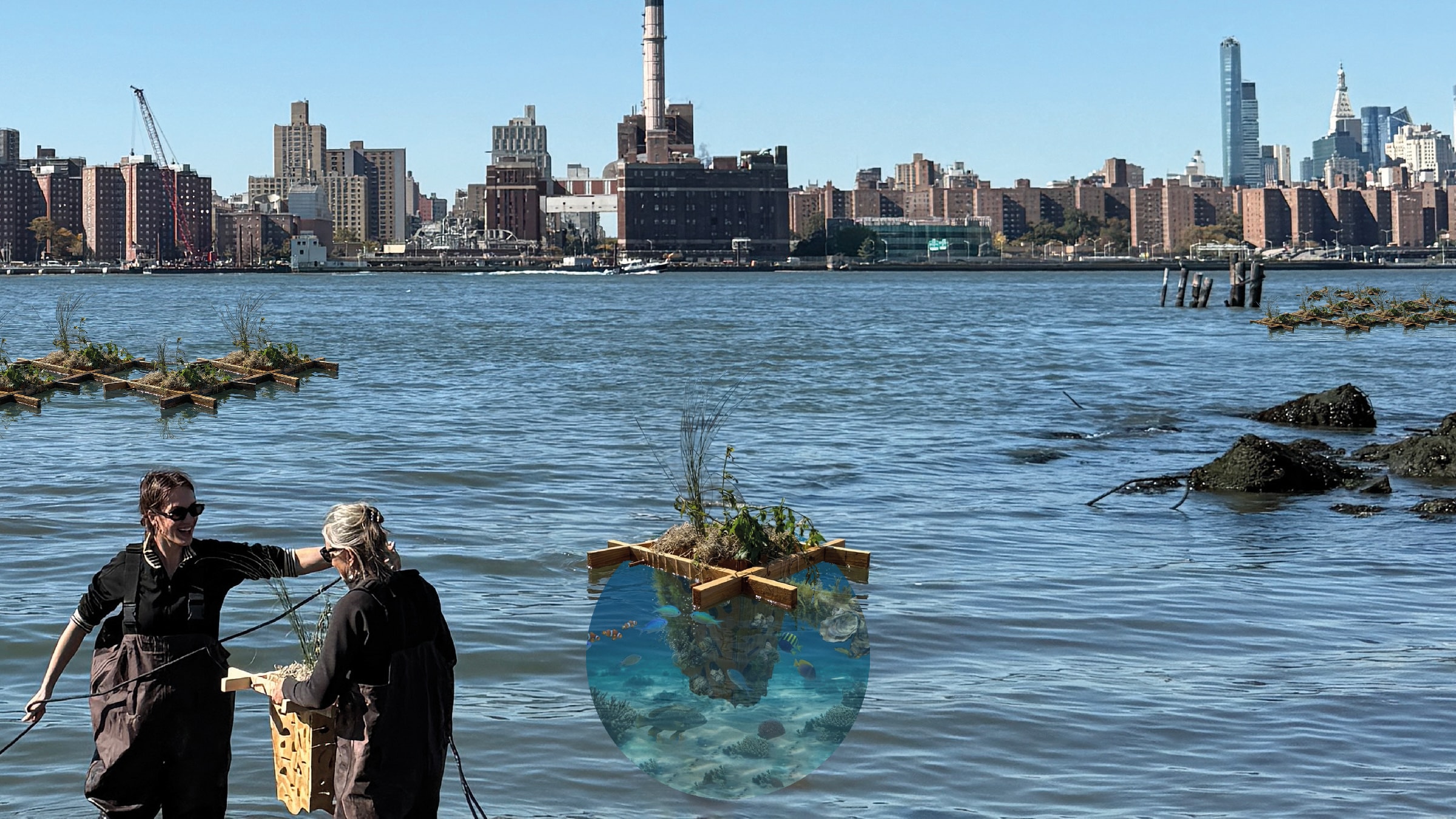 112
112
Miguel Angel Santivañez Lopez, Xire Sangpei
Nursery Reef – Seed Bombs
#Community #Materials #Resilience
Conceived for Bushwick Inlet Park, this floating micro-habitat regenerates biodiversity along Brooklyn’s pressured waterfront. Designed as a modular estuarine system, it supports life above and below the waterline, creating shelter for juvenile fish, marine species, and vegetation. Constructed from recyclable plywood, cork, and coconut fiber, it combines durability with gradual biodegradation, fostering marine attachment over time. Iterative prototyping refined buoyancy and form. With support from Friends of Bushwick Inlet Park, it was developed through dialogue on the importance of the Brooklyn waterfront ecosystem, proposing a scalable, low-impact strategy to restore ecological ground and advance collective stewardship and long-term resilience.
Columbia GSAPP - Graduate School of Architecture, Planning and Preservation; Professor: Emily Bauer
Bushwick Inlet Park
https://aiabrooklyn.org/wp-content/uploads/bknow/details/Nursery%20Reef_Bushwick%20Inlet%20Park%20Exhibition%20Board.jpg
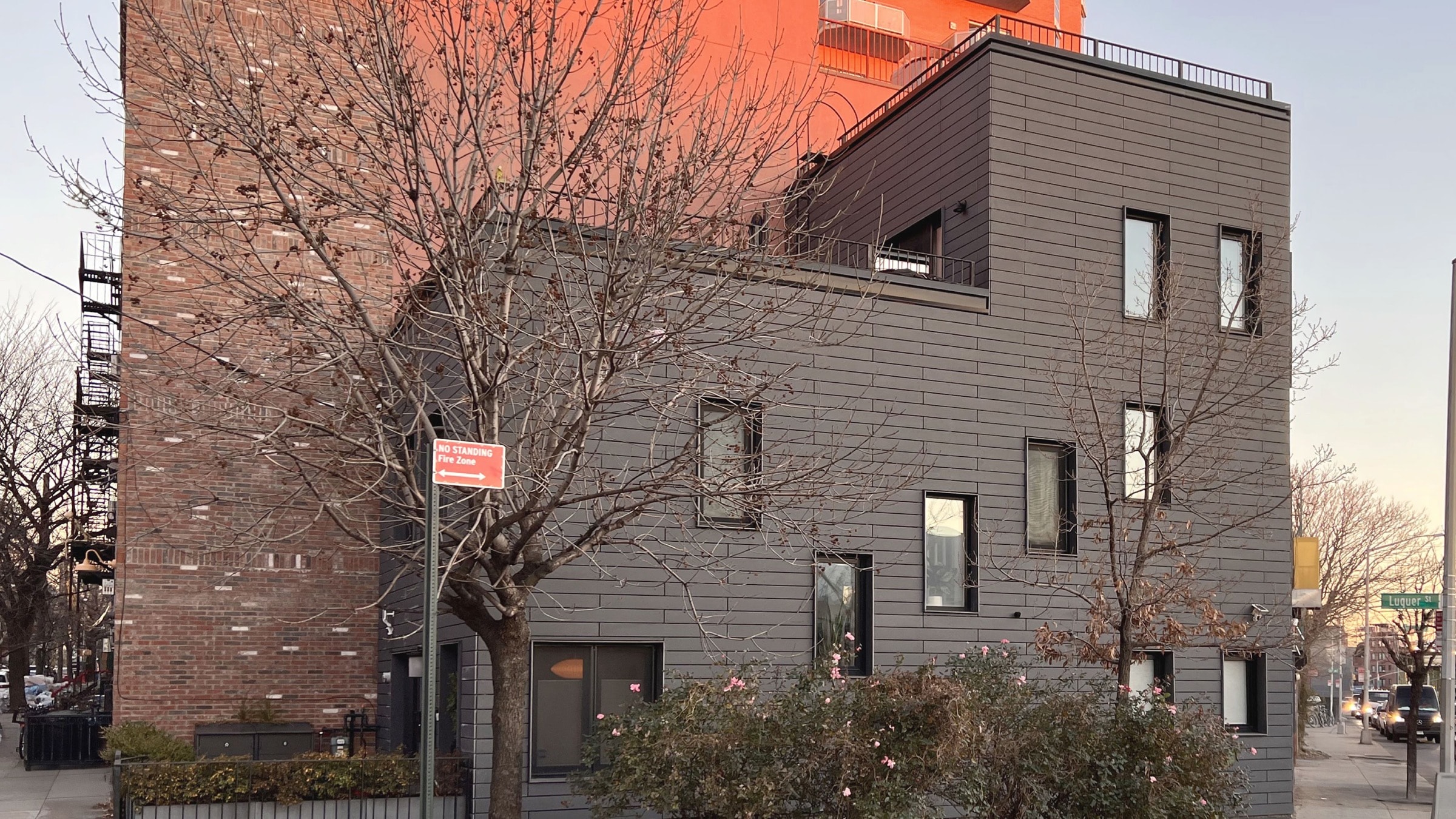 113
113
Principal Architect: Eric Safyan
90 Luquer Street Townhouse
#Family #Live #Materials
90 Luquer Street is a converted townhouse sited on an irregularly shaped lot at the edge of Carroll Gardens, abutting the Brooklyn Battery tunnel. This site condition creates a unique 3 sided building that caps the end of the block, with each facade facing a different streetscape, scale, and traffic condition. The Luquer Street facade continues the historic residential fabric at a lower 2 story scale before the building sets back to a 3rd story facing the Gowanus Expressway, while the middle facade transitions between the two utilizing diagonally ascending windows.The building materials include a grey ‘Fibre-C’ cement-fiber board; open-joint rain screen system, ‘Knight’ thermally isolated hanging system; Roxul mineral-wool insulation; and triple-pane windows, utilized for noise reduction from the expressway.This project was honored to be included in the book: ‘NEW YORK 2020: Architecture and Urbanism at the Beginning of a New Century’ by Robert A.M.Stern, D.Fishman, & J.Tilove.
Project Architect: Kevin Kehler
Carroll Gardens
https://aiabrooklyn.org/wp-content/uploads/bknow/details/Eric%20Safyan%20Architect%20PC_90%20Luquer%20Street_Final-Board.jpg
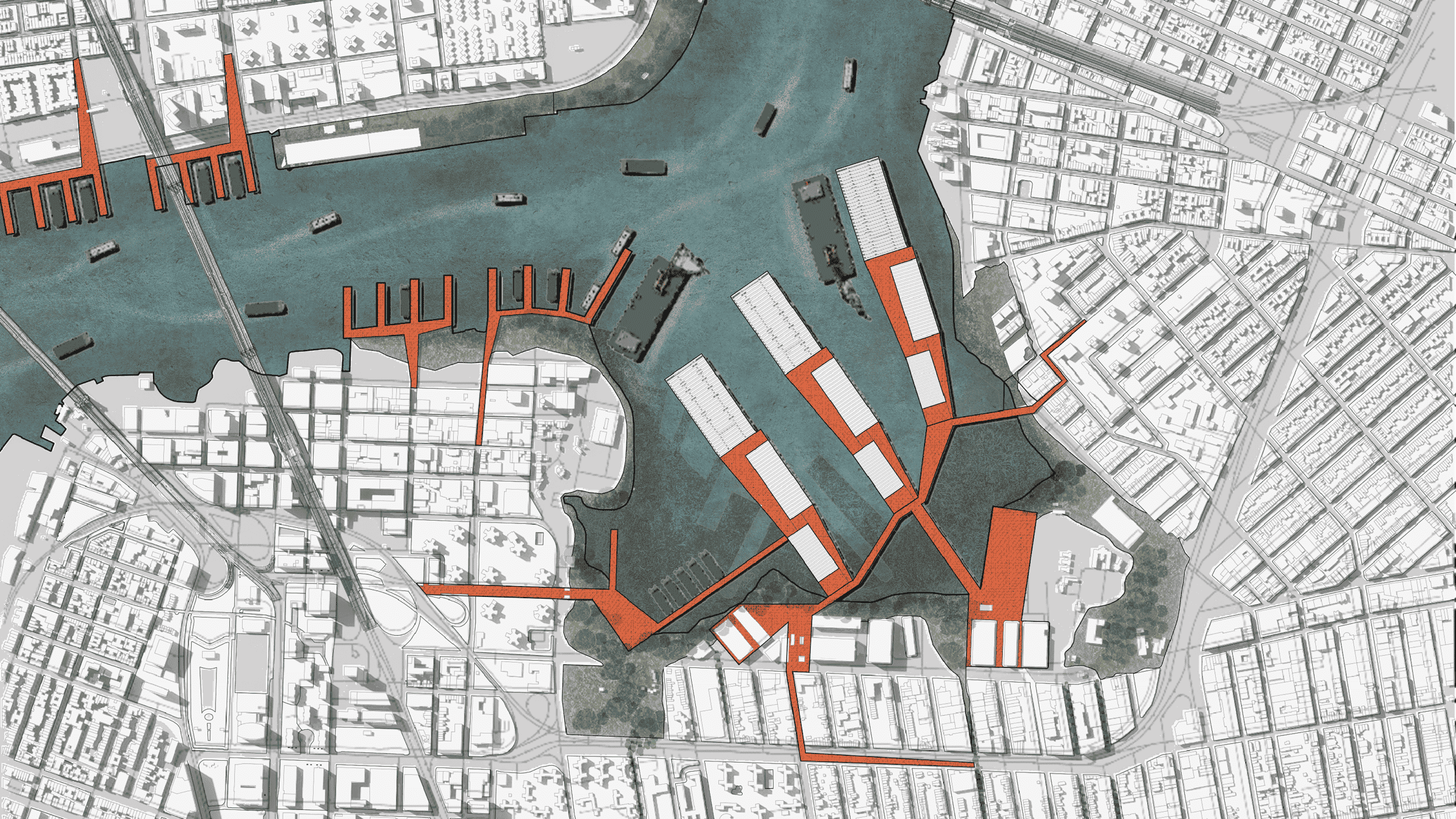 114
114
Susana Chinchilla
Building Brooklyn: The Working New Deal
#Community #Equity #Resilience
As we look toward a future construction industry tasked with delivering affordable housing, resilient infrastructure, and climate-adapted coastlines, the The Working New Deal project embraces Industry 4.0 to transform construction flows, labor, and supply chains in Brooklyn, New York. The Working New Deal proposes co-located off site fabrication spaces in New York City’s Industrial Business Zones, particularly, the Brooklyn Navy Yards. Reactivated dry docks become sites of making, paired with resilient public landscapes. By minimizing on-site work, the project improves worker safety and efficiency while addressing systemic inequities. By imagining a future in modular construction, The Working New Deal aims to make Construction a more sustainable, equitable, and climate-responsive industry and urban system.
Columbia University; Student Collaborators: Ambika Kannusami, Tianyi Shi, Yijing Li; Professors: Nans Voron, Sagi Golan, Sean Gallagher, Austin Sakong, Grant McCracken
Brooklyn Navy Yards
https://aiabrooklyn.org/wp-content/uploads/bknow/details/Building%20Brooklyn%20-%20The%20Working%20New%20Deal.jpg
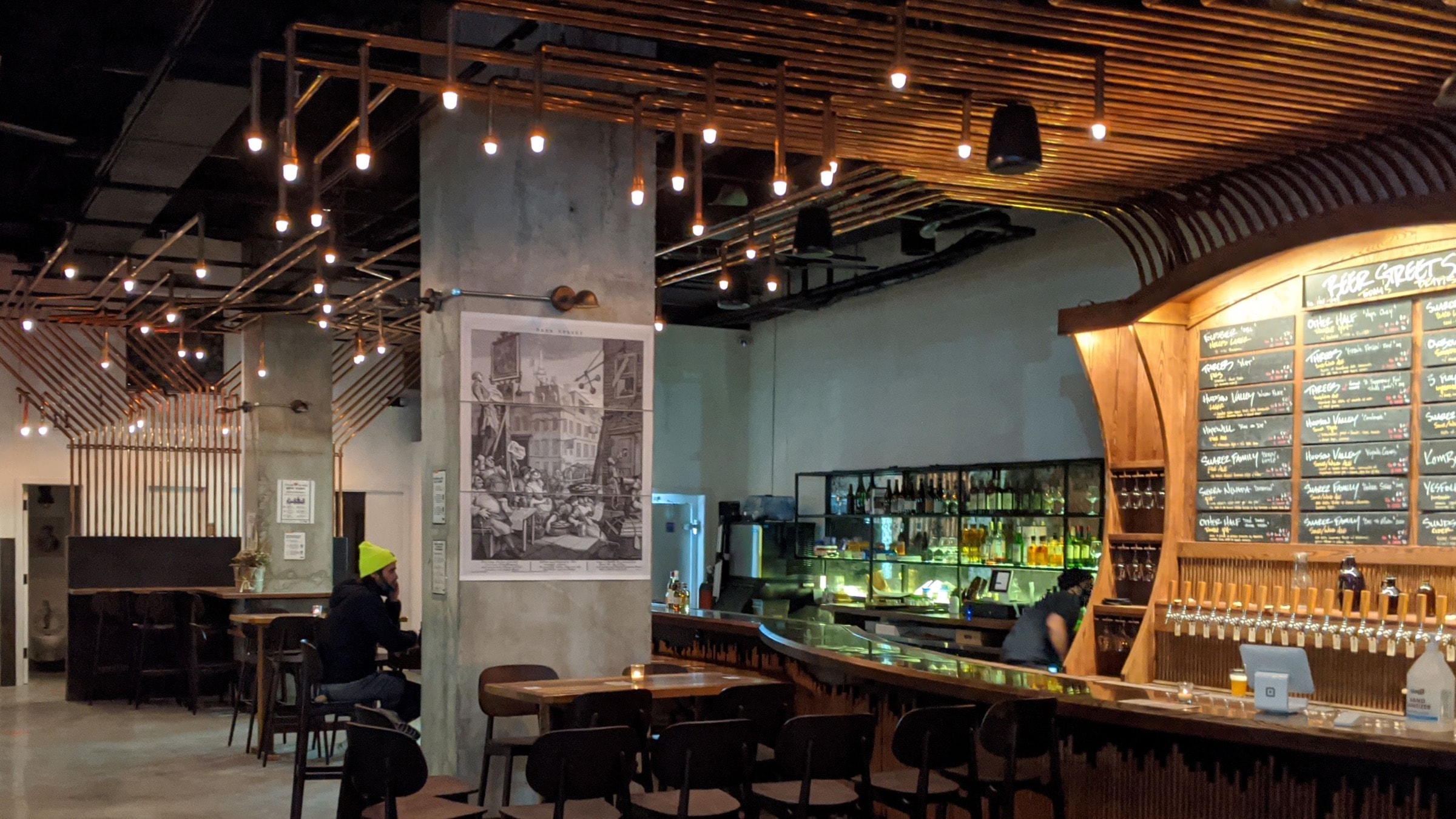 115
115
Principal Architect: Eric Safyan, AIA; Project Architects: Kevin Kehler, R.A., Yevgeny Koramblyum
Beer Street South
#Community #Craft #Play
Inspired by W.Hogarth’s 1751 etchings, “Beer-Street” & “Gin-Lane” depicting the evils of gin vs. the merits of beer, this Prospect Heights craft beer bar provides just such a gathering place. The renovation transforms a raw corner storefront into a warm, industrial taproom organized around a dramatic curved bar and a sculptural ceiling installation. The long curved copper-topped counter is clad in vertical copper tubes and backed by a curved wood portal framing a chalkboard beer list and a continuous row of brass-tap handles. Overhead, an intricate lattice of exposed copper piping weaves across the ceiling, integrating custom LED bulbs and extending down select walls to form a spatial canopy that visually connects entry, bar, and seating zones. Translucent backlit vignettes from the original ‘Beer-Street’ etching are featured thought the space.The build-out was a collaboration with multiple craftspeople including Iron Oaks – custom bar/millwork; Jason Krugman – copper/LED light installation; BOSS-Associates – general contractor.
Millwork/custom bar: Iron Oaks
Prospect Heights
https://aiabrooklyn.org/wp-content/uploads/bknow/details/Eric%20Safyan%20Architect%20PC_Beer%20Street%20South_Final-Board.jpg
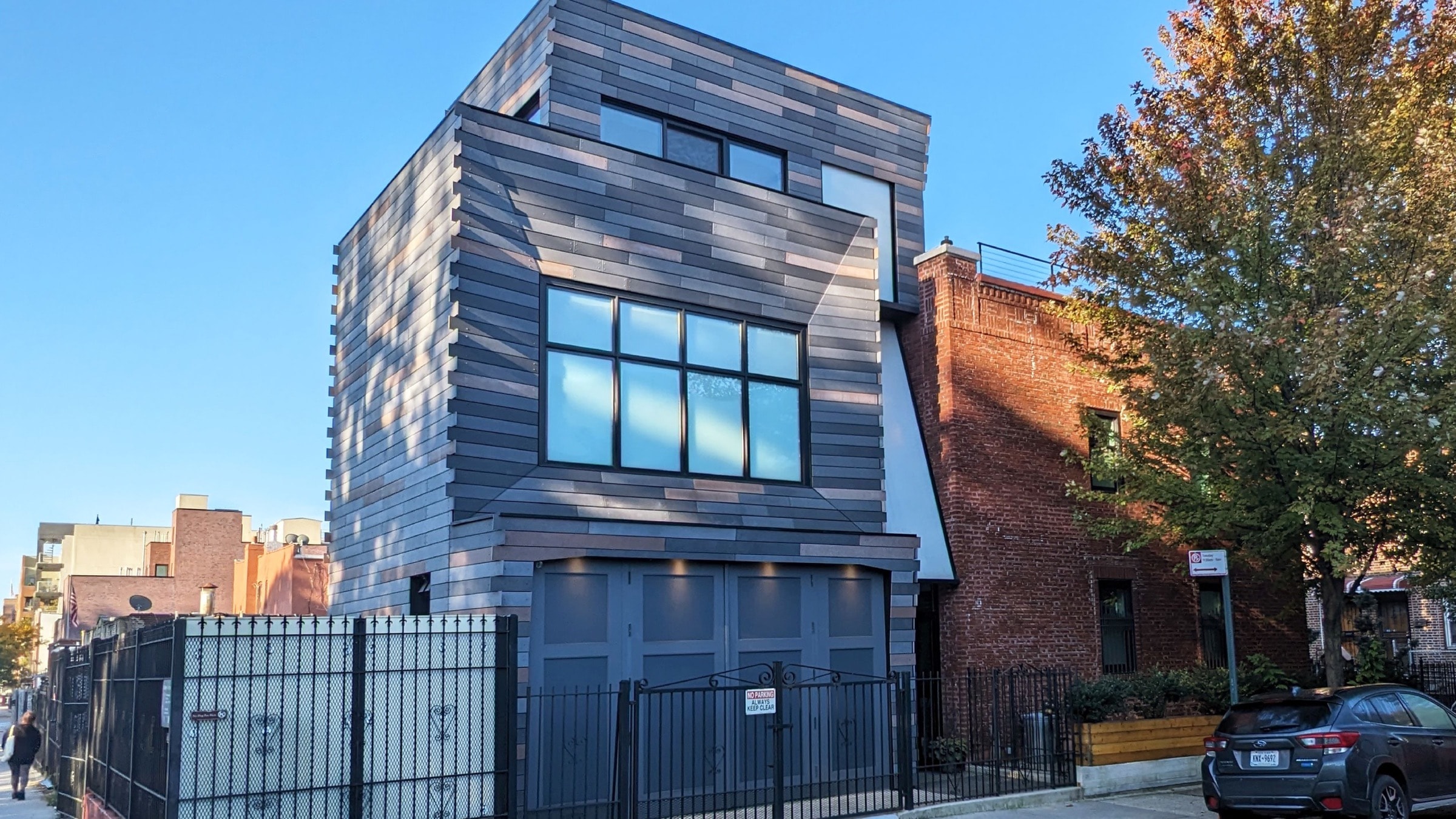 116
116
Principal Architect: Eric Safyan, Project Architect: Kevin Kehler
Greenwood Artist’s Studio Enlargement
#Family #Live #Work
This Greenwood Heights vertical enlargement to an existing corner garage structure engages in a dialogue between the existing brick row house and the new artist’s studio and captures views to the surrounding tree canopy of Greenwood Cemetery. The central stair spine, clad in translucent polycarbonate walls and floating concrete steps, transitions between the living / bedroom areas within the existing structure to the enlargement program of artist’s studios, a 3rd-floor study / ‘tree’ lounge, and rooftop terrace. The detailing of the enlargement utilizes a rain-screen system of fiber-cement panels that vary slightly in color to evoke the scale and colorful clapboard siding of the adjacent neighborhood while providing a contrast to the existing brick rowhouse, separated by an angled polycarbonate canopy that encloses the stair. The panels form a mitered frame to capture the main studio window and are ‘stitched’ at the corners to emphasize the lightness of the material.
Facade Fabricator: David Duncan
Greenwood Heights
https://aiabrooklyn.org/wp-content/uploads/bknow/details/Eric%20Safyan%20Architect%20PC_Greenwood%20Artists%20Studio%20Enlargment_Final-Board.jpg
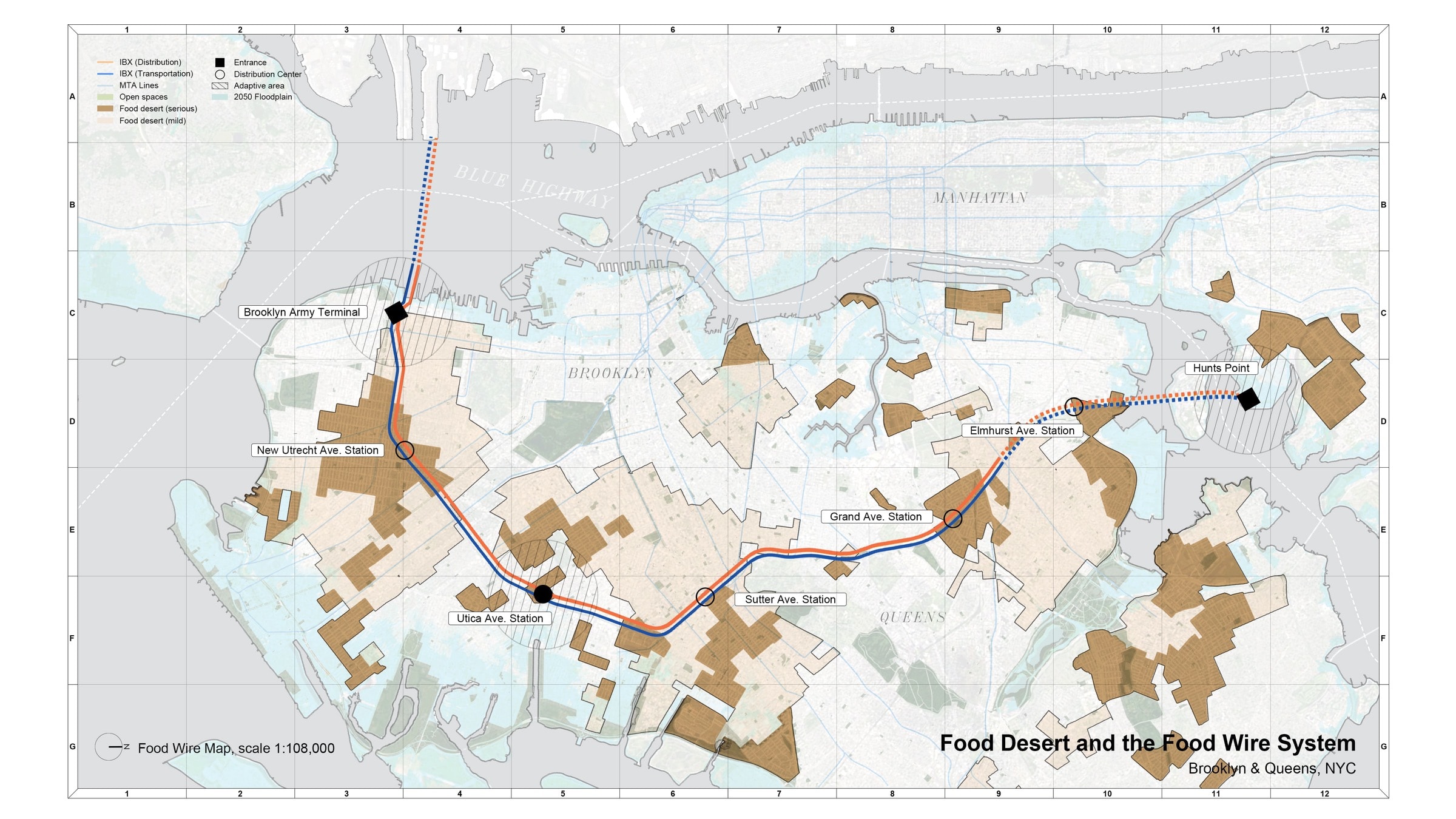 117
117
Miguel Angel Santivañez Lopez, Nicole (Eng Wei) Quah, Junbo Chen, Yi-Jou Lin
From Terminal to Table – The Food Wire
#Community #Equity #Resilience
New York City’s over-reliance on a single distribution center located in a flood-prone zone puts food access for 8 million people at risk. From Terminal to Table imagines a decentralized food network that improves access to affordable, healthy food in food deserts, while strengthening the resilience of the city’s food distribution system. By adapting the planned Interborough Express (IBX) into a multi-use rail line carrying both passengers and food, we address the city’s over-reliance on the flood-prone Hunts point distribution center and diversify the methods of transporting fresh produce. Across the IBX, we propose interventions at the first, middle, and last mile. By introducing a second major distribution hub at the Brooklyn Army Terminal, alongside neighborhood-scale storage and vendor-based last-mile distribution, the system redistributes food access across Brooklyn’s underserved communities. Framing food as essential urban infrastructure, the proposal positions Brooklyn as a model for equitable, community-driven, and climate-adaptive food systems.
Columbia University GSAPP - Graduate School of Architecture, Planning and Preservation; Professors: Nans Voron & Sagi Golan
IBX Corridor: Utica Ave (Flatbush) - Brooklyn Army Terminal (Sunset Park)
https://aiabrooklyn.org/wp-content/uploads/bknow/details/From%20Terminal%20to%20Table_The%20Food%20Wire%20Exhibition%20Board.jpg
 118
118
Principal Architect: Eric Safyan, AIA; Project Architect: Kevin Kehler, R.A.
Ruby’s Coney Island
#Community #Materials #Play
It’s Ruby’s at Coney Island! – where you can still “Walk under the Boardwalk.”Reclaimed boardwalk wood literally demolished from just outside the bar was reclaimed, re-milled for construction of wainscoting, bar tops, bathroom ceiling and a suspended boardwalk ceiling. The wood used on the bar front was left weathered and installed in a V-pattern for an authentic boardwalk look, while the bar top was re-milled revealing a golden-brown sheen of the original Brazilian ipe wood.Although the bar & kitchen were rebuilt from scratch to function more efficiently the layout and feel of the bar is much the same with old photos of Coney Island haphazardly displayed on the walls. Original hand-painted signage was salvaged & re-stored along the boardwalk frontage along with a new storefront and illuminated signage. The bathrooms were completely rebuilt & enlarged and utilize a durable marmoleum & cement board for the walls and boardwalk planks on the ceiling.
N/A
Coney Island Boardwalk
https://aiabrooklyn.org/wp-content/uploads/bknow/details/Eric%20Safyan%20Architect%20PC_Rubys_Final-Board.jpg
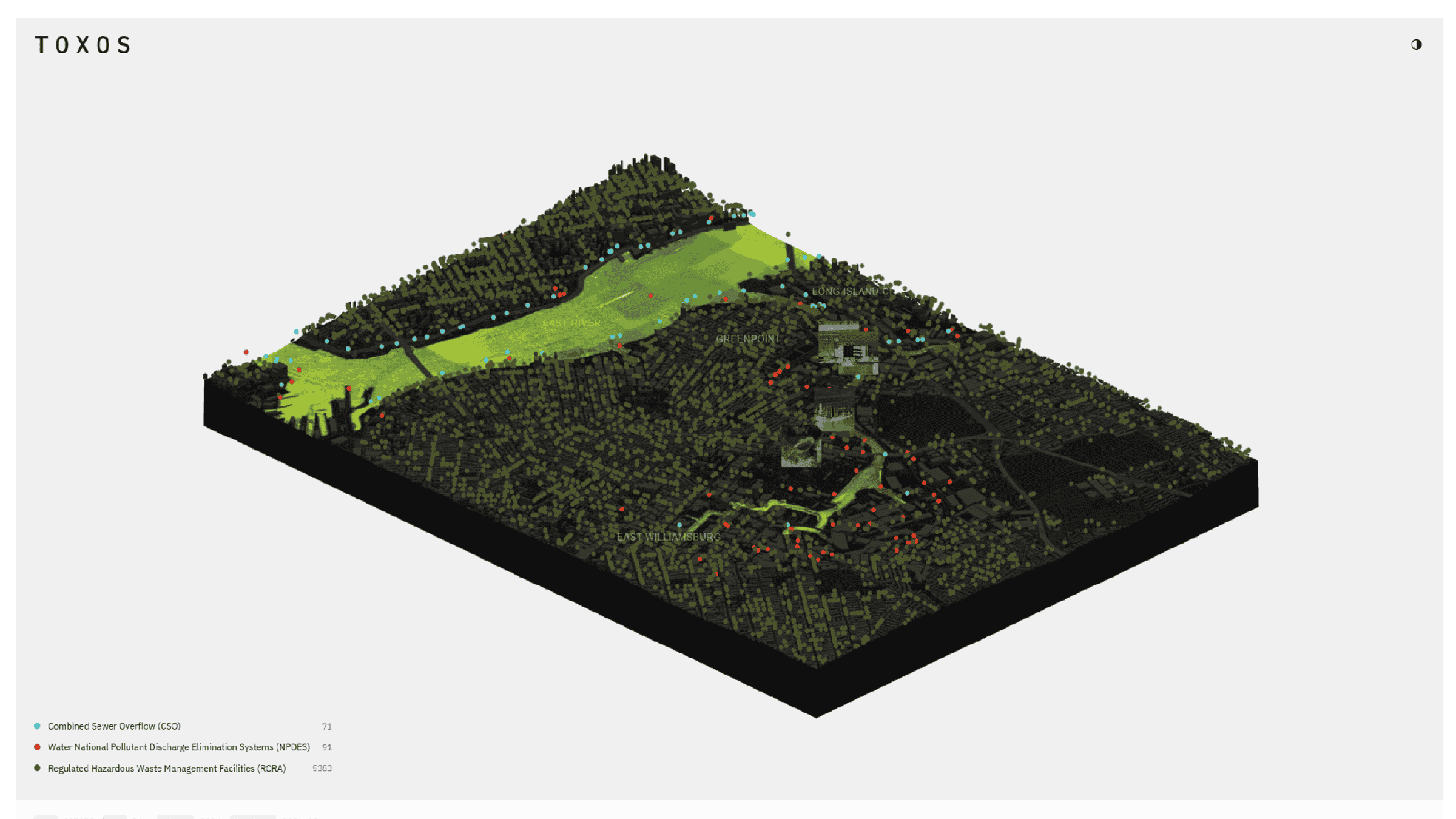 119
119
Julio Viejo
TOXIC ECOLOGIES OF NEWTOWN CREEK (TEN-C)
#Community #Craft #Resilience #Work
TOXOS, a student-led organization at Columbia GSAPP, advocates for one of the most polluted waterways and toxic soil ecologies in the United States— Newtown Creek. Our project confronts toxicity as a dynamic system shaped by time, policy, ecology, and collective neglect. Here, we develop an evolving framework to re-envision the creek and its surrounding post-industrial landscapes. Our work unfolds through a series of interconnected archives and platforms. We began by constructing a digital database of existing conditions, mapping environmental data, industrial histories, and regulatory frameworks. This expanded into a living archive— documenting voices of local residents, workers, and non-human species through film and field recordings. In parallel, we build a material archive that engages the site’s soils, sediments, and waste as active agents in design research. This evolving body of work culminates in the development of a digital platform that advances public engagement through dynamic data visualization, and physical exhibition.
Students: Shannon Levkovitz, Patrick Rodrigues, Samantha Nowak, Claire Galla, Cole Chroman; Supervising Professor: Lydia Kalipolliti (Columbia University)
Greenpoint, Brooklyn
https://aiabrooklyn.org/wp-content/uploads/bknow/details/TOOX_Brooklyn_Now.jpg
 120
120
Principal Architect: Eric Safyan, AIA; Project Architect: Kevin Kehler, R.A.
Gage & Tollner Restaurant
#Community #Craft #Play
For more than a century, Gage & Tollner was the cornerstone of the Brooklyn restaurant world. Generations of Brooklynites found comfort and community in Gage & Tollner’s magnificent landmarked dining room, the third-ever space to be designated an interior landmark and “one of the few remaining authentic Victorian interiors in the City”. Eric Safyan Architect PC had the privilege to be part of this team of architects designers, craftspeople, and restaurateurs, that restored this NYC interior landmark back to its former glory… and beyond!The renovation also entailed the exterior restoration of the landmarked facade and blade signage, complete reconstruction of the kitchen facilities, restoration of the 2nd floor private dining rooms and ‘Dolphin Bar, as well as the construction of a hidden tikki bar – ‘The Sunken Harbor Club.’Gage & Tollner was a recipient of the 2022 Lucy G. Moses Preservation Award, New York Landmarks Conservancy’s highest honors for excellence in preservation.
Restaurant Team: Sohui Kim, St. John Frizell, Ben Schneider; Construction Manager: Andrea Trimarco - Uplift NYC; Design Consultant: Joe Foglia
Downtown Brooklyn
https://aiabrooklyn.org/wp-content/uploads/bknow/details/Eric%20Safyan%20Architect%20PC_Gage%20Tollner_Board%20Final.jpg
 121
121
Fete Nature Architecture
Brooklyn Cooperative Federal Credit Union
#Community #Equity #Materials
Brooklyn Cooperative Federal Credit Union has served Bushwick for over 25 years and now opens its flagship at 1308 Myrtle Avenue. The space delivers accessible banking, lending, and guidance, while strengthening the community through financial education and free tax support. Designed by FNA Studio, the branch creates an open, welcoming environment that blends financial services with cultural activity. Visitors join workshops, events, and daily banking in one place. Sustainable materials, bold graphics, and acoustic elements express local creativity. A tiered seating area celebrates neighborhood history and reinforces a mission focused on inclusion, shared growth, and lasting economic impact. BCFCU has branches in Cypress Hills, Bed Stuyvesant, and Bushwick serving community.
Fete Nature Architecture - Architect, Darby Construction - Builder, L. Naoum - MEP/SP/FA, Acoustic and Structural - Arup
Bushwick, Brooklyn
https://aiabrooklyn.org/wp-content/uploads/bknow/details/BCFCU_FNAboardMED.jpg